Hydnora abyssinica
A. Braun ex Schweinf.
iNaturalist· cc-by-nc
(c) deriknieuwoudt, some rights reserved (CC BY-NC)
iNaturalist· cc-by-nc
(c) joanyoung, some rights reserved (CC BY-NC)
iNaturalist· cc-by-nc
(c) copper, some rights reserved (CC BY-NC), uploaded by copper
Description
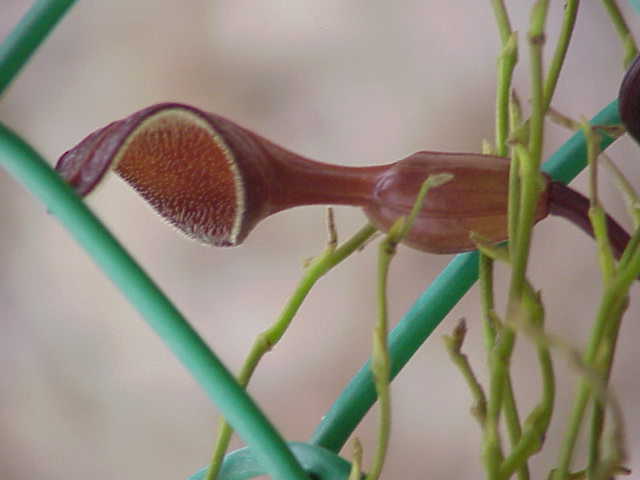
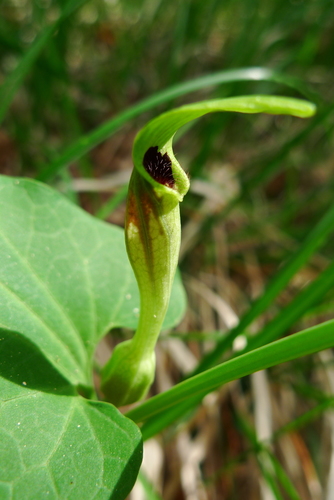
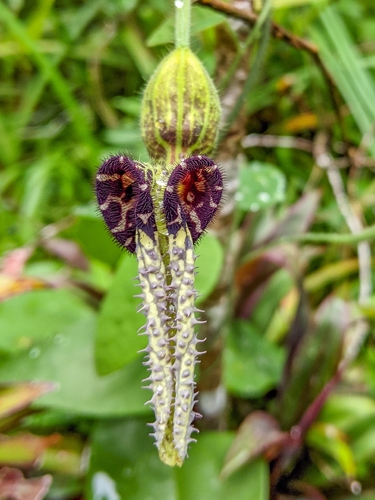
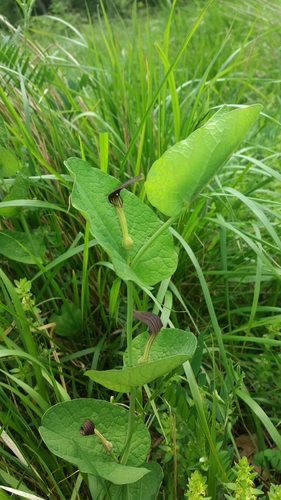
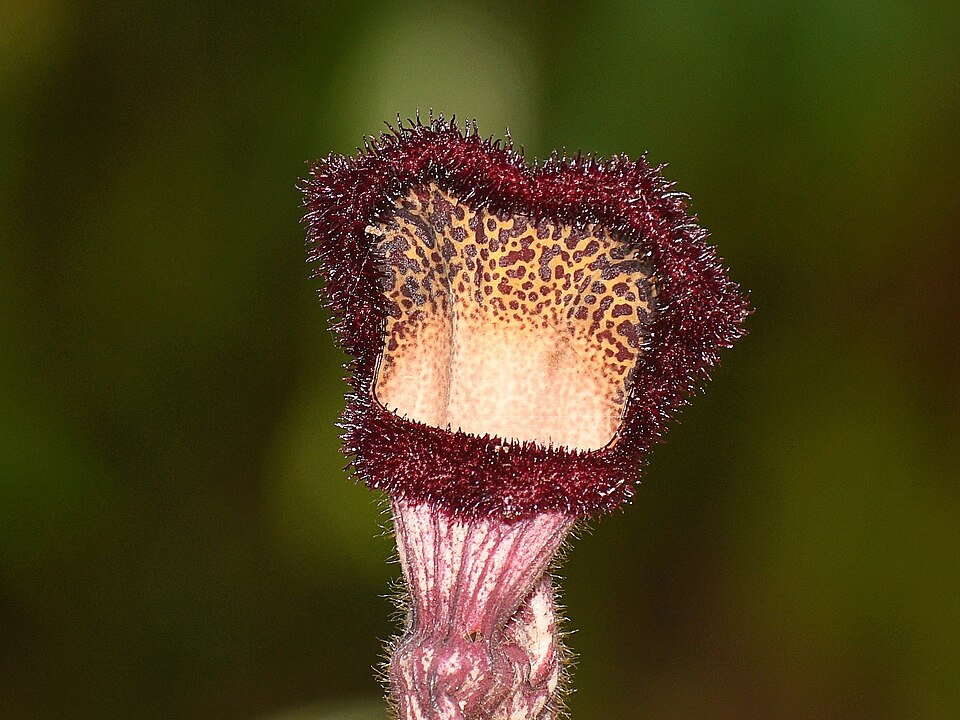
A herb. It grows on other plants. It usually grows on Acacia roots. It grows underground. It is a parasite growing on the roots of Lannea fulva (Engl.) Engl. (Anacardiaceae) and Acacia mellifera. It grows 10-15 cm high. It lacks leaves. It has runner like roots or rhizomes that are thick, hard and dark brown. The flowers are the only part visible above ground. They are brown and scaly and covered with coarse bristles. The flower buds turn rusty red on exposure to the air as they emerge from the ground. The flowers are 15 cm long. They have a bad smell and attract beetles. There are underground stems or rhizomes. The fruit are produced underground. The seeds are embedded in a pulp.
Edible Uses
The flowers are eaten raw or cooked. The fruit, which develops underground, is eaten raw or as a cooked vegetable, and can also be dried. The root tubers and shoots of underground stems are eaten raw, and the pulp surrounding the seeds is consumed.
Traditional Uses
The flowers are eaten raw and also cooked. The fruit are eaten raw and used as a vegetable. They are also dried. The root tubers are eaten raw. The fruit occurs underground and the pulp is eaten. The shoot of the underground stem is eaten raw.
Medicinal Uses
The underground stem is cut into pieces and boiled in water. The decoction is drunk to treat stomach-ache, dysentery, sore throat and retained placenta. The roots are used in the treatment of diarrhoea and to staunch haemorrhaging.
Distribution
It is a tropical plant. It grows in peat and organic soils. It can grow in arid places. It occurs in woodland and grassland up to 1,500 m above sea level in Tasmania. It grows in areas with a rainfall between 700-1,600 mm.
Where It Grows
Africa, Botswana, Central Africa, Congo, East Africa, Eswatini, Ethiopia, Kenya, Madagascar, Middle East, Saudi Arabia, Somalia, South Africa, Southern Africa, South Sudan, Sudan, Swaziland, Tanzania, Uganda, Yemen, Zimbabwe,
Cultivation
It can be grown by cuttings of the underground stem.
Propagation
Seed - it is able to germinate once the fruit has turned red, but will germinate far more quickly if it is left on the plant for another month or two before harvesting and sowing. Cuttings of the underground stem.
Other Uses
The roots are a source of tannins.
Production
Fruit are collected in the dry season.
Notes
There are 4 Hydnora species. They grow in Africa. Also put in the family Hydnoraceae.
Synonyms
Also Known As
Aurieng'o, Awurieng'o, Erukunyi, Fateekh, Ftookh, Guli, Imlokh, Kawo-riongo, Kongo amur, Kuaarer, Likeh, Liki, Muthigira, Nabeekh, Nyambo, Osuyo, Oyusu, Toga, Trateef, Twacheen
References (17)
- Addis, G., et al, 2013, The Role of Wild and Semi-wild Edible Plants in Household Food Sovereignty in Hamer and Konso Communities, South Ethiopia. Ethnobotany Research & Applications. 11:251-271
- Al-Fatimi, M. A., Wild Edible Plants Traditionally Collected and Used in Southern Yemen. Research Square. University of Aden. p 19
- East African Herbarium records, 1981, (As Hydnora johannis)
- Johns, T., and Kokwaro, J.O., 1991, Food Plants of the Luo of Siayo District, Kenya. Economic Botany 45(1), pp 103-113
- Lulekal, E., et al, 2011, Wild edible plants in Ethiopia: a review on their potential to combat food insecurity. Afrika Focus - Vol. 24, No 2. pp 71-121 (As Hydnora johannis)
Show all 17 references Hide references
- Maundu, P. et al, 1999, Traditional Food Plants of Kenya. National Museum of Kenya. 288p
- Mutie, F. M., et al, 2023, Important Medicinal and Food Taxa (Orders and Families) in Kenya, Based on Three Quantitative Approaches. Plants 2023, 12, 1145
- Newman, 1970, (As Hydnora johannis)
- Ngugi, G., 2000, Case Study from Kenya on Indigenous Wild Vegetables. Paper 4 Workshop in Kenya 1999. p 35
- Ojelel, S., et al, 2019, Wild edible plants used by communities in and around selected forest reserves of Teso-Karamoja region, Uganda. Journal of Ethnobiology and Ethnomedicine (2019) 15:3
- Oryema, C., et al, 2013, Edible wild fruit species of Gulu District, Uganda. International Journal of Biology and Biological Sciences Vol 2(4) pp 068-082
- Peters, C. R., O'Brien, E. M., and Drummond, R.B., 1992, Edible Wild plants of Sub-saharan Africa. Kew. p 116 (As Hydnora johannis)
- Royal Botanic Gardens, Kew (1999). Survey of Economic Plants for Arid and Semi-Arid Lands (SEPASAL) database. Published on the Internet; http://www.rbgkew.org.uk/ceb/sepasal/internet [Accessed 18th April 2011] (Also as Hydnora johannis) and (As Hydnora solmsiana)
- Ruffo, C. K., Birnie, A. & Tengnas, B., 2002, Edible Wild Plants of Tanzania. RELMA p 382
- Swaziland's Flora Database http://www.sntc.org.sz/flora
- Termote, C., et al, 2014, Assessing the potential of wild foods to reduce the cost of a nutritionally adequate diet: An example from eastern Baringo District, Kenya. Food and Nutrition Bulletin, vol. 35, no. 4
- World Checklist of Useful Plant Species 2020. Royal Botanic Gardens, Kew