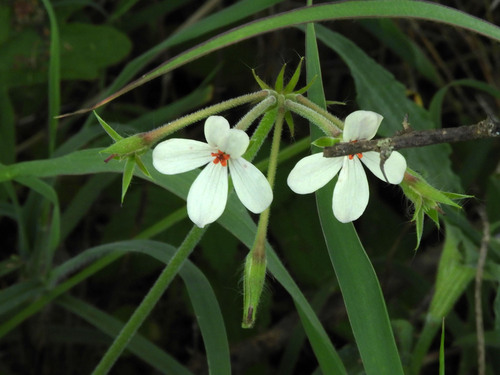
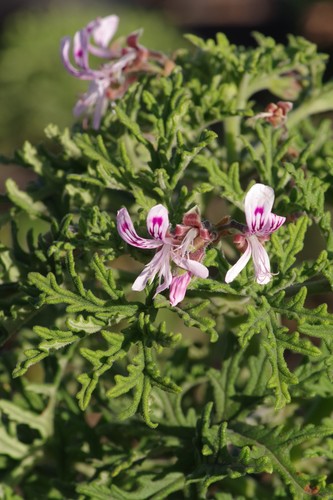
Erodium crinitum
Carolin
Native Crowsfoot, Blue Heron’s Bill, Blue crowsfoot
iNaturalist· cc-by
(c) Russell Best, some rights reserved (CC BY), uploaded by Russell Best
iNaturalist· cc-by-nc
(c) cinclosoma, some rights reserved (CC BY-NC)
Summary
A small annual herb tolerating light sandy, medium loamy, and heavy clay soils with preference for well-drained conditions. Grows in neutral to basic soils with low sun requirements and moderate to moist soil preference.
Description
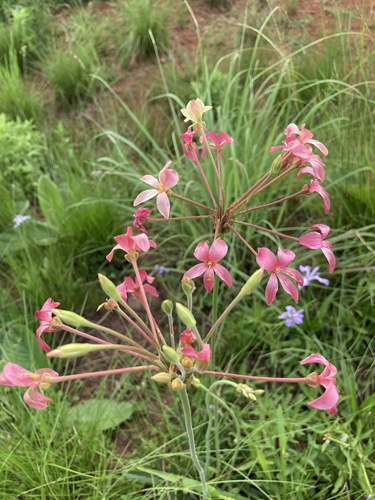
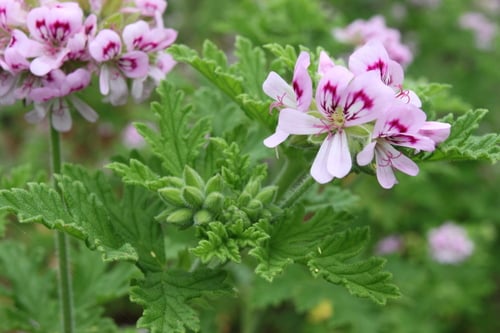
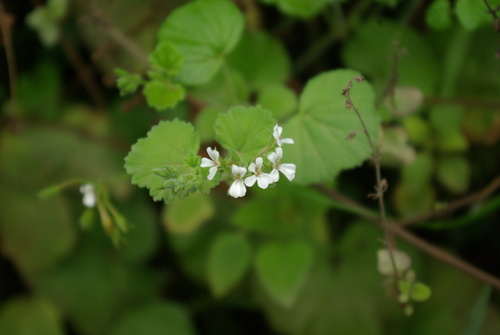
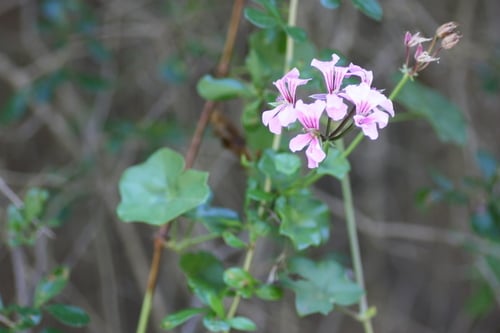
A small herb. The stems can hang down or curve up. They are hairy. The leaves are 1.5-4 cm long by 1.5-3 cm wide. They have a leaf stalk. Leaves have 3 main lobes and teeth along the edge. The flowers occur in groups of 2-6. They are 1.5 cm across. They are blue with yellow or white veins.
Edible Uses
Root is cooked before consumption.
Traditional Uses
The rhizomes are cooked and eaten.
This uses section is brief — help expand it
Medicinal Uses
None known
Distribution
It is a temperate plant. It grows on sandy or clay soils. It is normally in open locations. They need well drained soil. It is hardy to frost and extended dry periods.
Where It Grows
Australia*, Tasmania*,
Cultivation
We have almost no information on this species and do not know if it will be hardy in this country. It probably prefers a sunny well-drained position and a limy soil or at least one that is not acid.
Propagation
Sow seed directly outdoors as soon as ripe in late summer or in late spring. Germination typically occurs within 3 weeks.
Other Uses
None known Special Uses
Notes
There are about 200 Erodium species.
Also Known As
Corkscrew, Large parson's bands. Smooth leaf parson's bands
References (13)
- Cancilla, D., 2018, Ethnobotanical and Ethnozoological Values Desktop Assessment - Eliwana Project. p 40
- Cherikoff V. & Isaacs, J., The Bush Food Handbook. How to gather, grow, process and cook Australian Wild Foods. Ti Tree Press, Australia p 189, 195
- Cribb, A.B. & J.W., 1976, Wild Food in Australia, Fontana. p 160
- Cronin, L., 1989, The Concise Australian Flora. Reed. p 92
- Dashorst, G.R.M., and Jessop, J.P., 1998, Plants of the Adelaide Plains & Hills. Botanic Gardens of Adelaide and State Herbarium. p 92
Show all 13 references Hide references
- Elliot, W.R., & Jones, D.L., 1984, Encyclopedia of Australian Plants suitable for cultivation. Vol 3. Lothian. p 484
- Hunter, J.T., 2017, Is there a relationship between contemporary high Aboriginal plant resource locations and mapped vegetation communities? Cunninghamia 17:27-34. The Royal Botanic Garden Sydney. ISSN 2200 - 405X
- Lamp, C & Collet F., 1989, Field Guide to Weeds in Australia. Inkata Press. p 120
- Lazarides, M. & Hince, B., 1993, Handbook of Economic Plants of Australia, CSIRO. p 95
- Lim, T. K., 2015, Edible Medicinal and Non Medicinal Plants. Volume 9, Modified Stems, Roots, Bulbs. Springer p 41
- McKerney, M. & White, H., 2011, Bush Tucker, Boomerangs & Bandages. Border River-Gwyder Catchment Management Authority p 153
- Paczkowska, G. & Chapman, A.R., 2000, The Western Australian Flora. A Descriptive Catalogue. Western Australian Herbarium. p 252
- Plants for a Future database, The Field, Penpol, Lostwithiel, Cornwall, PL22 0NG, UK. http://www.scs.leeds.ac.uk/pfaf/