Eriogonum longifolium
Nutt.
Longleaf buckwheat
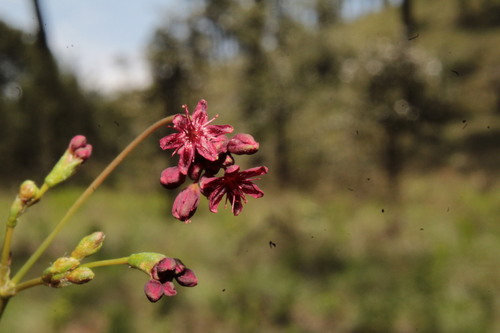
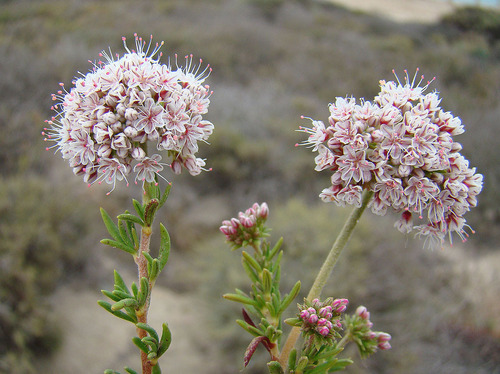
iNaturalist· cc-by-nc
(c) Sunny Fleming, some rights reserved (CC BY-NC), uploaded by Sunny Fleming
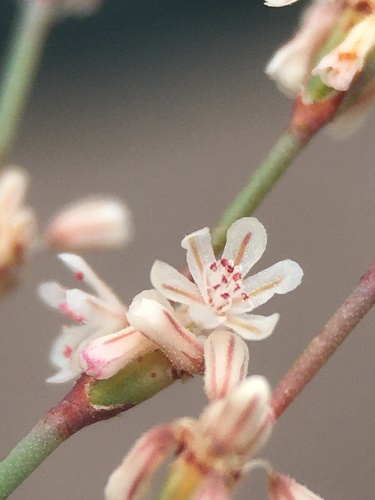
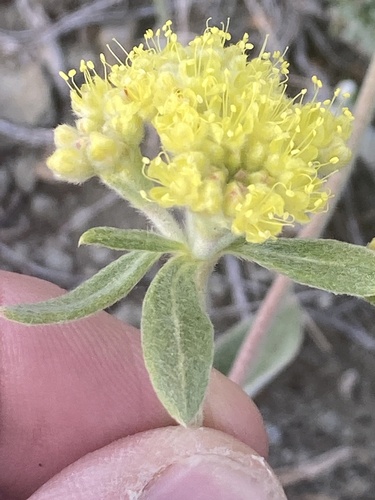
iNaturalist· cc-by-nc
(c) Eric Keith, some rights reserved (CC BY-NC), uploaded by Eric Keith
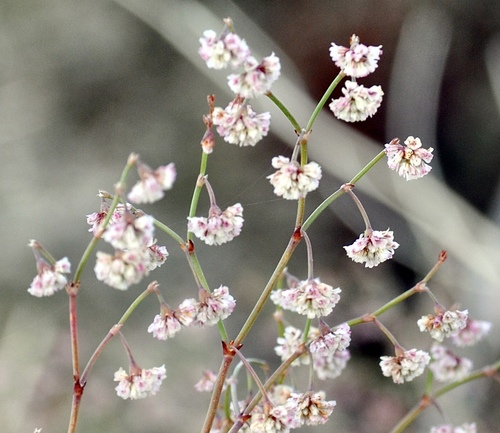
iNaturalist· cc-by
(c) Eric Knight, some rights reserved (CC BY)
Summary
Source: WikipediaEriogonum longifolium, the longleaf eriogonum or long-leaf wild buckwheat, is a dicot of the family Polygonaceae. In addition to populations of E. longifolium var. longifolium found in Arkansas, Kansas, Louisiana, Missouri, New Mexico, Oklahoma, and Texas, there are varieties or subspecies that are geographically isolated and at various levels of endangerment. According to the University of Michigan Native American Ethnobotony database, Eriogonum longifolium has been used as a food by the Kiowa and as a medicinal by the Comanche. Eriogonuum longifolium leaves are described as being lanceolate, oblanceolate or oblong and with tomentose coating; the plant develops flowering stems which are up to 17 dm (67 in) tall.
Description
A herb. The leaves are oblong to sword shaped The flowering stems are 70 cm tall.
This description is brief — help expand it
Edible Uses
The root is edible, though no further details on preparation or use have been recorded.
Traditional Uses
The roots are eaten.
This uses section is brief — help expand it
Medicinal Uses
An infusion of the root has been used to treat stomach disorders.
Distribution
It is a temperate plant.
Where It Grows
North America, USA,
Cultivation
We have very little information on this species and do not know if it will be hardy in Britain. The notes below are based on the needs of other members of this genus. Requires a loose lean gritty well-drained soil in a very sunny position. Succeeds in dry soils. Tolerates exposed positions. Requires some protection from winter wet. Established plants resent root disturbance.
Propagation
Sow seed as soon as it is ripe in autumn in a sandy compost in a greenhouse. Stored seed can be sown in early spring in a warm greenhouse. Prick seedlings into individual pots once large enough to handle and grow on under glass for at least their first winter. Plant out in late spring or early summer after the last expected frosts. Division in early spring must be done carefully, as the plant resents root disturbance. Work around the edges of the clump without lifting the whole plant, teasing out divisions with as much root as possible, then pot them up and grow in light shade in the greenhouse until well rooted before planting out in summer. Cuttings of greenwood with a heel can also be taken in summer.
Other Uses
No other uses are known for this plant.
Notes
There are 150 Eriogonum species.
References (4)
- Kermath, B. M., et al, 2014, Food Plants in the Americas: A survey of the domesticated, cultivated and wild plants used for Human food in North, Central and South America and the Caribbean. On line draft. p 340
- Kiple, K.F. & Ornelas, K.C., (eds), 2000, The Cambridge World History of Food. CUP p 1790
- Moerman, D. F., 2010, Native American Ethnobotany. Timber Press. p 222
- Plants for a Future database, The Field, Penpol, Lostwithiel, Cornwall, PL22 0NG, UK. http://www.scs.leeds.ac.uk/pfaf/