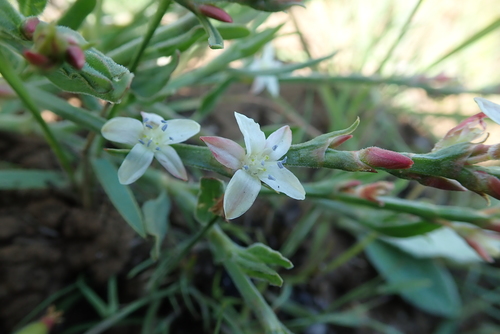
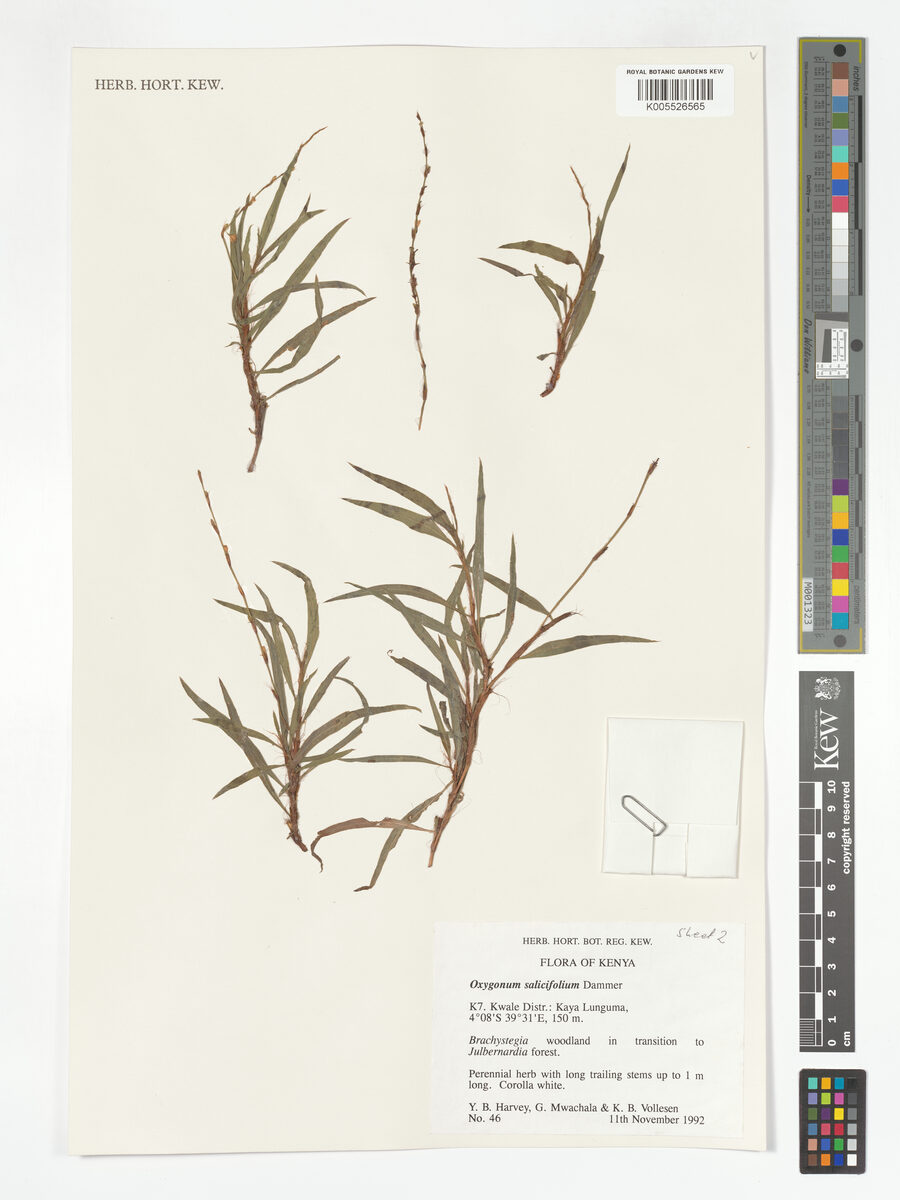
Eriogonum atrorubens
Engelm
Red Wild Buckwheat
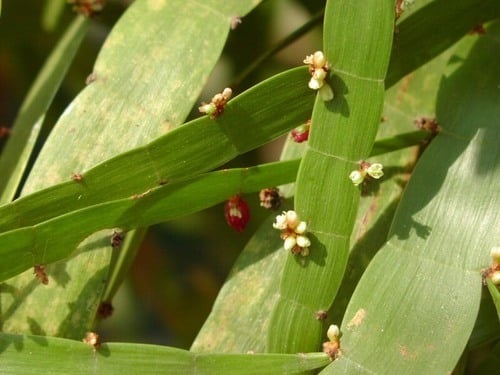
iNaturalist· cc-by-nc
(c) Arturo Castro Castro, some rights reserved (CC BY-NC), uploaded by Arturo Castro Castro
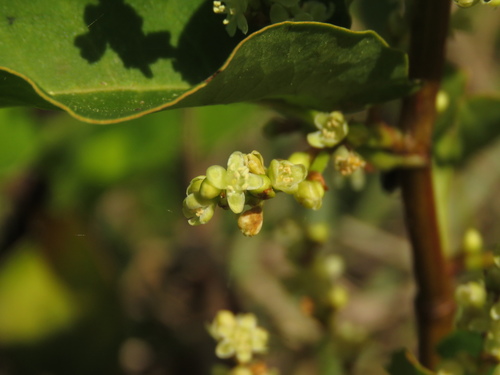
iNaturalist· cc-by-nc
(c) Mark Fishbein, some rights reserved (CC BY-NC), uploaded by Mark Fishbein
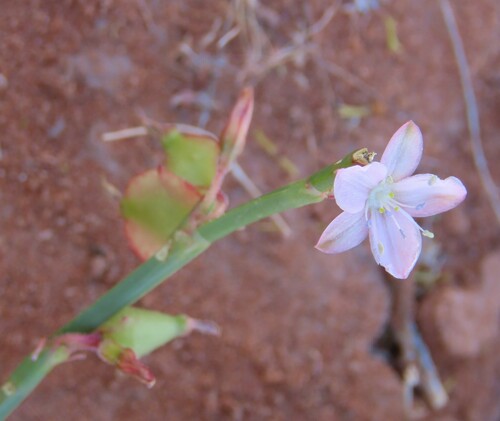
iNaturalist· cc-by-nc
(c) Mark Fishbein, some rights reserved (CC BY-NC), uploaded by Mark Fishbein
Summary
A perennial growing to 1 m (3 ft 3 in) tall, flowering from July to October. Hermaphroditic. Grows in light sandy and medium loamy, well-drained soils that may be nutrient-poor. Tolerates mildly acid to basic pH. Requires full sun and adapts to dry or moist conditions.
Description
A herb, It grows 50-100 cm tall. It has a taproot. The leaves at the base have a stalk 3-8 cm long.
This description is brief — help expand it
Edible Uses
The root is chewed for its edible qualities.
Traditional Uses
The root is chewed.
This uses section is brief — help expand it
Medicinal Uses
The root is used medicinally in Mexico as a treatment for toothache.
Distribution
It is a subtropical plant. It grows between 1,800-2,000 m above sea level.
Where It Grows
Central America, Mexico, North America,
Cultivation
We have very little information on this species and do not know if it will be hardy in Britain. The following notes are based on the general needs of the genus. Requires a loose lean gritty well-drained soil in a very sunny position. Succeeds in dry soils. Tolerates exposed positions. Requires some protection from winter wet. Established plants resent root disturbance.
Propagation
Sow seed as soon as it is ripe in autumn in a sandy compost in a greenhouse. Stored seed can be sown in early spring in a warm greenhouse. Prick seedlings into individual pots once large enough to handle and grow on under glass for at least their first winter. Plant out in late spring or early summer after the last expected frosts. Division in early spring must be done carefully, as the plant resents root disturbance. Work around the edges of the clump without lifting the whole plant, teasing out divisions with as much root as possible, then pot them up and grow in light shade in the greenhouse until well rooted before planting out in summer. Cuttings of greenwood with a heel can also be taken in summer.
Other Uses
No other uses are known for this plant.
Notes
There are 150 Eriogonum species. The root is used as medicine.
References (1)
- Plants for a Future database, The Field, Penpol, Lostwithiel, Cornwall, PL22 0NG, UK. http://www.scs.leeds.ac.uk/pfaf/