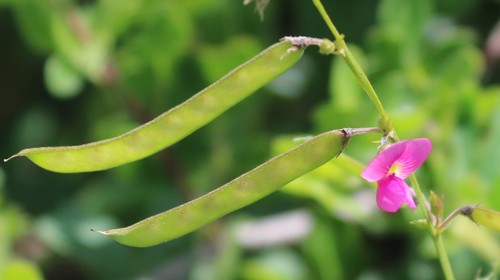
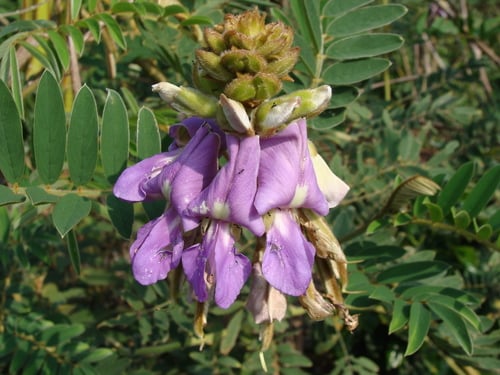
Pisum sativum arvense - (L.)Poir.
(L.)Poir.
Field Pea
gbif· cc-by
GBIF
gbif· cc-by
GBIF
gbif· cc-by
GBIF
Description
Pisum sativum arvense is a ANNUAL growing to 2 m (6ft 7in). It is not frost tender. It is in flower from May to September, and the seeds ripen from July to October. The species is hermaphrodite (has both male and female organs) and is pollinated by Occasionally bees. The plant is self-fertile. It can fix Nitrogen. Suitable for: light (sandy) and medium (loamy) soils and prefers well-drained soil. Suitable pH: neutral and basic (mildly alkaline) soils. It cannot grow in the shade. It prefers moist soil.
Edible Uses
Seed - cooked or sprouted and eaten raw. A good source of protein. The seeds of this sub-species tend to be of poorer quality than the species, being less rich in sugars. They are grown mainly for use when mature and dried. Young leaves - cooked.
Medicinal Uses
Contraceptive Skin. The seed is contraceptive, fungistatic and spermacidal. The dried and powdered seed has been used as a poultice on the skin where it has an appreciable affect on many types of skin complaint including acne. The oil from the seed, given once a month to women, has shown promise of preventing pregnancy by interfering with the working of progesterone. The oil inhibits endometrial development. In trials, the oil reduced pregnancy rate in women by 60% in a 2 year period and 50% reduction in male sperm count was achieved.
Distribution
S. Europe? An occasional escape from cultivation in Britain.
Where It Grows
Coming Soon
Cultivation
Requires a well-drained moisture retentive soil. Prefers a calcareous soil. Prefers a rich loamy soil. A light soil and a sheltered position is best for early sowings. This a more vigorous form of P. sativum with less sweet seeds which are usually eaten as a protein crop when they are mature. This sub-species is taken to include the Maple peas with varieties such as Minerva and Marathon. Other varieties included in this group are 'Bavarian pea', 'Black-podded pea', East Prussian pea', Sand pea', Smyrna pea' and 'Konigsberger pea'. This species has a symbiotic relationship with certain soil bacteria, these bacteria form nodules on the roots and fix atmospheric nitrogen. Some of this nitrogen is utilized by the growing plant but some can also be used by other plants growing nearby. When removing plant remains at the end of the growing season, it is best to only remove the aerial parts of the plant, leaving the roots in the ground to decay and release their nitrogen.
Propagation
Pre-soak the seed for 12 hours in warm water and sow it in situ from early to late spring. Germination should take place within 2 weeks.
Other Uses
Green manure. Sometimes grown as a spring sown green manure, plants produce a good bulk and fix a large quantity of nitrogen.