Oxygonum salicifolium
Dammer
gbif· cc-by
Royal Botanic Gardens, Kew
gbif· cc-by
Royal Botanic Gardens, Kew
gbif· cc-by-nc-sa
MBG
Description
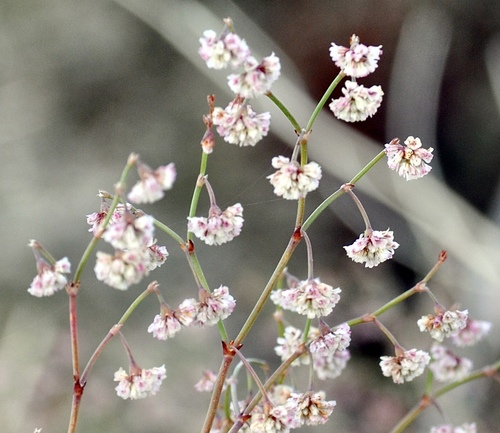
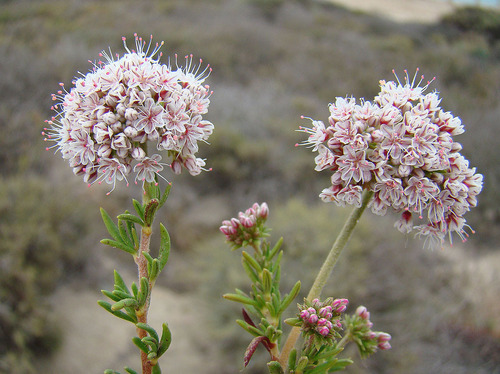
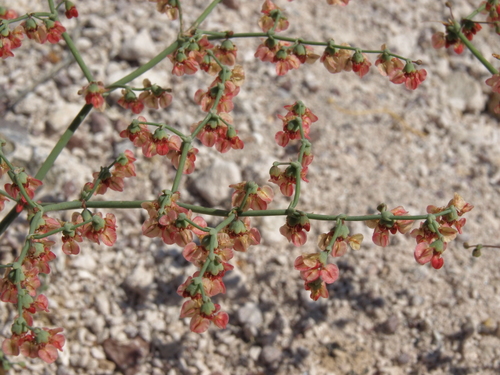
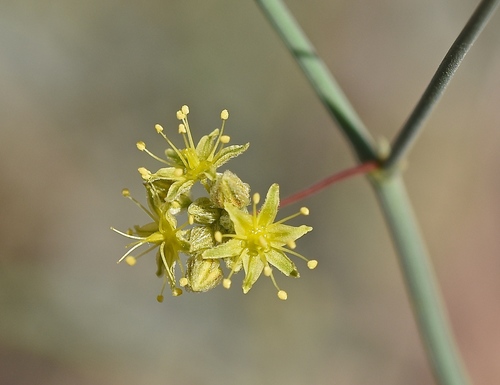
A slender trailing herb. It has many branches. The stems can be 1 m long. The leaves are alternate and simple. The sheath around the stem is cylinder shaped and 1 cm long and has red hairs at the end. The leaves are narrowly oval and 3-7 cm long by 2-20 mm wide. The flowers are in a spike like group 12-20 cm long. The flowers are tube shaped. The fruit is a softly hairy nut.
Edible Uses
The leaves are cooked and eaten, often prepared together with other leaves to improve the taste, and used as a vegetable.
Traditional Uses
The leaves are cooked and eaten. They are often cooked with other leaves to improve the taste.
This uses section is brief — help expand it
Distribution
It is a tropical plant. In Kenya it grows in coastal regions.
Where It Grows
Africa, East Africa, Kenya, Tanzania,
Cultivation
The plants are polygamous - the flowers can be either bisexual or unisexual.
Other Information
It is harvested from the wild and is of minor and local importance.
Nutrition
| Part | Moisture | kJ | kcal | Protein | Vit A | Vit C | Iron | Zinc |
|---|---|---|---|---|---|---|---|---|
| Leaves | 88.7 | — | — | 2.3 | — | — | 10.6 | — |
Also Known As
Bamba, Kimbiri, Kindiri
References (6)
- East African Herbarium records, 1981,
- Grubben, G. J. H. and Denton, O. A. (eds), 2004, Plant Resources of Tropical Africa 2. Vegetables. PROTA, Wageningen, Netherlands. p 407
- Maundu, P. et al, 1999, Traditional Food Plants of Kenya. National Museum of Kenya. 288p
- Mutie, F. M., et al, 2023, Important Medicinal and Food Taxa (Orders and Families) in Kenya, Based on Three Quantitative Approaches. Plants 2023, 12, 1145
- Peters, C. R., O'Brien, E. M., and Drummond, R.B., 1992, Edible Wild plants of Sub-saharan Africa. Kew. p 162
Show all 6 references Hide references
- World Checklist of Useful Plant Species 2020. Royal Botanic Gardens, Kew