Murraya koenigii - (L.) Spreng.
(L.) Spreng.
Curry tree, Curry leaf tree
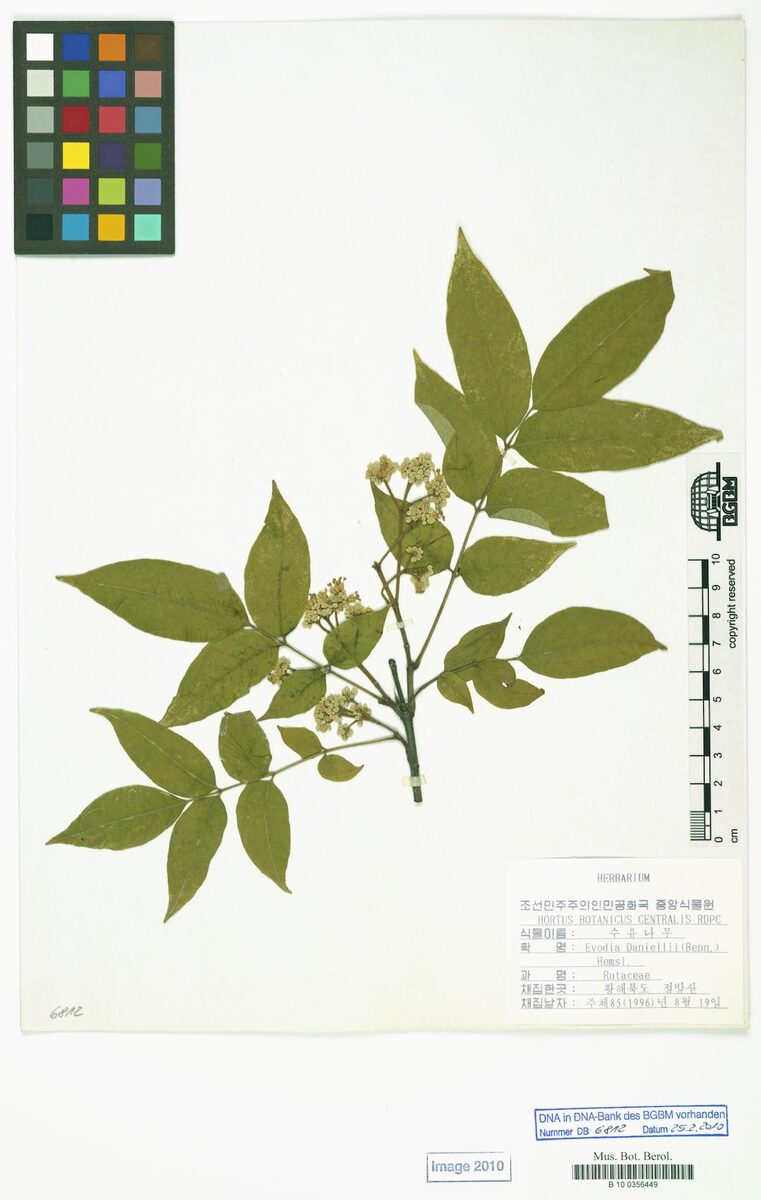
gbif· cc-by-nc
dawolef
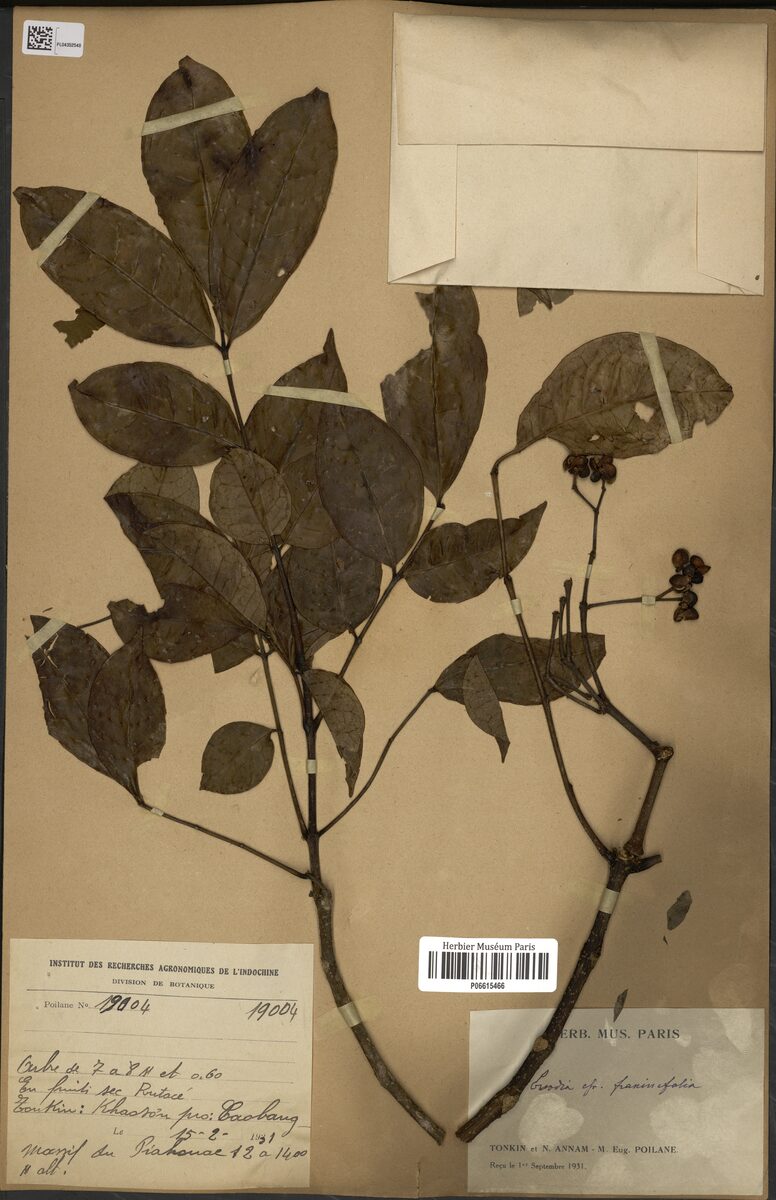
gbif· cc-by
scallions
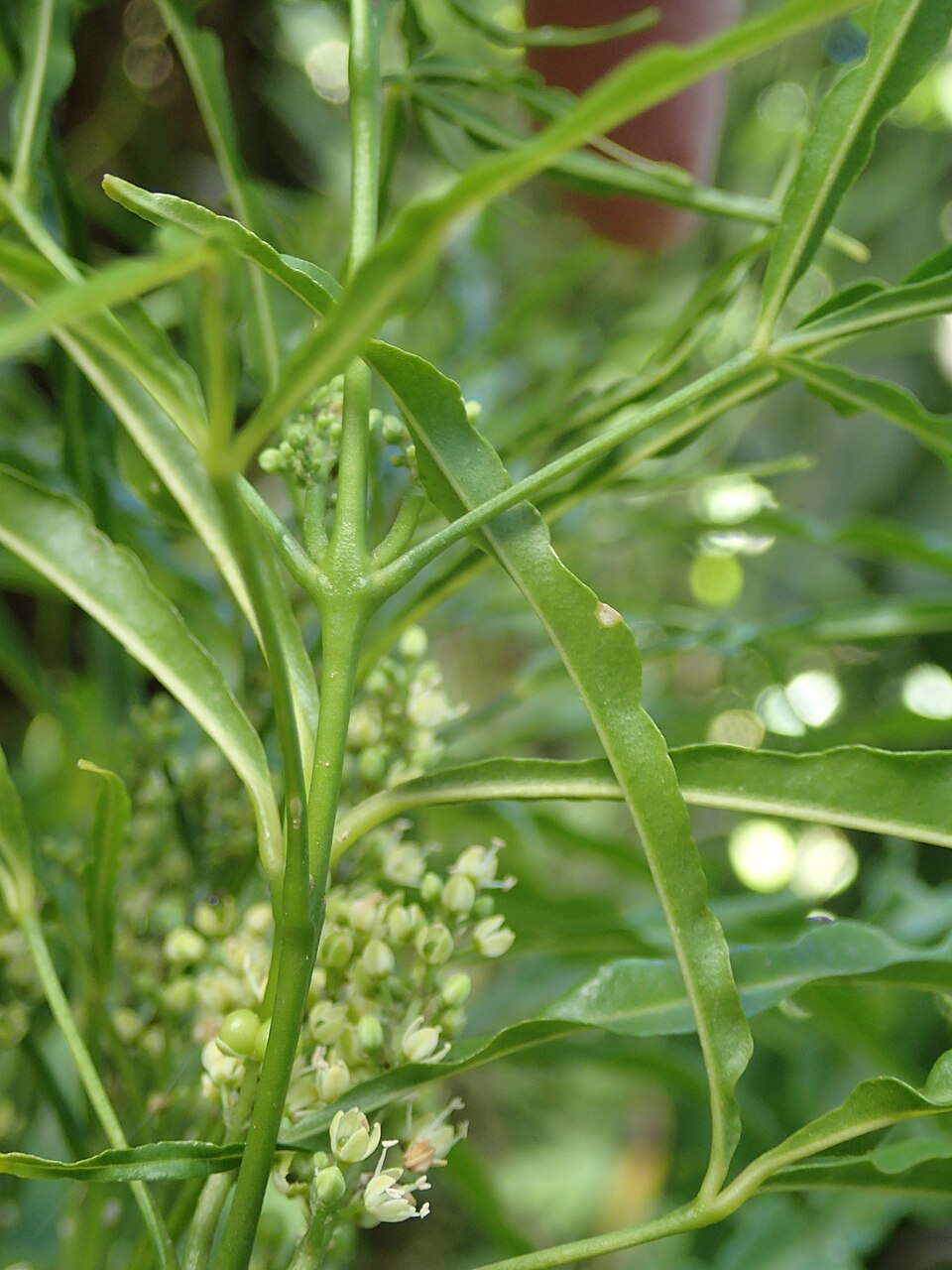
gbif· cc-by
scallions
Description
Murraya koenigii is an evergreen Tree growing to 4 m (13ft) by 3 m (9ft) at a medium rate. See above for USDA hardiness. It is hardy to UK zone 10 and is frost tender. The plant is self-fertile. It is noted for attracting wildlife. Suitable for: light (sandy), medium (loamy) and heavy (clay) soils and prefers well-drained soil. Suitable pH: mildly acid, neutral and basic (mildly alkaline) soils. It can grow in semi-shade (light woodland) or no shade. It prefers dry or moist soil and can tolerate drought.
Edible Uses
Oil. Leaves - cooked. The pungent, aromatic leaves are a common ingredient in curries, chutneys, stews etc. Leaves are first fried in ghee or oil until crisp, then added to the curry. An indispensible ingredient in southern Indian curries. The leaves retain their characteristic flavour and aroma even after drying. The leaves dried and powdered and used in spice blends. Leaves can be sun-dried and stored. Another report says that the leaves are little know away from areas in which the plant is grown because the leaves lose their flavour upon being dried. Fruit - a peppery flavour. The black fruit is 8 - 10mm in diameter. Curry plant (Helichrysum italicum) is a totally unrelated plant (an herbaceous annual of the Aster family) that has a curry-like aroma but is not recommended as a substitute for curry leaf in cooking.
Medicinal Uses
Antidiarrhoeal Antiemetic Antiinflammatory Dysentery Febrifuge Stimulant Stomachic Tonic. Curry leaf contains several medically active constituents including a glycoside called koenigin, an essential oil and tannins. It is a warming, strongly aromatic herb that improves appetite and digestion. The leaves, roots and bark can all be used internally in the treatment of digestive problems. It has been shown that the leaves increase digestive secretions and relieve nausea, indigestion and vomiting. The leaves can be used internally in treating constipation, colic and diarrhoea. The leaves are used in the treatment of diarrhoea and dysentery. The leaves can be applied externally as a poultice to treat burns and wounds. The leaves are harvested as required and used fresh. The roots and bark are harvested as required and can be used fresh or dried. The juice of the fruit, mixed with lime juice (Citrus aurantiifolia) is applied to soothe insect bites and stings. A paste made from the bark is applied to the bites of poisonous insects and other animals.
Distribution
E. Asia - China, Indian subcontinent, Myanmar, Thailand, Laos, Vietnam.
Where It Grows
TEMPERATE ASIA: Guangdong Sheng, Hainan Sheng, Yunnan Sheng (south),China. TROPICAL ASIA: Bangladesh, Bhutan, India, Sikkim, Andhra Pradesh, Assam, Bihar, Himachal Pradesh, Jammu and Kashmir, Kerala, Meghalaya, Odisha, Tamil Nadu, Uttar Pradesh, West Bengal, Karnataka, Sri Lanka, Nepal, Pakistan (north), India, Andaman and Nicobar Islands, Laos, Myanmar, Thailand (north), Vietnam,
Cultivation
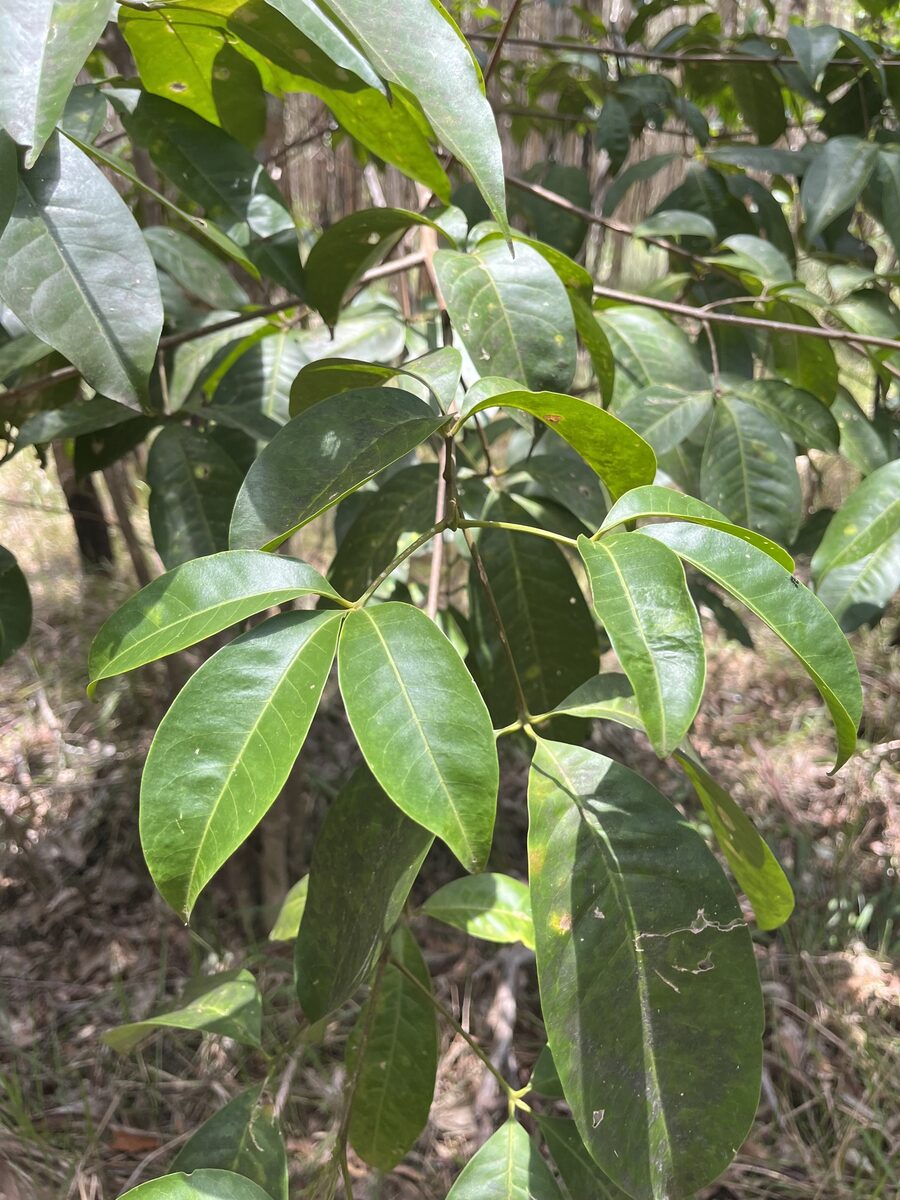
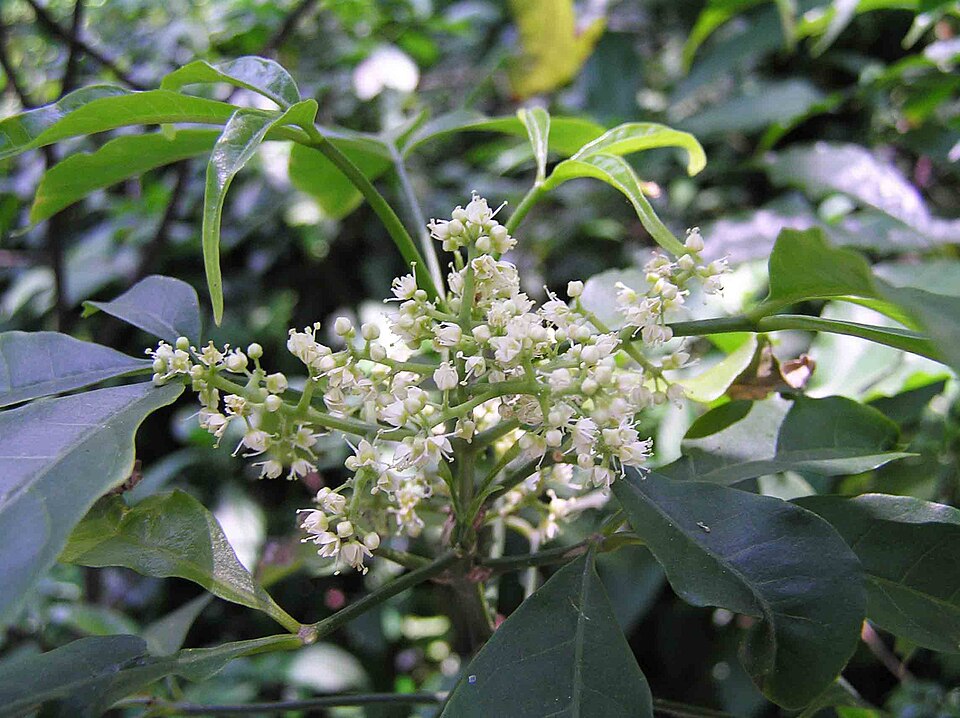
A small evergreen tree which with aromatic compound leaves growing 3-6m in height. Grows best in full sun. A very easily grown plant, succeeding in most soils and situations. Prefers a fertile, humus-rich, moisture-retentive but well-drained, light soil. Prefers a pH in the range 5.5 - 6.5, tolerating 5 - 7. Leaves may drop in colder areas. Established plants are drought tolerant. A plant of the moist tropics, where it is found at elevations up to 1,600 metres. It grows best in areas where annual daytime temperatures are within the range 27 - 41°c, but can tolerate 8 - 47°c. They will not tolerate heavy frosts. It prefers a mean annual rainfall of 1,400 - 1,800mm, but tolerates 500 - 2,500mm. Plants can sucker freely and also spreads by seeds, so it can become invasive. Due to the vigorous suckering, plants are unsuitable for small gardens. Best sited in locations sheltered from strong winds. Plants can be grown in overwintered indoor containers in colder climates, allowing soil to dry between waterings. The leaves can be picked about one year after planting. Main production starts after about 3 years. 2-2.5 kg yields per square metre are possible. The Curry tree is self-fertile. Leaves can be harvested throughout the year, typically from Spring to Autumn. The Curry tree flowers in Spring to Summer.
Propagation
Seed. Division of suckers in the growing season. Very easy. Cuttings of half-ripe wood. A spacing of 3.5m is used.
Other Uses
Containers Hair Hedge Houseplant Oil Repellent. Agroforestry Uses: Plants can be grown as a hedge. Known for its aromatic leaves, making it beneficial for companion planting. Other Uses: An oil is extracted from the ripe seeds. An oil obtained from the leaves (essential oil?) is used in the soap industry. The leaves are thought to be a hair tonic in India, where it is believed that they can prevent the hair greying. The flowers are used to repel shrews. Container plant - overwintered indoors in colder areas. An interesting house plant, the leaflets of which can be snipped for cooking.
Synonyms
Also Known As
Ar-pa-til, Asare, Bai karee, Ban-neem, Barsan, Barsanga, Basango, Bhursunga, Bishahari, Boke, Bokejanu no, Bokraitee, Bowala, Curryblatt, Curry bwlai, Curry patta, Daun kari, Dengjari, Duo ye jiu li xiang, Efinrin oso, Foglio di curry, Gandaela, Gandhela, Gandhla, Gandi, Gandla, Gangela, Gani, Goranimb, Hikandhi faiy, Hikandhi gas, Hoja de cari, Indian bay leaf, Jhirang, Ka li cai, Kadhilimbdo, Kadi patta, Kantrok samlor, Kantrook, Kara keeling, Karapincha, Karepaku, Karhinimb, Kari, Kariaphulli, Karibevu, Kari pata, Karipatta, Karipattar, Karivempu, Kariveppilei, Karpoolay, Karupillay, Karuvembu, Karuvepillai, Karuveppilei, Kathneem, Kathnim, Kattuveppilei, Konda karivepaku, Kurry patta, Kyaung-thwe, Ma jiao ye, Mechia sag, Meetha neem, Mithhalimb, Mitha-neem, Mitho nim, Mvuje, Nangken nyibumturum, Narashingha, Narasingha, Narasinha, Nolsing, Nwrsing, Poospala, Pyi-naw-thein, Pyindaw-thein, Pyin-taw-sein, Salam koja, Sam-khatsi, Surabhininiba, Sweet neem, Tejpatii, Thamsi-youngihabia, Thengsakso, Thenhskso.