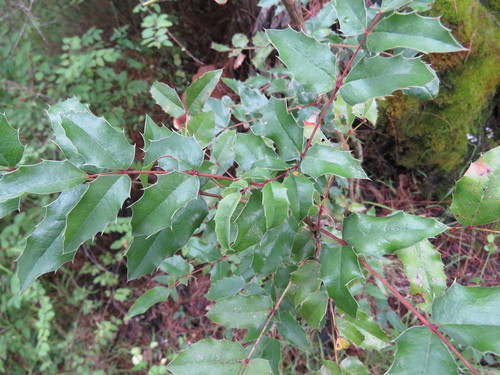
Mahonia fortunei - (Lindl.)Fedde.
(Lindl.)Fedde.
Fortune's Mahonia
gbif· cc-by-nc
a0937779958
gbif· cc-by-nc
sgreen1125
gbif· cc-by-nc
howengkun
Description
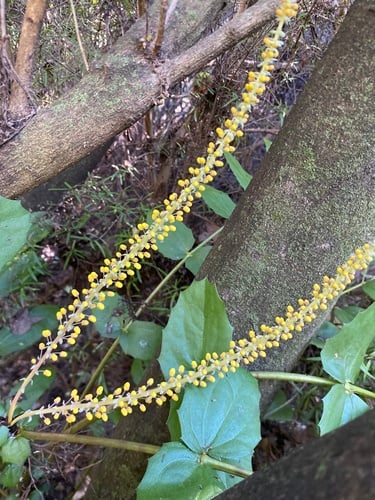
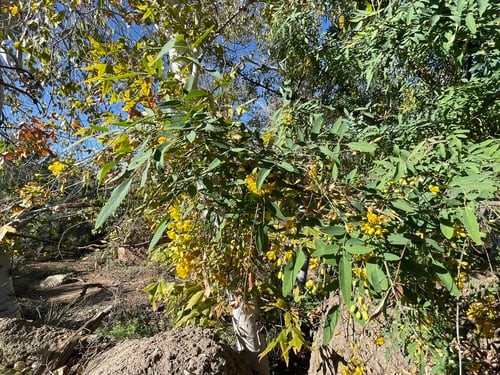
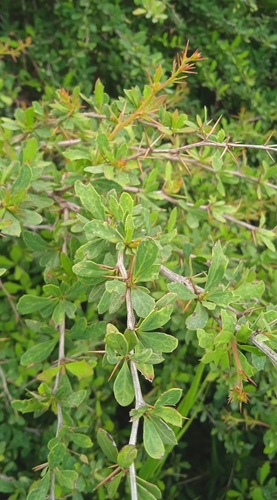
Mahonia fortunei is an evergreen Shrub growing to 2 m (6ft) by 3 m (9ft) at a slow rate. See above for USDA hardiness. It is hardy to UK zone 7 and is not frost tender. It is in leaf all year, in flower from October to December. The species is hermaphrodite (has both male and female organs) and is pollinated by Insects. Suitable for: light (sandy), medium (loamy) and heavy (clay) soils and can grow in heavy clay and nutritionally poor soils. Suitable pH: mildly acid, neutral and basic (mildly alkaline) soils. It can grow in full shade (deep woodland) semi-shade (light woodland) or no shade. It prefers moist soil.
Edible Uses
Fruit - raw or cooked. An acid flavour, but it makes an acceptable dessert fruit and is especially nice when added to muesli or porridge. Unfortunately, there is relatively little flesh and a lot of seeds.
Medicinal Uses
Antibacterial Antitumor Cancer Dysentery Febrifuge Odontalgic Tonic. The leaf is anticancer. A decoction of the root is febrifuge and odontalgic. Berberine, universally present in rhizomes of Mahonia species, has marked antibacterial effects and is used as a bitter tonic. Since it is not appreciably absorbed by the body, it is used orally in the treatment of various enteric infections, especially bacterial dysentery. It should not be used with Glycyrrhiza species (Liquorice) because this nullifies the effects of the berberine. Berberine has also shown antitumour activity. The root and root bark are best harvested in the autumn.
Distribution
E. Asia - China.
Where It Grows
TEMPERATE ASIA: China (Guangxi Zhuangzu Zizhiqu, Guizhou Sheng, Hubei Sheng, Jiangxi Sheng, Sichuan Sheng, Zhejiang Sheng)
Cultivation
An easily grown shrub, it thrives in any good garden soil including heavy clays. Prefers a semi-shaded woodland position in a damp, slightly acid to neutral humus-rich soil. Plants are not very hardy in Britain, they do not succeed at Kew Gardens, but grow well in milder areas. The young growth in spring can be damaged by late frosts. Plants are very tolerant of pruning and can be cut right back into old wood if they have outgrown their welcome. Hybridizes freely with other members of this genus. The flowers are very sweetly scented. Due to their habit of flowering in late autumn, fruits are rarely formed in Britain.
Propagation
Seed - best sown as soon as it is ripe in a greenhouse. It usually germinates in the spring. 'Green' seed (harvested when the embryo has fully developed but before the seed case has dried) should be sown as soon as it is harvested and germinates within 6 weeks. Stored seed should be sown as soon as possible in late winter or spring. 3 weeks cold stratification will improve its germination, which should take place in 3 - 6 months at 10°c. Prick out the seedlings when they are large enough to handle and grow them on in the greenhouse for at least their first winter. Plant them out in late spring or early summer and consider giving them some protection from the cold for their next winter. Division of suckers in spring. Whilst they can be placed direct into their permanent positions, better results are achieved if they are potted up and placed in a frame until established. Leaf cuttings in the autumn.