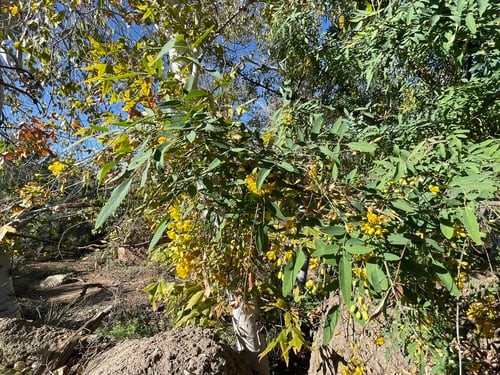
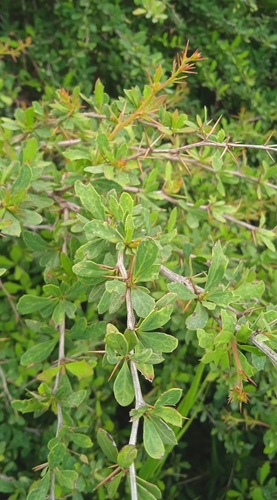
Epimedium grandiflorum
C. Morren
Barrenwort, Medion herb, Bishop's hat
iNaturalist· cc-by
(c) Marco Mussita, some rights reserved (CC BY), uploaded by Marco Mussita
iNaturalist· cc-by-nc
(c) 空猫 T. N, some rights reserved (CC BY-NC)
iNaturalist· cc-by-sa
(c) MrClementi, some rights reserved (CC BY-SA)
Summary
Source: WikipediaEpimedium grandiflorum, the large flowered barrenwort, or bishop's hat, is a species of flowering plant in the family Berberidaceae, native to Japan and Korea.
Description
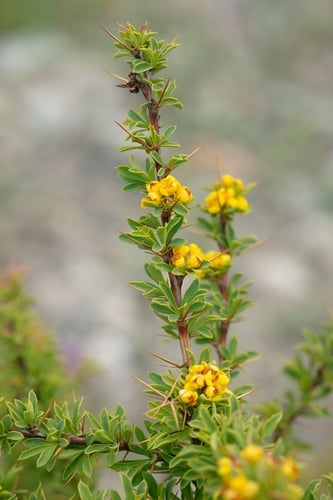
A perennial plant. It grows 20-30 cm high and 30-40 cm across. The flowers are mauve-pink and spurs. The young leaflets are coppery brown. Later they change to light green. The flowers are reddish-pink.
Edible Uses
Young plants and young leaves are edible cooked — they should be soaked and then boiled, which suggests the leaves carry some bitterness that soaking helps to remove.
Traditional Uses
The leaves are boiled and eaten with oil and salt.
This uses section is brief — help expand it
Medicinal Uses
The aerial parts of the plant are antiasthmatic, antibacterial, antirheumatic, antitussive, aphrodisiac, hypoglycaemic, tonic, and vasodilator, and their use lowers blood sugar levels. The plant is used in the treatment of impotence, seminal emissions, lumbago, arthritis, numbness and weakness of the limbs, hypertension, and chronic bronchitis. It has an action on the genitals similar to the male sex hormone and can increase the weight of the prostate gland and seminal vesicle. It has been shown to increase copulation in animals and to increase the secretion of semen. The leaves are used specifically as an aphrodisiac; when leaf extract is administered orally it increases the frequency of copulation in animals.
Distribution
A temperate plant. It will grow in most soils. It is frost hardy. It is best in a protected, shaded, moist position. It suits hardiness zones 5-9.
Where It Grows
Asia, Australia, China, Europe*, Japan, Korea, Manchuria, Tasmania,
Cultivation
Succeeds in any fertile humus-rich soil, preferring a moist but well-drained peaty loam. Requires a lime-free soil. Grows best in the light dappled shade of a woodland. Plants can succeed in the dry shade of trees. A shallow-rooting plant, the rhizomes creeping just below the soil and the finer roots occupying the top 30cm of the soil. A clump-forming species, the rhizomes making only short new growth each year, it needs to be divided every 3 - 4 years in order to maintain vigour. Plants are hardy to about -20°c, though the flowers in spring can be damaged by late frosts. A very ornamental plant, there are several named varieties. It grows well in the rock garden or wild garden. Plants are self-sterile and so more than one clone is required for cross-fertilization in order for seed to be produced. Plants will often hybridise with other species growing nearby. Members of this genus are rarely if ever troubled by browsing deer or rabbits.
Propagation
Seed is best sown in a cold frame as soon as it ripens in late summer. Stored seed should be sown as early in the year as possible in a cold frame. Prick seedlings out into individual pots when large enough to handle and grow on in light shade in a cold frame or greenhouse for at least their first winter, then plant out in mid to late summer. Division is best carried out in August to September according to one source, or in late spring according to another. Larger clumps can go directly into permanent positions, though smaller clumps are better potted up and grown on in a cold frame until well rooted before planting out in spring. Cuttings can be taken in late summer.
Other Uses
Makes a good ground cover plant.
Notes
There are over 44 Epimedium species.
Synonyms
Also Known As
Bishop's mitre, Horny goat weed
References (10)
- Belgique Hort. 2:141. 1851
- Bodkin, F., 1991, Encyclopedia Botanica. Cornstalk publishing, p 383
- Brickell, C. (Ed.), 1999, The Royal Horticultural Society A-Z Encyclopedia of Garden Plants. Convent Garden Books. p 400
- Chen, B. & Qiu, Z., Consumer's Attitudes towards Edible Wild Plants, Ishikawa Prefecture, Japan. p 23 www.hindawi.com/journals/ijfr/aip/872413.pdf
- Cundall, P., (ed.), 2004, Gardening Australia: flora: the gardener's bible. ABC Books. p 542
Show all 10 references Hide references
- Hibbert, M., 2002, The Aussie Plant Finder 2002, Florilegium. p 93
- Joyce, D., 1998, The Garden Plant Selector. Ryland, Peters and Small. p 224
- Plants for a Future database, The Field, Penpol, Lostwithiel, Cornwall, PL22 0NG, UK. http://www.scs.leeds.ac.uk/pfaf/
- READ, (As Epimedium macranthum)
- Ryan, S., 2008, Dicksonia. Rare Plants Manual. Hyland House. p 101