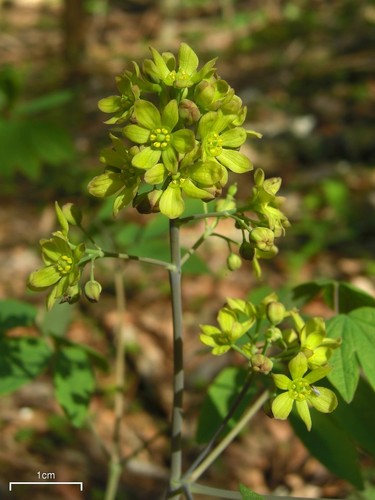
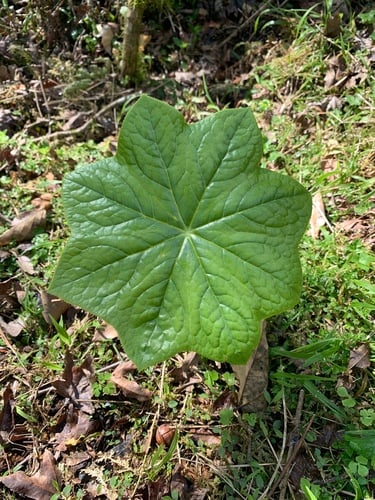
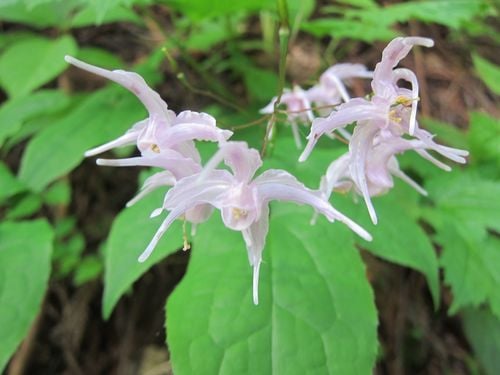
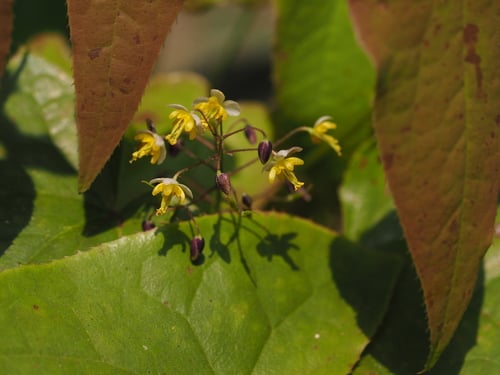
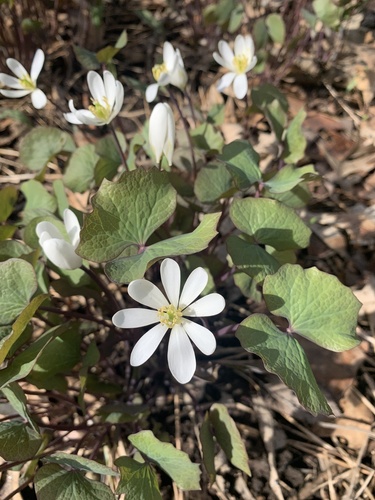
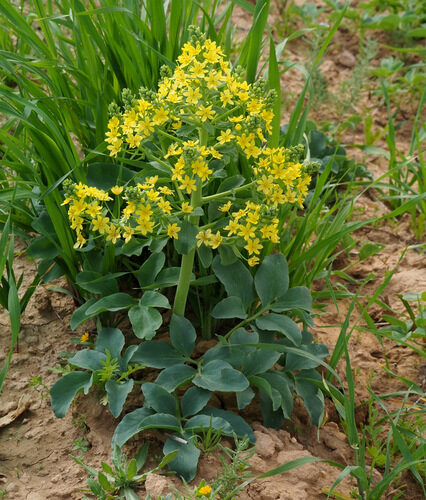
Diphylleia grayi
F. Schmidt
iNaturalist· cc-by-nc
(c) nanying, some rights reserved (CC BY-NC)
iNaturalist· cc-by-nc
(c) nanying, some rights reserved (CC BY-NC)
iNaturalist· cc-by-nc
(c) nanying, some rights reserved (CC BY-NC)
Summary
Source: WikipediaDiphylleia grayi, also known as the skeleton flower, is a species of perennial plant in the family Berberidaceae. It is native to northern and central Japan. Other regions and languages have common names for this plant; In Japan, it is commonly referred to as Japanese: サンカヨウ, romanized: sankayō, lit. 'lotus of mountain'. In China, it is commonly referred to as Chinese: 冰莲, romanized: bīng lián, lit. 'ice lotus'.
Description
A perennial herb reaching 0.4 m (1ft 4in) in height. Hermaphroditic flowers bloom from June to July. Thrives in light sandy to medium loamy soils with mildly acid to basic pH. Grows well in semi-shaded woodland conditions and prefers consistently moist soil.
Edible Uses
The fruit is edible. No further details are available.
Medicinal Uses
None known
Distribution
A temperate plant.
Where It Grows
Asia, Japan,
Cultivation
We have very little information on this species and do not know if it will be hardy in Britain, though judging by its native range it should succeed outdoors in many parts of this country. The following notes are based on the general needs of the genus. Prefers a moist peaty soil and semi-shade, growing well in a woodland garden.
Propagation
Seed is best sown in a cold frame as soon as it is ripe. Germination is very slow, typically taking a year or more. Stored seed should be sown as soon as possible in a cold frame. When large enough to handle, prick seedlings out into individual pots and grow on in the greenhouse for at least their first winter. Plant out into permanent positions in late spring or early summer, after the last expected frosts. Division can be done in spring.
Other Uses
None known Special Uses
Notes
There are 3 Diphylleia species.
References (2)
- Mem. Acad. Imp. Sci. Saint Petersbourg, Ser. 7, 11:109. 1868 (Reisen Amur.)
- Plants for a Future database, The Field, Penpol, Lostwithiel, Cornwall, PL22 0NG, UK. http://www.scs.leeds.ac.uk/pfaf/