Epimedium sagittatum
(Siebold. & Zucc.) Maxim.
Barrenwort, Horny goatweed
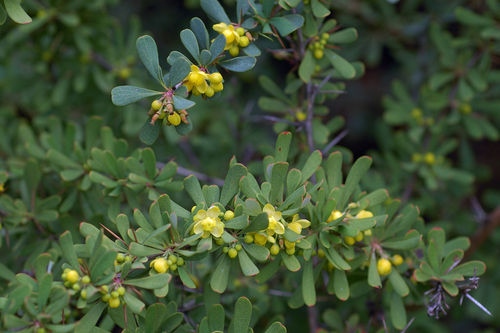
iNaturalist· cc-by-nc
(c) 小铖/Smalltown, some rights reserved (CC BY-NC), uploaded by 小铖/Smalltown
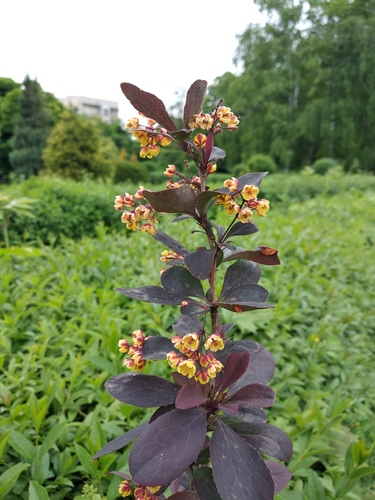
iNaturalist· cc-by-nc
(c) zhaozaizai, some rights reserved (CC BY-NC)
Summary
Source: WikipediaEpimedium sagittatum is a flowering plant in the barberry family (Berberidaceae) native to China. It is known locally as 三枝九叶草 and is sometimes called horny goat weed for its purported aphrodisiac properties.
Description
An evergreen herb. It keeps growing from year to year and has creeping underground stems or rhizomes. The leaves have 3 leaflets and are leathery. The leaflets are oval to sword shaped and 5 cm long. There are spiny teeth along the edge. The flowers are pale yellow and in groups of 20-60.
Edible Uses
Young plants and young leaves are edible cooked — they should be soaked and then boiled, which suggests the leaves carry some bitterness that soaking helps to remove.
Traditional Uses
It is an ingredient in Chinese "spring wine". Caution: It is used in medicine and should not be taken in large amounts.
This uses section is brief — help expand it
Medicinal Uses
The whole plant is antirheumatic, aphrodisiac, carminative, expectorant, ophthalmic, and vasodilator. It is used as a kidney tonic and also treats sterility and barrenness. Taken internally, it addresses asthma, bronchitis, cold or numb extremities, arthritis, lumbago, impotence, involuntary and premature ejaculation, high blood pressure, and absentmindedness. It should be used with caution, as excess amounts can cause vomiting, dizziness, thirst, and nosebleeds. The plant is harvested during the growing season and dried for later use.
Distribution
It is a temperate plant. It grows in forests, on slopes and along streams between 200-1,800 m above sea level in China.
Where It Grows
Asia, China*, Japan,
Cultivation
Plants are grown from ripe seed. They can also be grown by division, after flowering and from rooted sections of the rhizome.
Propagation
Seed is best sown in a cold frame as soon as it ripens in late summer. Stored seed should be sown as early in the year as possible in a cold frame. Prick seedlings out into individual pots when large enough to handle and grow on in light shade in a cold frame or greenhouse for at least their first winter, then plant out in mid to late summer. Division can be done in July/August according to one source, or in late spring according to another. Larger clumps can go directly into permanent positions, though smaller clumps are better potted up and grown on in a cold frame until well rooted before planting out in spring. Cuttings can be taken in late summer.
Other Uses
Makes a good ground cover plant.
Notes
There are over 30 Epimedium species.
References (3)
- Brown, D., 2002, The Royal Horticultural Society encyclopedia of Herbs and their uses. DK Books. p 202
- Melanges Biol. Bull. Phys.-Math. Acad. Imp. Sci. Saint-Petersbourg 9:713. 1876
- Plants for a Future database, The Field, Penpol, Lostwithiel, Cornwall, PL22 0NG, UK. http://www.scs.leeds.ac.uk/pfaf/