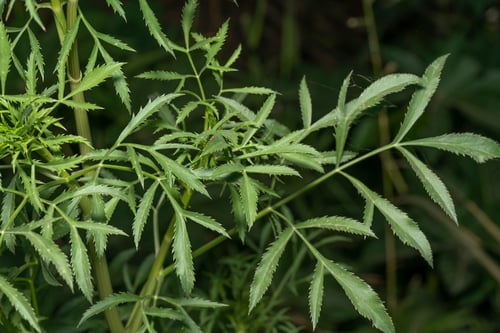
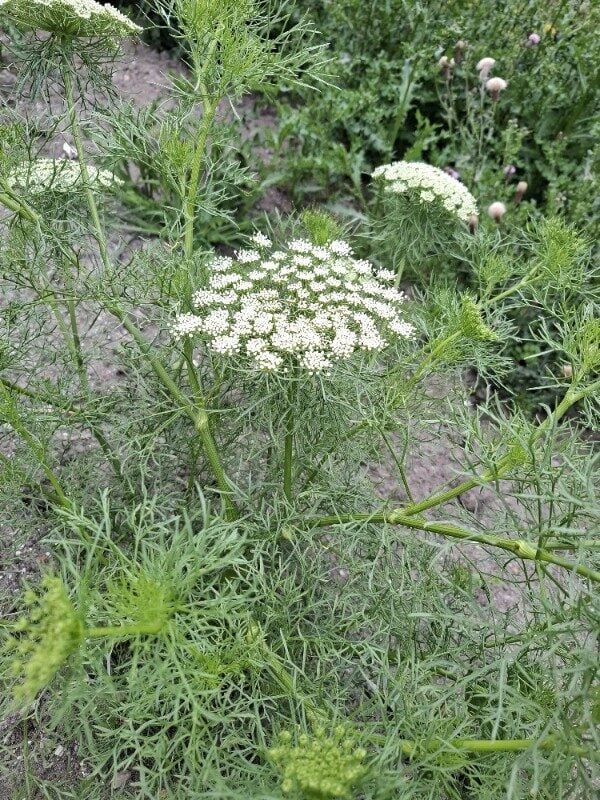
Lomatium gormanii - (How.)Coult.&Rose.
(How.)Coult.&Rose.
Gorman's biscuitroot
gbif· cc-by-nc
RJ Baltierra
gbif· cc-by-nc
RJ Baltierra
gbif· cc-by-nc
RJ Baltierra
Description
Lomatium gormanii is a PERENNIAL growing to 0.2 m (0ft 8in). The species is hermaphrodite (has both male and female organs) and is pollinated by Insects. The plant is self-fertile. Suitable for: light (sandy), medium (loamy) and heavy (clay) soils and prefers well-drained soil. Suitable pH: mildly acid, neutral and basic (mildly alkaline) soils. It cannot grow in the shade. It prefers dry or moist soil.
Edible Uses
Root - dried and ground into a powder that can be used as a thickener in soups etc or can be added to cereal flours for making bread etc.
Distribution
Western N. America - Washington to N. California.
Where It Grows
Coming Soon
Cultivation
We have almost no information on this species and do not know if it will be hardy in Britain, though judging by its native range it should succeed outdoors in much of the country. It can be assumed that plants will require a dry to moist but well-drained soil in a sunny position. This is a taxonomically very difficult genus, many of the species now included in it have at times been included in other genera.
Propagation
Seed - best sown as soon as it is ripe in a cold frame. Stored seed can be rather slow to germinate, when sown in the spring it usually takes at least 12 months to germinate. Giving it a period of cold stratification might reduce this time. The seedlings need to be pricked out into individual pots as soon as they are large enough to handle, and should be planted out into their permanent positions in the summer. Fresh seed can be sown immediately in situ. Division may be possible in spring or autumn.