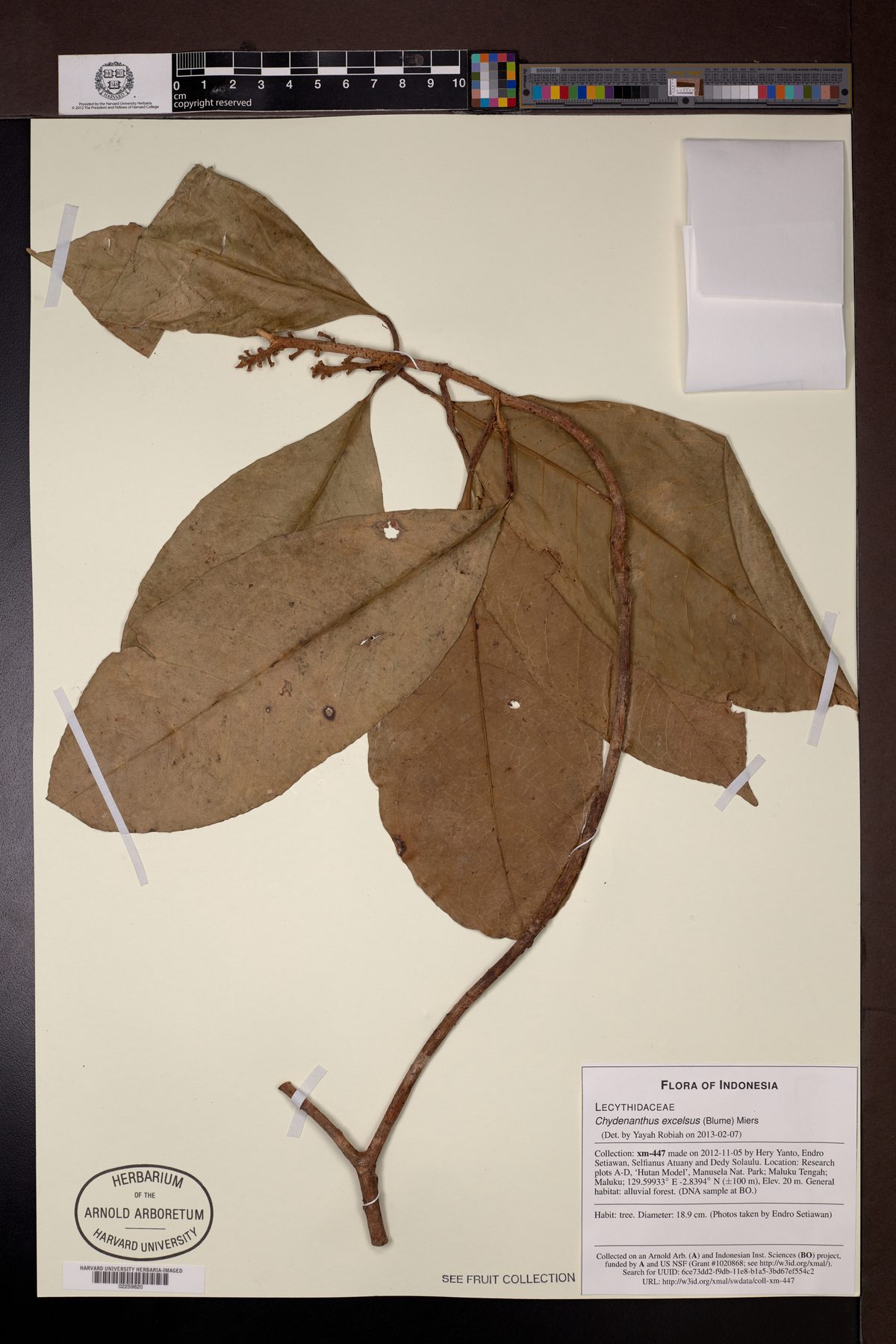
Lecythis zabucajo
Aubl.
Sapucaia. Sapucaia nut, Paradise nut, Monkey nut
iNaturalist· cc-by-sa
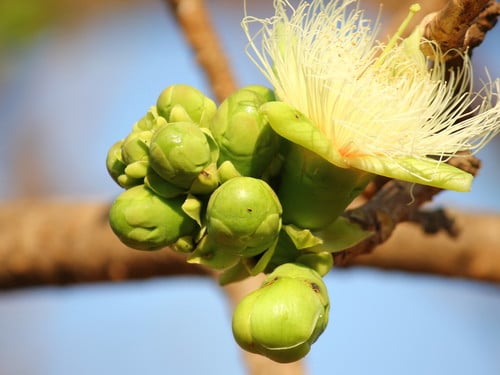
(c) Nando cunha, some rights reserved (CC BY-SA)
iNaturalist· cc-by-sa
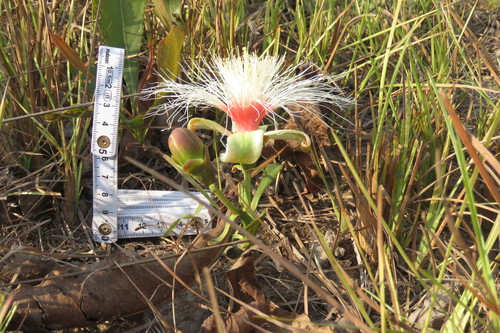
(c) Nando cunha, some rights reserved (CC BY-SA)
Description
Lecythis zabucajo is a deciduous Tree growing to 30 m (98ft) by 30 m (98ft) at a medium rate. See above for USDA hardiness. It is hardy to UK zone 10. The flowers are pollinated by Bees, insects. It is noted for attracting wildlife. Suitable for: light (sandy), medium (loamy) and heavy (clay) soils and prefers well-drained soil. Suitable pH: mildly acid, neutral and basic (mildly alkaline) soils. It cannot grow in the shade. It prefers moist soil.
Edible Uses
Oil. Seed - raw. Of excellent quality. Rich in oil, they are similar to the Brazil nut in size and shape. When ripe, the ivory-white kernels have a delicious flavour with a soft, almost creamy texture. The seeds are said to be sweeter than Brazil nuts, with a superior flavour and easier to digest. A very nutritious seed, containing about 63% oil or fat and 20% protein. Seeds are about 5cm long and 2.5cm thick. The shell is thin and easily broken, when quite fresh, however, this shell is said to contain a poisonous principle. An edible oil can be obtained from the seed. Pale yellow in colour, suggestive of almond oil in both taste and smell.
Medicinal Uses
The plant is used for treating liver problems. The part used is not specified.
Known Hazards
Possible toxic seed
Distribution
Western S. America - northern Brazil.
Where It Grows
SOUTHERN AMERICA: French Guiana, Guyana, Suriname, Venezuela, Brazil, Ecuador
Cultivation
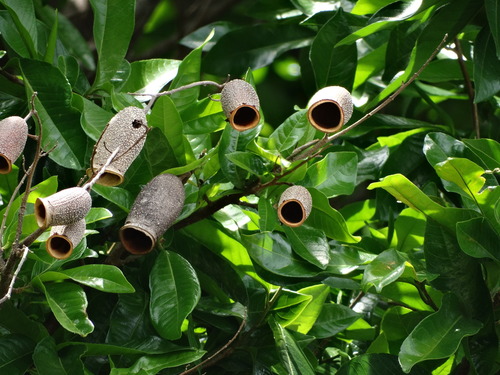
Prefers a deep, rich, fertile, moisture-retentive soil. Prefers a sunny position. Unlike the related Brazil nut, which only produces its seeds towards the top of the tree, this species can fruit right down to the lower branches. It has been estimated that individual trees could produce about 80 kilos of seeds per year. The seeds take 18 months to mature after flowering. The fruits, which are suspended from the ends of branches, develop a perfectly fitting 'lid', which drops off as the nuts ripen, thus scattering the seeds. These fruits have been used as monkey traps. A bait is placed inside the empty fruit, which the monkey puts its hand inside to grab and then finds it cannot withdraw its hand (unless it releases the bait of course).
Propagation
Seed - it only has a short period of viability so should be sown as soon as it is ripe. Trees have been known to produce their first crop in less than ten years from seed. Cuttings of half-ripe wood.
Other Uses
Oil. Design: Large flowering and fruiting tree; Public open space; Botanical collection; Humid shade garden. An oil obtained from the seed is used for making soap and as an illuminant. The hard wooden 'fruits' that contain the seeds are put to various domestic or kitchen uses. By cutting them away slightly at the stalk end they can be made to stand upright. Wood - tough and difficult to work so it is not extensively used. Hard and durable, it is much desired. A general description of the wood from this genus is as follows:- The heartwood is light to dark salmon; the sapwood is creamy-yellow. The texture is medium fine and uniform; the grain fairly straight or slightly interlocked; lustre is mostly low but high in some species; there is no distinctive odour or taste. the wood is reported to be very durable upon exposure to both a white-rot and a brown-rot fungus confirming its reputation for high resistance to decay; it is also highly resistant to dry-wood termites and is reported to be moderately resistant to marine borer attack. It is rated as easy to moderately difficult to air season, depending on species; a slow to rapid drying rate is reported; warp and checking ranged from slight to moderate. The wood is moderately difficult to work because of its high density; however, surfaces obtained in planing, boring, sawing, and shaping were smooth and rated as good to excellent. Silica content varies with species and dulling of cutters is also variable. The wood is used for purposes such as heavy construction, ship keels and beams, railroad crossties, industrial flooring and other uses requiring high impact resistance (wagon wheels, tool handles), turnery.
Synonyms
Also Known As
Kume, Olla de mono, Nuez de paraiso, Nuez sapucaia, Sapucaia, Wadaduri, Monkey Pot.