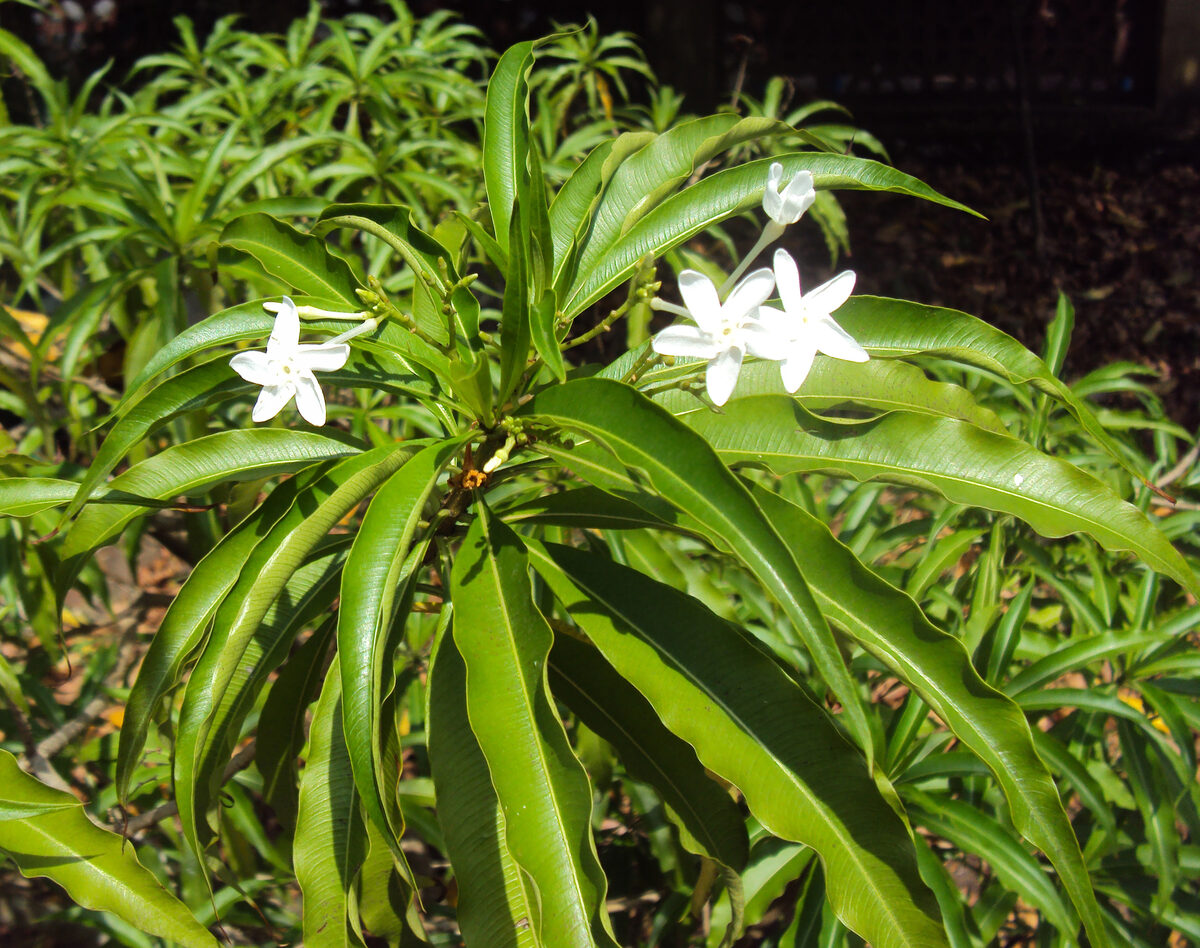
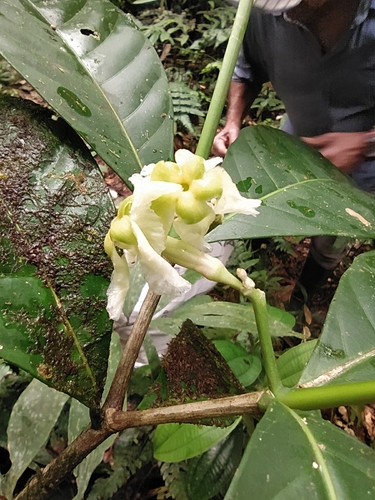
Landolphia heudelotii
A.DC.
Guinea gumvine, Landolphia rubber
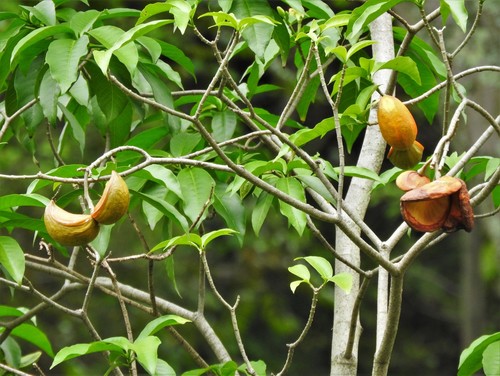
iNaturalist· cc-by-nc-sa
(c) Stefan Dressler, some rights reserved (CC BY-NC-SA)
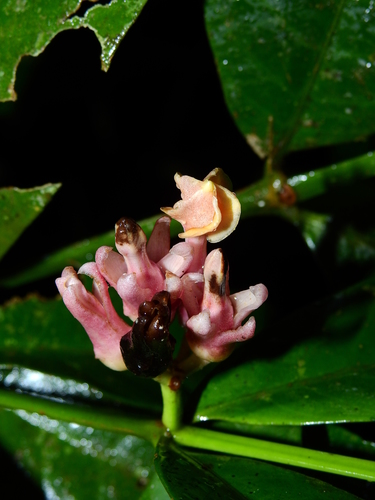
iNaturalist· cc-by-nc-sa
(c) Stefan Dressler, some rights reserved (CC BY-NC-SA)
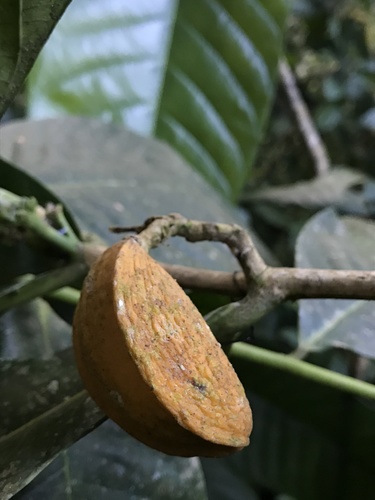
iNaturalist· cc-by-nc-sa
(c) Marco Schmidt, some rights reserved (CC BY-NC-SA), uploaded by Marco Schmidt
Description
Landolphia heudelotii is a CLIMBER growing to 15 m (49ft) by 0.3 m (1ft in) at a fast rate. See above for USDA hardiness. It is hardy to UK zone 10. Suitable for: light (sandy) and medium (loamy) soils, prefers well-drained soil and can grow in nutritionally poor soil. Suitable pH: mildly acid and neutral soils. It cannot grow in the shade. It prefers moist or wet soil.
Edible Uses
Drink. The fruit pulp is edible and refreshing. It is slightly acidulous and mucilaginous and is said to promote good digestion. The pulp surrounding the seeds is filled with a juice that is regarded as very healthful and is sometimes prescribed as an aid to digestion. Rich in organic acids, this pulp is used as a snack, as a breakfast food, and as a source of refreshing drinks. The juice is commonly used to season rice with its sprightly sourness. It is fermented to make an alcoholic drink. The yellow fruit is pear-shaped or globose and often suddenly contracted into a stout stipe, 3 - 8cm in diameter.
Medicinal Uses
Antihaemorrhoidal Odontalgic TonicA decoction of the stems, or of the roots, is given for treating intestinal pains. It is not purgative. Vapour from a boiling concoction of leafy twigs is inhaled orally for tooth troubles. The plant (part not stated) is used in draughts and added to squat-baths in treating haemorrhoids. A decoction of the roots, and of the fruit pulp, with some lime-juice is added to baths as a remedy for fatigue. The seeds have unspecified medicinal use in Sierra Leone.
Distribution
Western tropical Africa - Senegal to N. Ghana.
Where It Grows
AFRICA: Burkina Faso, Côte D‘Ivoire, Ghana, Guinea, Gambia, Guinea-Bissau, Mali, Niger, Senegal, Sierra Leone
Cultivation
The plant grows under trees and is promising for agroforestry. The plant is said to withstand bush-fires and grazing.
Propagation
Seed - Cuttings
Other Uses
Latex. The plant contains an abundance of white latex and the rubber obtained from it is of good quality. The sap is no longer used commercially, but has local applications - to fix bicycle tubes, for example.
Synonyms
Also Known As
Angambane, Beta, Bufene, Canho, Debol-poledje, Entonke, Erocodo, Fole-di-lala, Fole-di-lete, Fole-macacou, Fole-pequeno, Fole, Foleos-sum-o, Folezinho, Foli, Mambina, N'batano, Pore-lare, Pore, Psobe, Umbatano