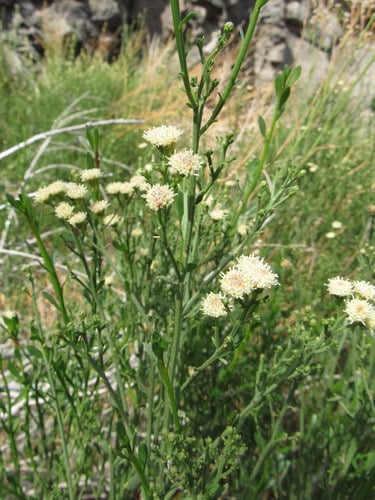
Helianthus lenticularis
Douglas.
Wild Sunflower
gbif· cc-by-sa
GBIF
Description
Helianthus lenticularis is a ANNUAL growing to 3 m (9ft 10in). The species is hermaphrodite (has both male and female organs) and is pollinated by Bees, flies. Suitable for: light (sandy), medium (loamy) and heavy (clay) soils and prefers well-drained soil. Suitable pH: mildly acid, neutral and basic (mildly alkaline) soils. It cannot grow in the shade. It prefers moist soil.
Edible Uses
Oil. Seed - raw or cooked. The seed can be dried and ground into a powder then used with cereal flowers in making breads, cakes and rich soups. An edible oil is obtained from the seed. The roasted shells, after the starch has been removed, or the roasted seeds, can be used in preparing a coffee-like beverage.
Distribution
N. America - Minnesota to North Dakota, Idaho, Missouri, Texas and California.
Where It Grows
NORTHERN AMERICA: Canada (Saskatchewan (south), Alberta (south), Manitoba (south), British Columbia (south)), United States (Connecticut, Indiana, Maine, Massachusetts, Michigan, New Hampshire, New Jersey, New York, Ohio, Pennsylvania, Rhode Island, Vermont, West Virginia, Illinois, Iowa, Kansas, Minnesota, Missouri, Nebraska, North Dakota, Oklahoma, South Dakota, Wisconsin, Colorado, Idaho, Montana, Oregon, Washington, Wyoming, Alabama, Arkansas, Delaware, Florida, Georgia, Kentucky, Louisiana, Maryland, Mississippi, North Carolina, South Carolina, Tennessee, Virginia, District of Columbia, New Mexico, Texas, Arizona, California, Nevada, Utah), Mexico (Baja California (Norte), Chihuahua, Coahuila de Zaragoza, Durango, Nuevo León, Sonora, Tamaulipas)
Cultivation
Succeeds in most soils in a sunny position. Requires a rich soil. Dislikes shade. The young growth is extremely attractive to slugs, plants can be totally destroyed by them. Members of this genus are rarely if ever troubled by browsing deer or rabbits. Probably no more than the wild form of the cultivated sunflower, H. annuus, it is treated as a sub-species of that by many botanists.
Propagation
Seed - sow in mid spring in situ. An earlier start can be made by sowing 2 - 3 seeds per pot in a greenhouse in early spring. Use a fairly rich compost. Thin to the strongest seedling, give them an occasional liquid feed to make sure they do not become nutrient deficient and plant them out in late spring or early summer.
Other Uses
Oil. None known