Eragrostis lanipes
C.E. Hubb.
Love Grass, Creeping Wanderrie
iNaturalist· cc-by-nc
(c) geoffbyrne, some rights reserved (CC BY-NC)
iNaturalist· cc-by-nc
(c) geoffbyrne, some rights reserved (CC BY-NC)
Description
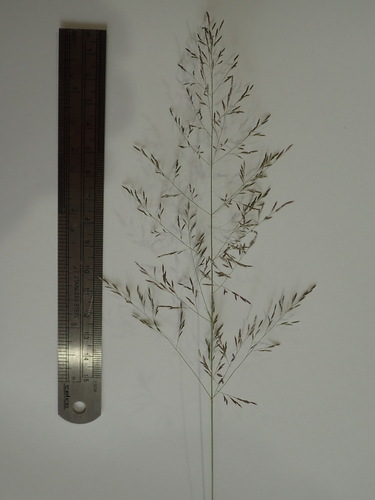
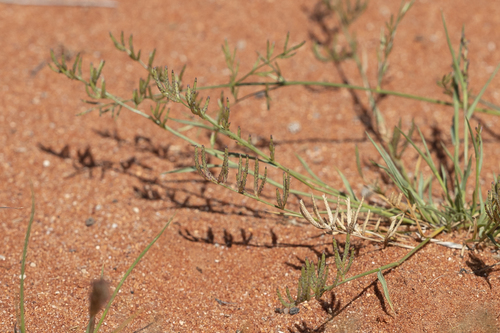
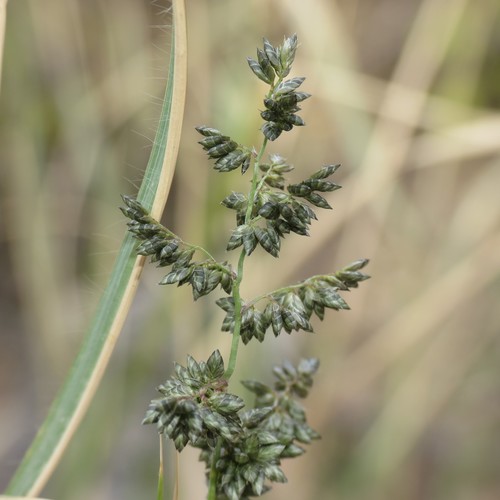
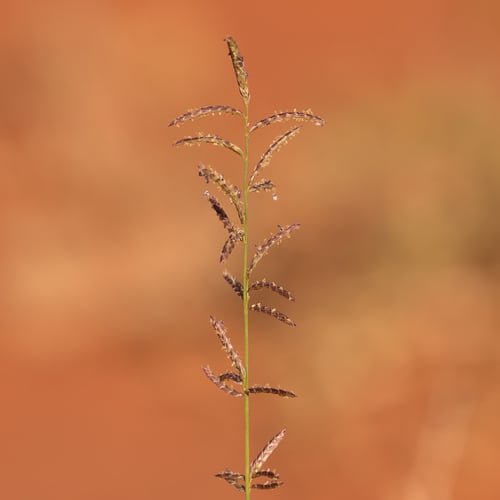
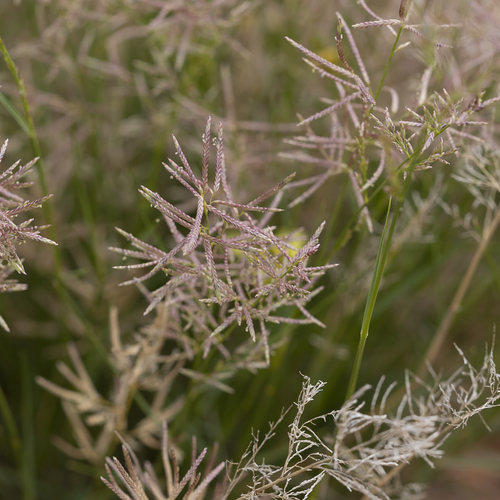
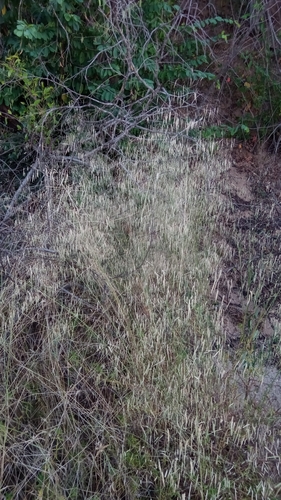
A grass which keeps growing from year to year. It grows 20-50 cm tall. It forms spreading clumps. The bases of the clumps form bulbs. They are woolly. The leaves are 4-10 cm long by 0.2-0.3 cm wide. They can be flat or rolled inwards. The stem is 20-50 cm long and slender and smooth. The branched flower head is 10-20 cm long by 3-8 cm wide. It is open and loose. The spikelets are 0.5 cm long and green or purple.
Edible Uses
The seeds are harvested and used as a cereal grain.
Distribution
It suits temperate places. It needs an open sunny position.
Where It Grows
Australia*,
Cultivation
Plants can be grown from seed or division of the rhizomes.
Notes
There are about 300 Eragrostis species.
References (6)
- Cancilla, D., 2018, Ethnobotanical and Ethnozoological Values Desktop Assessment - Eliwana Project. p 43
- Cherikoff V. & Isaacs, J., The Bush Food Handbook. How to gather, grow, process and cook Australian Wild Foods. Ti Tree Press, Australia p 189
- Elliot, W.R., & Jones, D.L., 1984, Encyclopedia of Australian Plants suitable for cultivation. Vol 3. Lothian. p 423
- Famine foods (As Eragrostis clendandii)
- Irvine, (As Eragrostis clendandii)
Show all 6 references Hide references
- Paczkowska, G. & Chapman, A.R., 2000, The Western Australian Flora. A Descriptive Catalogue. Western Australian Herbarium. p 105