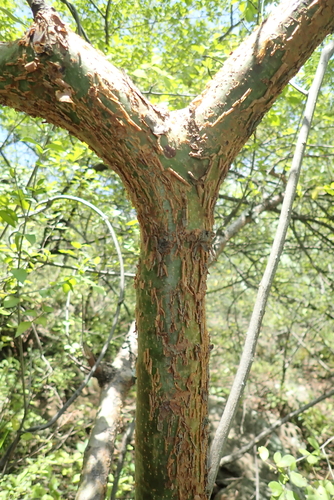
Canarium schweinfurtii
Engl.
African elemi
gbif· cc-by
GBIF
gbif· cc-by-sa
Saint Fédriche NDZAI
gbif· cc-by-sa
Adeyemi Ajani
Description
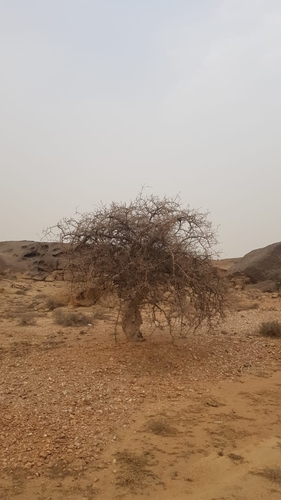
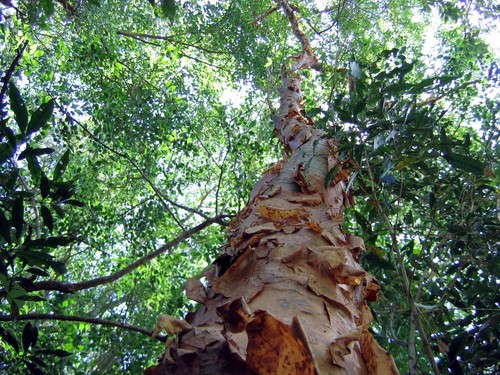
Canarium schweinfurtii is an evergreen Tree growing to 30 m (98ft) by 30 m (98ft) at a medium rate. See above for USDA hardiness. It is hardy to UK zone 10. The flowers are pollinated by Insects. Suitable for: light (sandy), medium (loamy) and heavy (clay) soils and prefers well-drained soil. Suitable pH: mildly acid, neutral and basic (mildly alkaline) soils. It cannot grow in the shade. It prefers moist soil.
Edible Uses
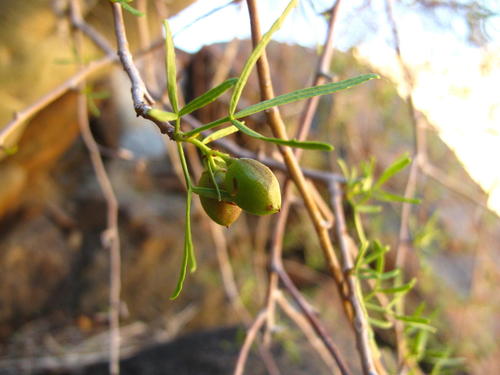
Oil. The slightly greenish outer pulp of the fruit is oily and edible. It can be eaten raw or softened in warm water to improve palatability. It tastes similar to olives and is very popular as a snack among herders and children. Often used as a condiment. The fruit is about 35mm long. The pulp oil is about 71 % palmitic acid and 18 % oleic acid. The seed-kernel is oily and edible. It is cooked, and is sometimes prepared into a vegetable-butter and eaten as a substitute for shea-butter. The seeds contain several fatty acids including oleic (36 %), linoleic (28 %), palmitic (26 %), stearic (7 %). Carbon Farming - Staple Crop: oil.
Medicinal Uses
Antitussive Diuretic Dysentery Eczema Emetic Emollient Hypotensive Leprosy Poultice Purgative Skin StimulantIn the past, the resin was exported to Europe for pharmaceutical use. It was used as a substitute for gum-mastic in making wound dressings in World War II. The resin is used against roundworm infections and other intestinal parasites. It is an emollient, stimulant, diuretic and has action on skin-affections and eczema. The bark is emetic and purgative. A decoction is used as a treatment against hypertension, dysentery, gonorrhoea, coughs, chest pains, pulmonary affections, stomach complaints, food poisoning etc. The pounded bark is used against leprosy and ulcers. Root is used against adenites whereas root scrapings are made into a poultice. The leaves are boiled with other herbs and the decoction used to treat coughs. The seeds are roasted and pounded and the resulting powder mixed with skin oil or jelly to treat wounds.
Distribution
Africa - Senegal to west Cameroon and extending to Ethiopia, Tanzania and Angola.
Where It Grows
AFRICA: Angola, Benin, Burkina, Cabinda, Cameroon, Central African Repu, Chad, Congo, Ethiopia, Gabon, Ghana, Guinea, Guinea-Bissau, Gulf of Guinea Is., Ivory Coast, Liberia, Nigeria, Senegal, Sierra Leone, Sudan, Tanzania, Togo, Uganda, Zambia, Zaïre.
Cultivation
It grows best in areas where the mean annual rainfall is in the range 900 - 1,400mm. Climate: tropical. Humidity: humid. Carbon Farming - Cultivation: regional crop only. Management: standard.
Propagation
Seed - pre-soak the seed by immersing it in hot water and then allowing it to cool in the water for 24 hours prior to sowing. The seed can be sown in nursery beds or in situ. The ripe fruits should be collected when they fall to the ground and allowed to decompose, the stones should then be separated from the outer fruit coats. Seeds can be stored for a long time.
Other Uses
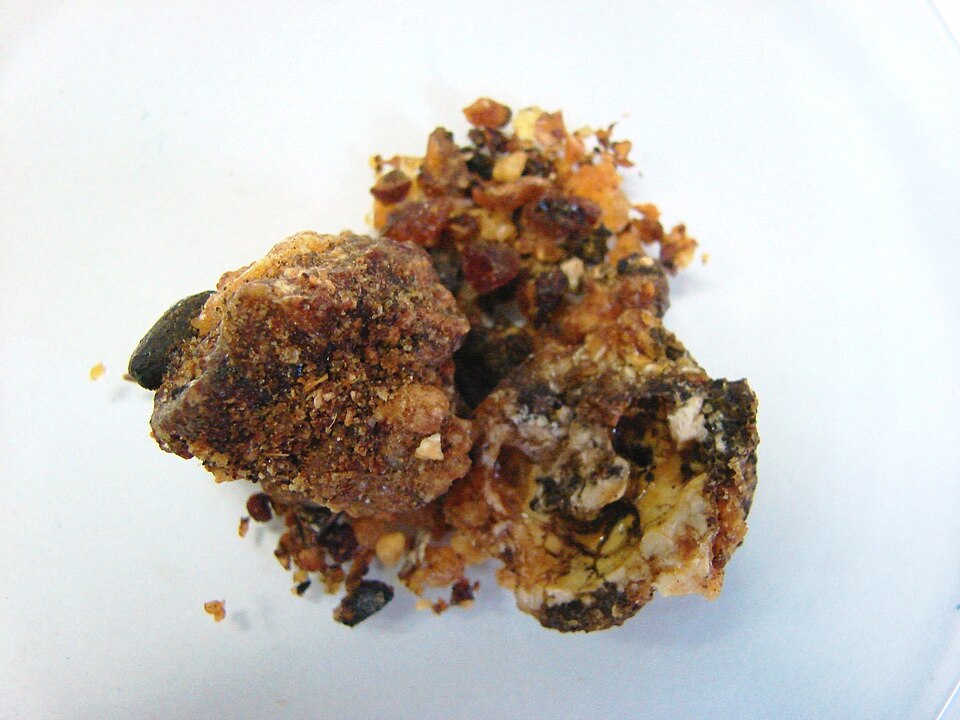
Adhesive Beads Containers Essential Fuel Furniture Gum Incense Ink Insecticide Lighting Oil Resin Shelterbelt Waterproofing Wood. The bark exudes a heavy, sticky oleoresin that smells like turpentine and solidifies to a whitish resin. It is obtained by slashing the bark and allowing the colourless expiation to trickle to the ground where it solidifies into a sulphur-yellow opaque resin. The resin is used as primitive illuminant and as incense and releases a lavender-like smell. The resin burns readily and is used as a bush candle. The flame is very smoky and soot is collected as carbon-black from the outside of pots held over it for use in tattooing and to make ink in Liberia. The resin is also used to repair broken pottery, for caulking boats and as a gum for fastening arrowheads to shafts. The resin contains 8-20 % of an essential oil, the main constituent of which is limonene. It is rich in phellandrenes, and contains also resins and a bitter principle. The resin is used as a fumigant against mosquitoes. The elemi is often left standing on cleared land to provide shade and has potential as a wind break. It has been planted for reforestation in Uganda. The endocarp is used by children as spinning tops. The seeds are strung into necklaces or attached to traditional instruments. The bark of young trees is split off in Gabon to make boxes. The wood is said to secrete oil and is used for canoe making. The heartwood is pinkish when fleshly cut but darkens to light brown mahogany colour; it is not slearly demarcated from the 5 - 15cm wide band of sapwood that is white with pinkish reflections. The texture is slightly coarse; the grain interlocked, thus causing a fine striped figure on quarter-sawn boards. The wood is light in weight; very soft; not very durable, being suseptible to fungi, dry wood borers and termites. It seasons slowly but fairly well, though there is a risk of distortion and checking; once dry it is poorly stable in service. works easily, stains and polishes well. Used as a substitute for true mahogany. The timber is used as core veneer, for decorative panelling, parquetry, furniture, flooring and for general utility purposes. Locally, the wood is used for mortars, planks, and canoes. The wood is a good fuel, igniting readily and burning with a lot of heat.
Synonyms
Also Known As
African Elemi, canarium, mupafu, ube osa, mpafu, kenari or mbani