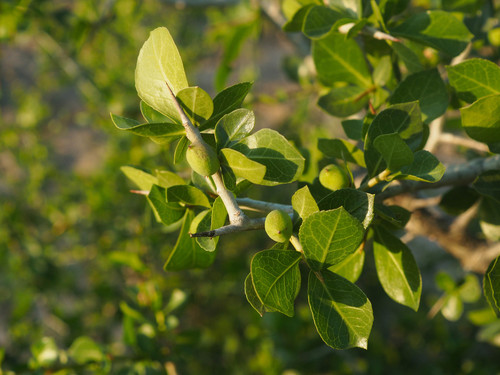
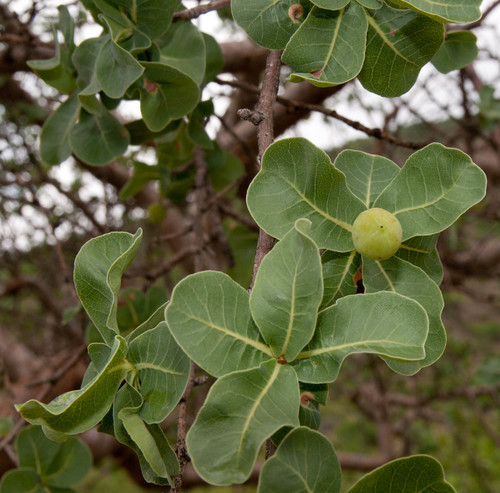
Commiphora gracilifrondosa
van der Walt
Stink corkwood
iNaturalist· cc-by-nc
(c) Lize von Staden, some rights reserved (CC BY-NC), uploaded by Lize von Staden
iNaturalist· cc-by-nc
(c) _3foxes, some rights reserved (CC BY-NC), uploaded by _3foxes
iNaturalist· cc-by-sa
(c) Nicola van Berkel, some rights reserved (CC BY-SA), uploaded by Nicola van Berkel
Description
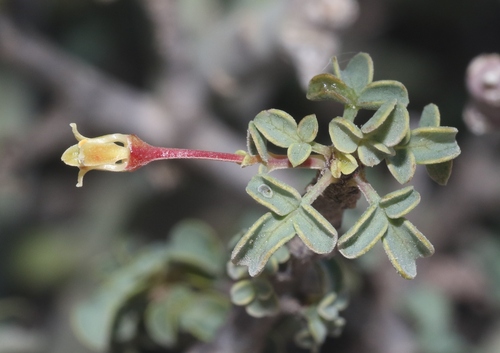
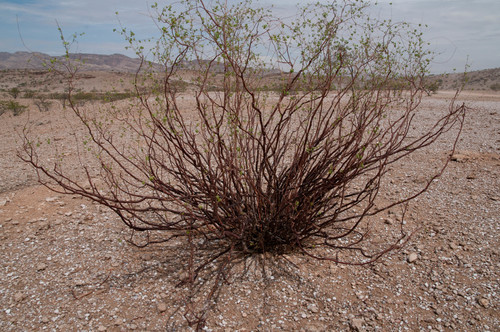
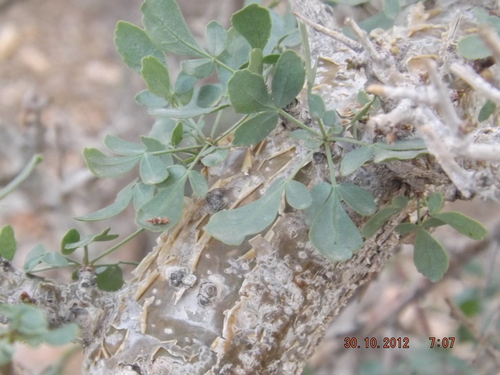
A shrub or tree. It has several stems and loses its leaves during the year. It grows 3 m high. The bark is grey to brown. It has dark flecks. The leaves have 3 leaflets and are arranged in spirals. The end leaflet can have irregular lobes. The flowers are small and yellow. Male and female flowers occur on separate plants.
Edible Uses
The stems contain a sweet juice and are eaten raw.
Traditional Uses
The stems have a sweet juice. It is eaten raw.
This uses section is brief — help expand it
Distribution
It is a subtropical plant. It grows in hot arid places. It grows in areas with a rainfall below 160 mm per year. In southern Africa it grows between 400-1,035 m above sea level. It is drought tolerant. It can grow in arid places.
Where It Grows
Africa, Namibia, South Africa, Southern Africa,
Also Known As
Karee corkwood
References (1)
- Royal Botanic Gardens, Kew (1999). Survey of Economic Plants for Arid and Semi-Arid Lands (SEPASAL) database. Published on the Internet; http://www.rbgkew.org.uk/ceb/sepasal/internet [Accessed 5th April 2011]