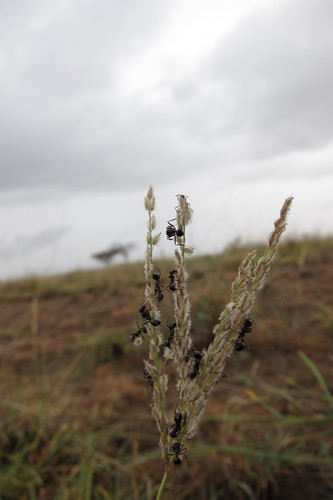
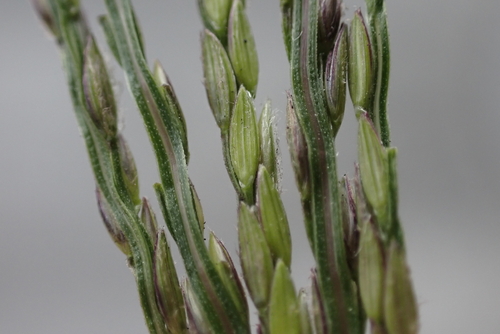
Eragrostis ciliaris
(L.) R. Br.
Love grass
iNaturalist· cc0
no rights reserved, uploaded by 葉子
iNaturalist· cc-by-nc
(c) Chi Chun, some rights reserved (CC BY-NC)
iNaturalist· cc-by-nc-sa
(c) Kuan-Chieh (Chuck) Hung, some rights reserved (CC BY-NC-SA), uploaded by Kuan-Chieh (Chuck) Hung
Summary
Source: WikipediaEragrostis ciliaris, the gophertail lovegrass, is a species of grass (family Poaceae). It is native to the Old World Tropics; nearly all of Africa, Madagascar, other Indian Ocean islands, the Arabian Peninsula, the Indian Subcontinent, Myanmar, Vietnam, Taiwan and the Philippines and a number of Pacific islands, and has been introduced to the New World Tropics and Subtropics, from the southern United States to Argentina, the Caribbean, and other Pacific islands. Its seeds are edible and nutritious, but quite small and difficult to harvest and handle, so it is usually regarded as a famine food.
Description
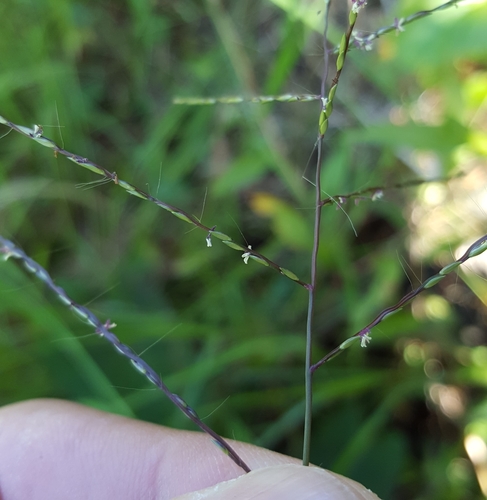
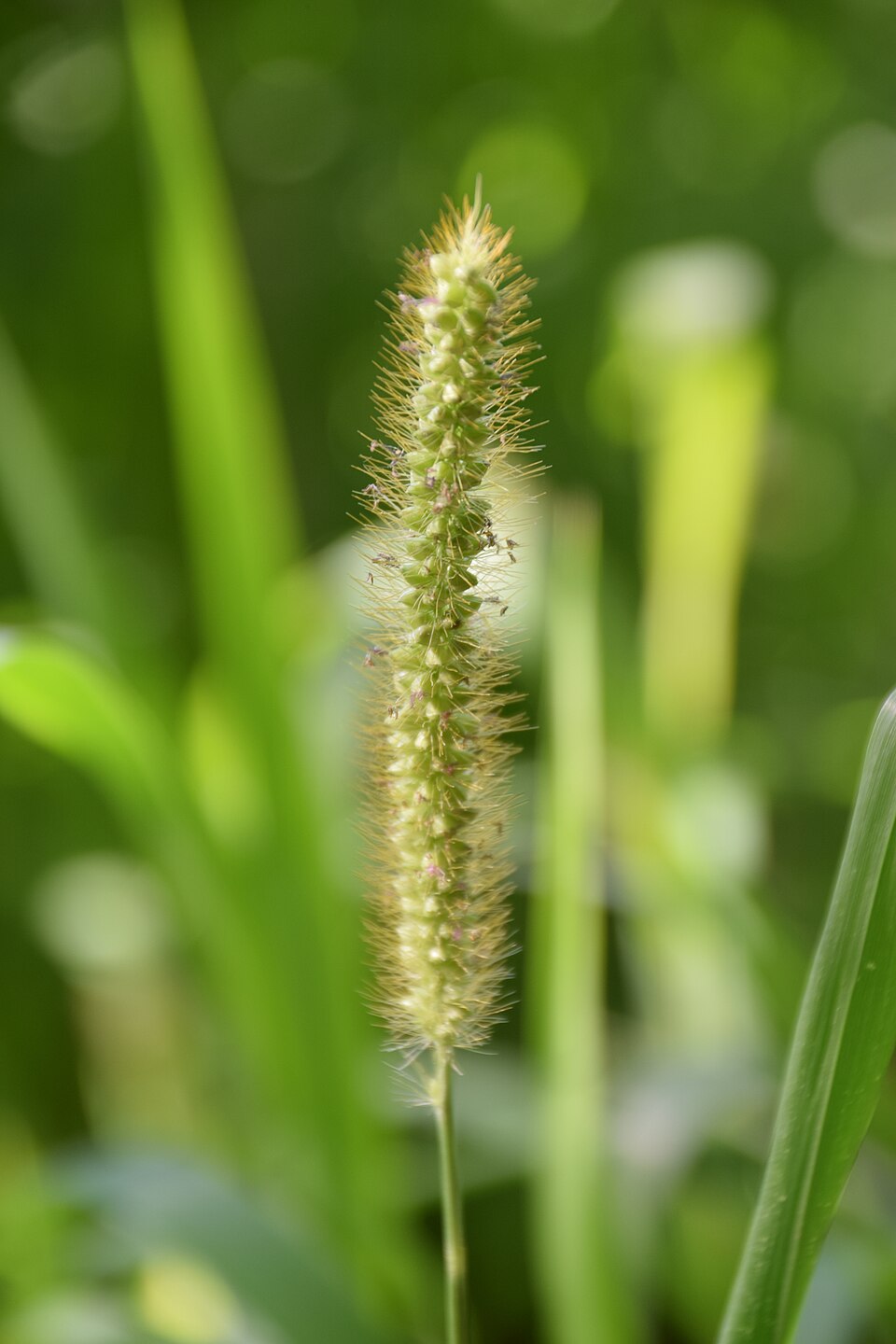
A grass. It is a tufted annual. It grows 5-60 cm high. The leaf blade is flat and 12 cm long by 5 mm wide. The flower panicle is like a spike but interrupted. It is 1-20 cm long and woolly. The spikelets have 6-12 flowers. The seeds are up to 0.5 mm long.
Edible Uses
The seeds are eaten as a cereal and are used as a famine food, with good nutritional value.
Medicinal Uses
The plant is reduced to ash, which is spread over cuts, burns and the like in order to clean them and promote healing. The inflorescence, either in flower or in seed, is reduced to ash and, like the vegetative parts, is used for its curative properties, in this instance being mixed with castor-oil and applied to whitlows. Maturation is rapid. An infusion of the plant is taken as a treatment for stomach-pains.
Distribution
A tropical plant. It can grow in sandy locations including pure coastal sand. In West Africa it grows from sea level to 1,400 m altitude. In Argentina it grows from sea level to 1,600 m above sea level.
Where It Grows
Africa, Arabia, Argentina, Asia, Botswana, Brazil, Burkina Faso, Central Africa, Chad, China, Congo, Dominican Republic, East Africa, Eritrea, Eswatini, Gabon, Gambia, Ghana, Guianas, Guinea, Guinée, Guinea-Bissau, Guyana, India, Iran, Jamaica, Madagascar, Malawi, Mali, Middle East, Mozambique, Myanmar, Nigeria, Pakistan, Paraguay, SE Asia, Senegal, Sierra Leone, South Africa, South America, Southern Africa, St. Kitts and Nevis, Suriname, Swaziland, Taiwan, Venezuela, West Africa, West Indies, Zambia, Zimbabwe,
Cultivation
The plant succeeds in sandy soils, even in pure coastal sands. The plant is often found as a weed of cultivation.
Propagation
Seed - sow in situ, only just covering the seed. Germination is usually very quick and free.
Other Uses
The straw is woven into mats for covering food, and also into a coarse cordage. The longer culms may be bundled for sale as brooms or used as thatch. The wild plant is useful in helping to fix coastal sand dunes.
Other Information
It is a famine food. It has good food value.
Notes
There are about 300 Eragrostis species.
Nutrition
| Part | Moisture | kJ | kcal | Protein | Vit A | Vit C | Iron | Zinc |
|---|---|---|---|---|---|---|---|---|
| Seeds | 10.6 | 1367 | 327 | 16.7 | — | — | — | — |
Synonyms
Also Known As
Ahipody, Gophertail, Kumburar kama
References (13)
- Abbiw, D.K., 1990, Useful Plants of Ghana. West African uses of wild and cultivated plants. Intermediate Technology Publications and the Royal Botanic Gardens, Kew. p 26
- Ambasta, S.P. (Ed.), 2000, The Useful Plants of India. CSIR India. p 197
- Burkill, H. M., 1985, The useful plants of west tropical Africa, Vol. 2. Kew.
- Busson, 1965,
- Flora of Pakistan. www.eFloras.org
Show all 13 references Hide references
- Food Composition Tables for use in Africa FAO http://www.fao.org/infoods/directory No. 41
- Jardin, C., 1970, List of Foods Used In Africa, FAO Nutrition Information Document Series No 2.p 3
- National Research Council, 1996, Lost crops of Africa. Volume 1 grains, p 271
- Peters, C. R., O'Brien, E. M., and Drummond, R.B., 1992, Edible Wild plants of Sub-saharan Africa. Kew. p 22
- Swaziland's Flora Database http://www.sntc.org.sz/flora
- Tuckey, Narr. exped. Zaire, App. 5, 478. 1818
- van Oudtshoorn, F and van Wyck, E., 2004, Guide to Grasses of Southern Africa. Briza. p 106
- World Checklist of Useful Plant Species 2020. Royal Botanic Gardens, Kew