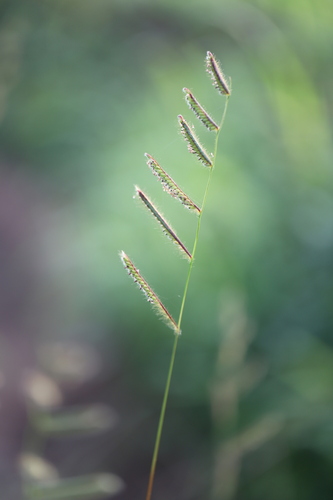
Eragrostis barrelieri
Daveau
Pitted lovegrass
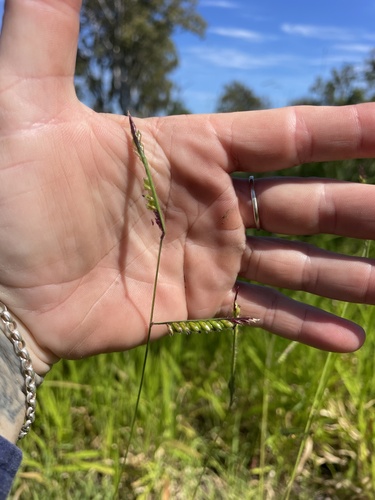
iNaturalist· cc-by
(c) Kevin Faccenda, some rights reserved (CC BY), uploaded by Kevin Faccenda
iNaturalist· cc-by
(c) Kym Nicolson, some rights reserved (CC BY), uploaded by Kym Nicolson
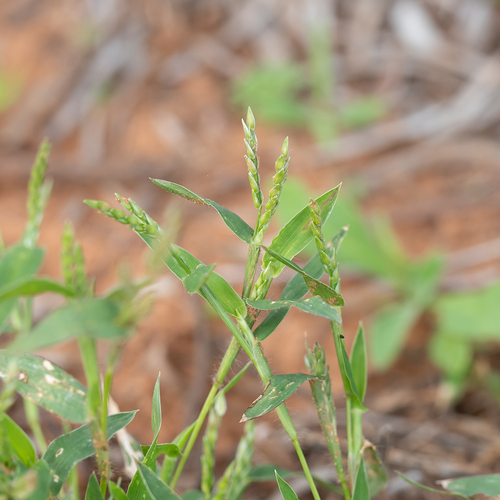
iNaturalist· cc-by
(c) Kevin Faccenda, some rights reserved (CC BY), uploaded by Kevin Faccenda
Description
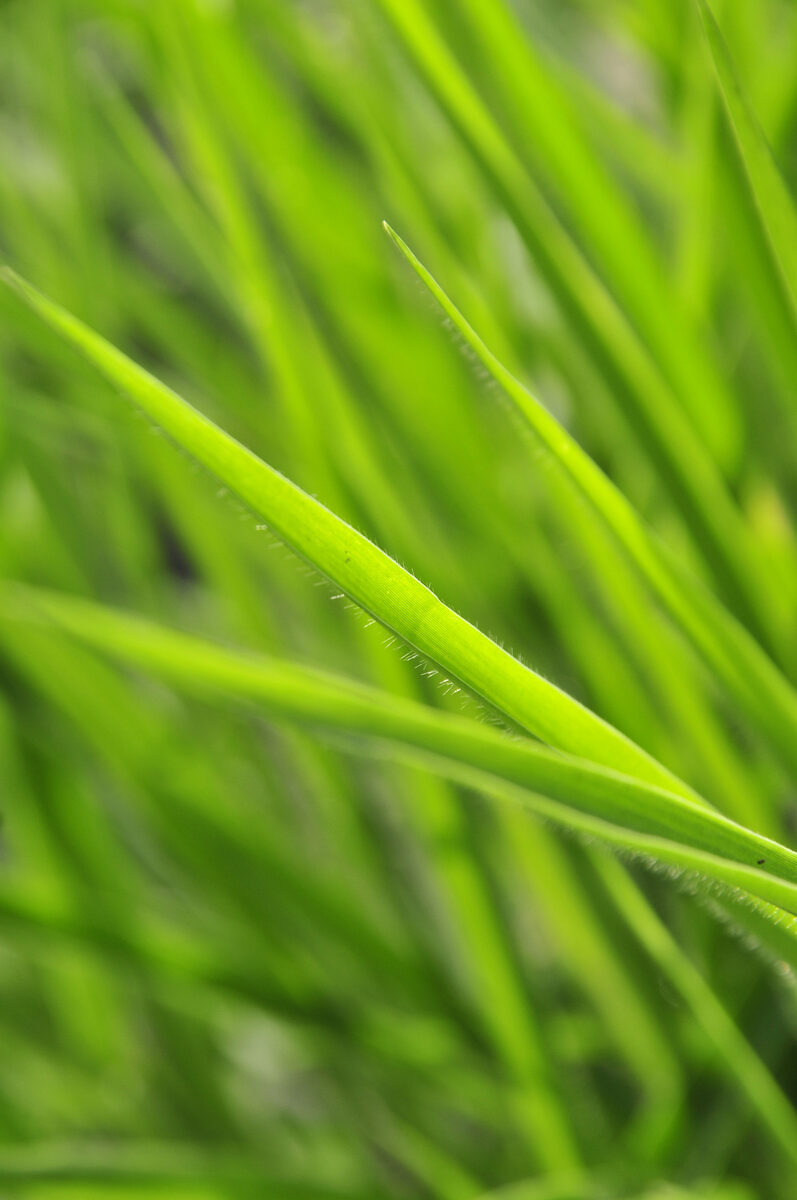
An erect annual grass. It forms tufts. It often has an aroma. It grows 10-45 cm high. The leaf blades are 10 cm long by 5.5 mm wide. They can be flat or rolled inwards. The flower panicle is 3-20 cm long and sword shaped. It is usually open with stiff branches. The flowers are green and purple. The seeds are up to 1 mm long and dark brown
Edible Uses
The seeds are eaten as a cereal.
Distribution
A subtropical plant. It grows on sand. It grows in subtropical and warm temperate places. In Argentina it grows from sea level to 2,000 m above sea level.
Where It Grows
Africa*, Algeria, Argentina, Asia, Australia, Botswana, Central Africa, Chad, Colombia, Dominican Republic, East Africa, Egypt, Europe*, Haiti, Iran, Iraq, Jamaica, Mediterranean, Middle East, Mozambique, Myanmar, North Africa, North America, Pakistan, Puerto Rico, SE Asia, South Africa, Southern Africa, South America, Uruguay, USA, West Indies, Zambia, Zimbabwe,
Notes
There are about 300-350 Eragrostis species.
Also Known As
Mediterranean lovegrass
References (8)
- Flora of Pakistan. www.eFloras.org
- Hussey, B.M.J., Keighery, G.J., Cousens, R.D., Dodd, J., Lloyd, S.G., 1997, Western Weeds. A guide to the weeds of Western Australia. Plant Protection Society of Western Australia. p 54
- Jardin, C., 1970, List of Foods Used In Africa, FAO Nutrition Information Document Series No 2.p 3
- J. Bot. (Morot) 8:289. 1894
- Kew Plants of the World onLine
Show all 8 references Hide references
- Lazarides, M. & Hince, B., 1993, Handbook of Economic Plants of Australia, CSIRO. p 91
- Paczkowska, G. & Chapman, A.R., 2000, The Western Australian Flora. A Descriptive Catalogue. Western Australian Herbarium. p 104
- Plants of Haiti Smithsonian Institute http://botany.si.edu/antilles/West Indies