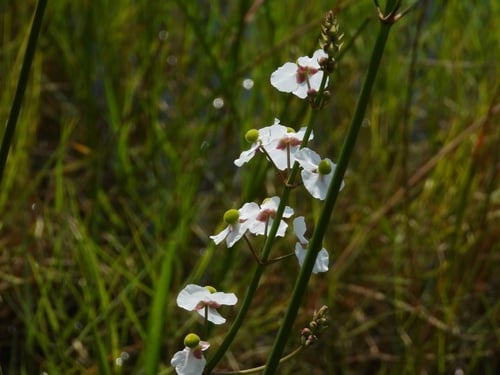
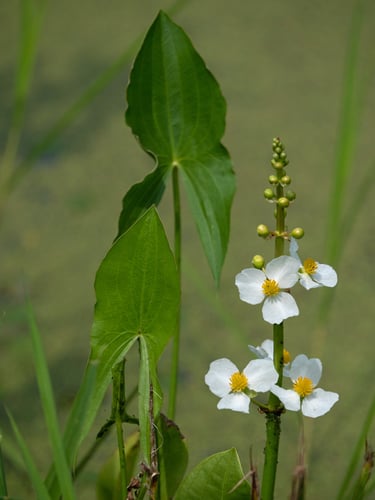
Alisma triviale
Pursh
Mud or Northern Water Plantain
iNaturalist· cc-by-nc-nd
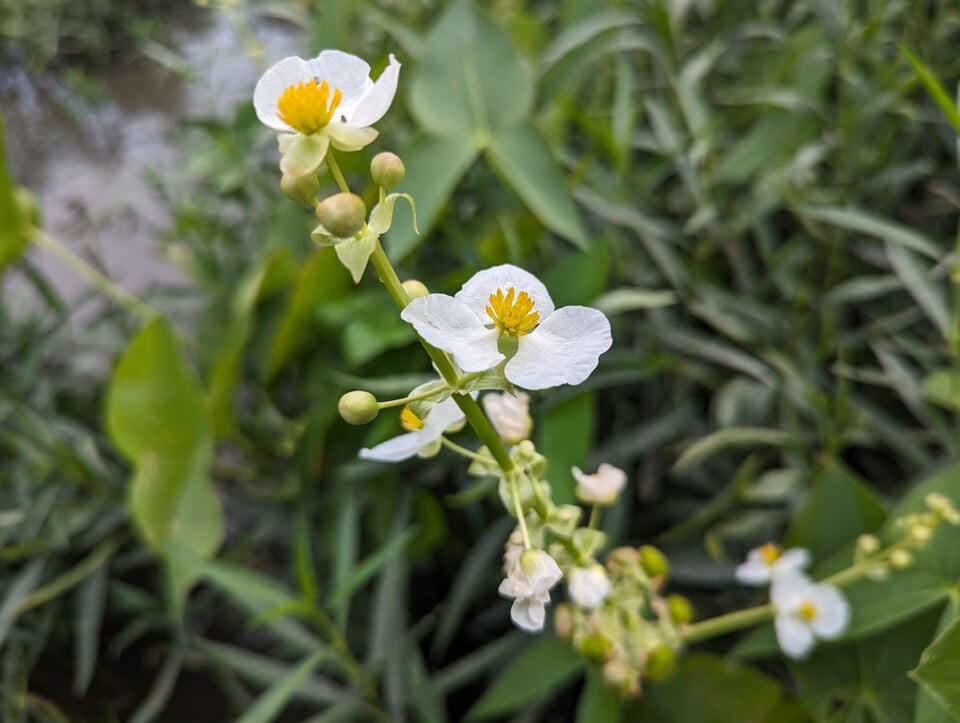
(c) Dan Mullen, some rights reserved (CC BY-NC-ND)
iNaturalist· cc-by-nc
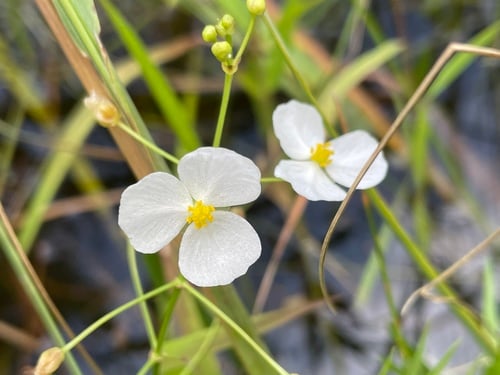
(c) Vanessa Voelker, some rights reserved (CC BY-NC), uploaded by Vanessa Voelker
iNaturalist· cc-by-nc
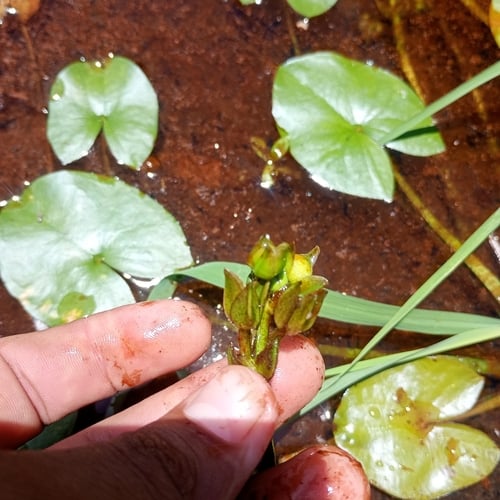
(c) alltheseliveswelive, some rights reserved (CC BY-NC)
Description
Alisma triviale is a PERENNIAL growing to 0.6 m (2ft) by 0.3 m (1ft in) at a medium rate. See above for USDA hardiness. It is hardy to UK zone 4 and is not frost tender. The flowers are pollinated by Bees, Insects. It is noted for attracting wildlife. Suitable for: light (sandy), medium (loamy) and heavy (clay) soils. Suitable pH: mildly acid, neutral and basic (mildly alkaline) soils. It cannot grow in the shade. It prefers moist or wet soil and can grow in water.
Edible Uses
Edible Uses & Rating: The cooked rhizomes/tuberous bases are the principal edible; seeds are theoretically usable but tiny. With correct preparation, it merits an edibility rating of 3/5 as a secondary wetland starch. The rhizomes are the most valuable edible part. They resemble small potatoes in flavor and texture when cooked, with only a faint resinous note. Raw rhizomes are acrid and should not be eaten without cooking. They can be roasted, dried, and ground into a flour that is aromatic and nourishing. Rhizomes are best harvested in late autumn to early spring when carbohydrate content is highest. The fibrous roots are less useful but can be chewed as a starchy gum. The leaf bases contain small amounts of starch and can be eaten, though with little caloric value. Other leaf parts are spongy, marshy in taste, and not digestible. Taste, Processing & Kitchen Notes: Thoroughly boiled or roasted rhizomes lose much of their acridity and provide a mealy, starchy texture reminiscent of a slightly sharp potato or arrowhead. Incomplete cooking leaves a sharp, peppery burn. Roots can be sliced, leached, and then further cooked to improve flavor. Seasonality (Phenology): Vegetative growth in late spring; flowering mid-summer; seed and rhizome maturity late summer to autumn. Roots are best lifted in late season when starch is highest. Harvest & Processing Workflow: In late summer/autumn, dig rhizomes from firm stands, scrub clean, slice, leach in water if strongly acrid, then boil or roast until palatable. Seeds are rarely worth the effort. Look-Alikes & Confusion Risks: Can be confused with arrowhead (Sagittaria spp.) or other emergent aquatics. Confirm the characteristic Alisma inflorescence and fruiting pattern before use. Traditional/Indigenous Use Summary: Water-plantains were used in some Indigenous North American food systems as auxiliary starchy roots, always cooked; A. triviale is consistent with that pattern.
Known Hazards
Raw rhizomes are acrid and should be considered potentially irritating or mildly toxic until well-cooked. Always cook thoroughly and avoid polluted waters.
Distribution
Widespread in North American.
Where It Grows
Alaska, Alberta, Arizona, British Columbia, California, Colorado, Connecticut, Idaho, Illinois, Indiana, Iowa, Kansas, Maine, Manitoba, Massachusetts, Mexico Northwest, Michigan, Minnesota, Montana, Nebraska, Nevada, New Brunswick, New Hampshire, New Mexico, New York, Newfoundland, North Dakota, Northwest Territories, Nova Scotia, Ohio, Oklahoma, Ontario, Oregon, Pennsylvania, Prince Edward I., Québec, Saskatchewan, South Dakota, Utah, Vermont, Washington, Wisconsin, Wyoming
Cultivation
A historically relevant, modest wetland food plant: useful where abundant, but processing-intensive and habitat-limited. Identification & Habit: Plants form clumps of ovate to lanceolate basal leaves on long petioles, emerging from muddy shallows. Leaf blades are broader than in A. gramineum. Slender, branching scapes rise above, bearing many small white to pale lilac flowers with three petals. Fruits are rings of small, crescentic achenes. Habit is tufted and emergent along pond and ditch margins. Growing Conditions: Prefers sunny, shallow, slow or still water, soft mud, and clean conditions. Tolerates fluctuating water levels and cold winters (dies back to rootstock). Habitat & Range: Widespread in North American wetlands: ponds, marshes, ditches, backwaters, slow streams. Size & Landscape Performance: A useful emergent in wildlife ponds, forming modest clumps and providing structure without overwhelming most sites .Cultivation (Horticulture): Simple to grow in pond margins or bog gardens: plant pieces of rootstock in shallow mud; ensure at least several cm of water above crowns during growing season. Pests & Problems: Sensitive to herbicides, pollution, and habitat drainage. Otherwise robust. Cultivar/Selection Notes: No named varieties for food.
Propagation
By seed sown in wet mud or by division of rhizomes/crowns in spring.
Other Uses
Compared with A. gramineum, it offers more biomass and clearer ethnobotanical support. A useful emergent in wildlife ponds, forming modest clumps and providing structure without overwhelming most sites. Ecology & Wildlife: Provides cover and foraging habitat for amphibians, aquatic invertebrates, and some waterfowl. Flowers are visited by small flies and bees, providing limited insect-pollinated reproduction; some selfing occurs.
Synonyms
Also Known As
Alisma triviale (Mud or Northern Water Plantain). American Water-plantain.