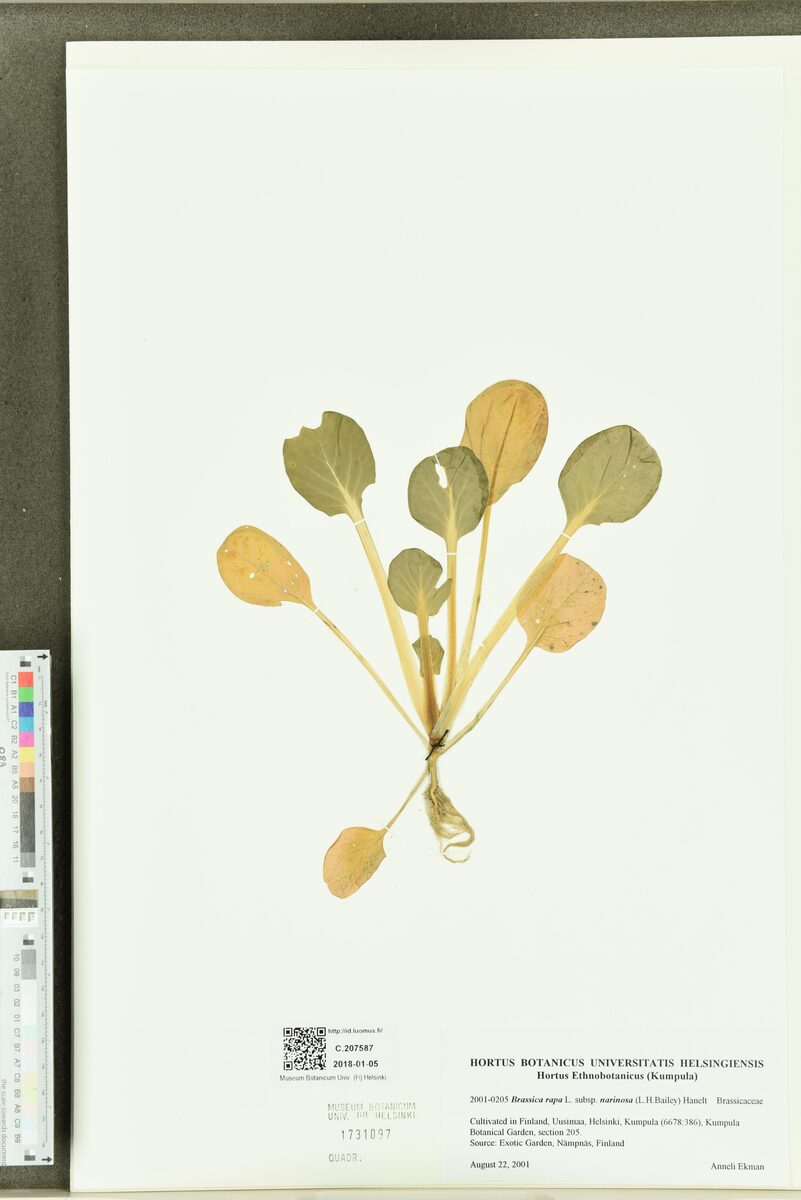
Wasabia japonica - (Miq.)Matsum.
(Miq.)Matsum.
Japanese Horseradish, Wasabi
No photos yet for Wasabia japonica - (Miq.)Matsum.
Sign in to contribute a photoDescription
Wasabia japonica is a PERENNIAL growing to 0.3 m (1ft) by 0.2 m (0ft 8in). See above for USDA hardiness. It is hardy to UK zone 8. It is in flower from April to May. The species is hermaphrodite (has both male and female organs). Suitable for: light (sandy), medium (loamy) and heavy (clay) soils. Suitable pH: mildly acid, neutral and basic (mildly alkaline) soils. It can grow in semi-shade (light woodland) or no shade. It prefers wet soil and can grow in water.
Edible Uses
Condiment. Root - a horseradish substitute. The fleshy rhizomes are finely grated and prepared into an attractive fresh green paste which is much used as a condiment in Japan. It is considered to have a distinct flavour and pungency that is superior to horseradish, Armoracia rusticana. The pungency rapidly deteriorates once the root has been cut. Roots of plants 15 - 24 months old are best. Leaves, flowers and petioles - cooked. The leaves, flowers, leafstalks and freshly sliced rhizome are soaked in salt water and then mixed with saki lees to make a popular Japanese pickle called 'wasabi-zuke'. The following analysis is said to belong to the leaves but it looks more like a root analysis. The leaves contain about 6.1% protein, 0.2% fat, 22.3% carbohydrate, 1.3% ash.
Medicinal Uses
Digestive. The root is a pungent warming herb that stimulates the digestion. It is used internally as an antidote to fish poison. (This probably refers to food poisoning caused by eating fish).
Distribution
E. Asia - Japan.
Where It Grows
TEMPERATE ASIA: Russian Federation (Sakhalin), Korea, Japan (Hokkaidô, Honshu, Kyushu, Shikoku)
Cultivation
Prefers a position in wet soil or shallow water. The best quality roots are produced from plants growing in semi-shade in clear running spring water at a temperature between 11 - 14°c. This species is cultivated in eastern Asia for its edible root which is used in much the same way as horseradish, it takes 3 - 5 years to produce marketable roots. The roots are finger-thick and up to 18cm long.
Propagation
Seed - sow spring in a greenhouse and keep the seed permanently moist. Prick out the seedlings into individual pots when they are large enough to handle and grow them on in the greenhouse for their first year. Stand the pots in shallow water to ensure the plants do not dry out. Plant them out in late spring or early summer. Division in spring as the plant comes into growth. Very easy, the larger divisions can be planted out direct into their permanent positions. We have found that it is best to pot up smaller divisions and grow them on in light shade in a greenhouse or cold frame until they are growing away well. Plant them out in the summer or the following spring.