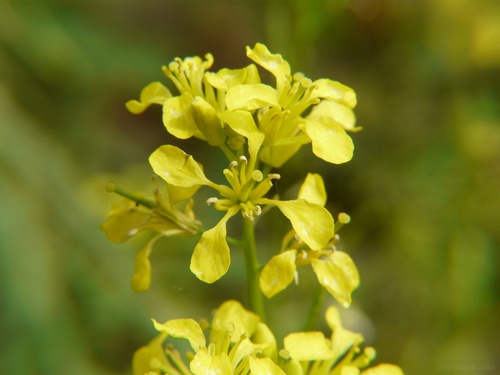
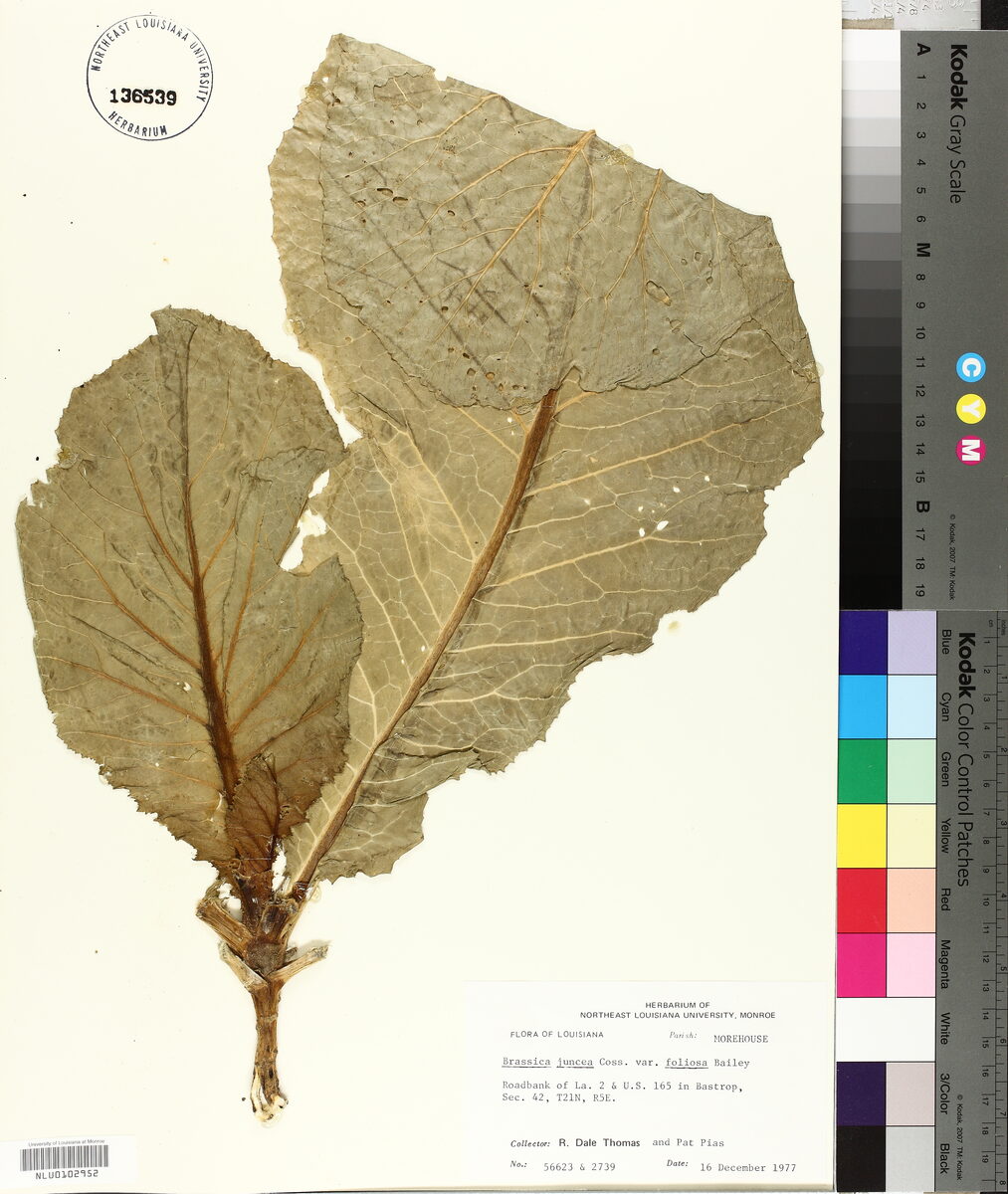
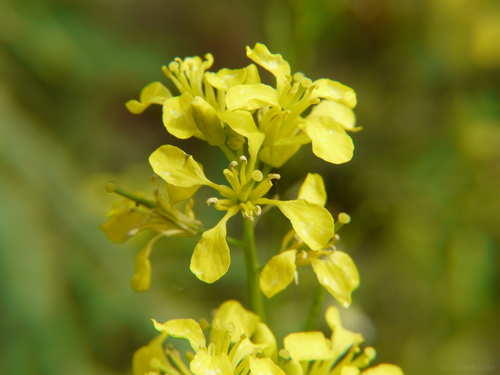
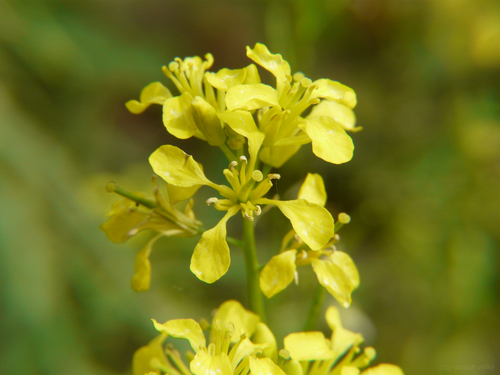
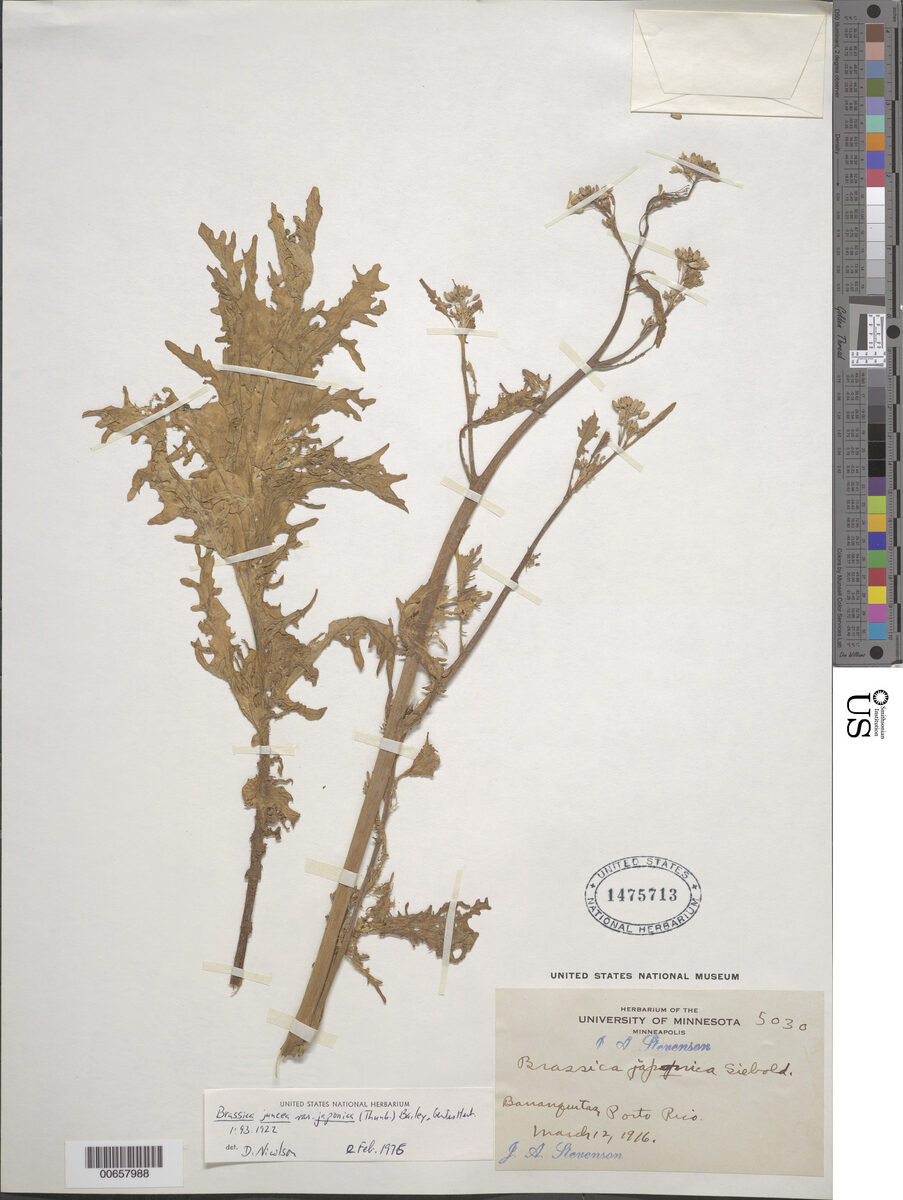
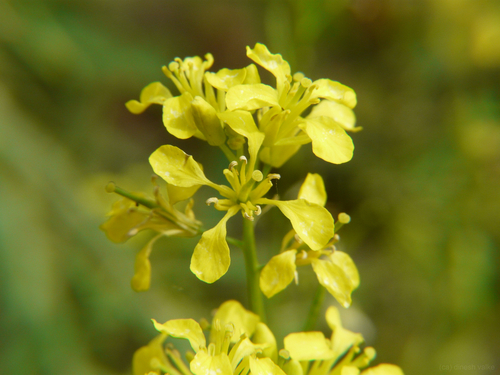
Brassica rapa
L.
Wild turnip
wikimedia· cc-by-sa
Karl-Heinz Wellmann (via Wikimedia Commons)
wikimedia· cc-by
semizzang (via Wikimedia Commons)
wikimedia· cc-by-sa
Miya (via Wikimedia Commons)
iNaturalist· cc-by-nc
(c) Stepan Senator, some rights reserved (CC BY-NC), uploaded by Stepan Senator
iNaturalist· cc-by-nc
(c) Шильников Дмитрий Сергеевич, some rights reserved (CC BY-NC), uploaded by Шильников Дмитрий Сергеевич
iNaturalist· cc-by-nc
(c) emileechristinee, some rights reserved (CC BY-NC)
Summary
Source: WikipediaBrassica rapa is an annual to biennial plant species native to Eurasia that is from the Brassicaceae family. It has been widely cultivated into many forms, including the turnip (a root vegetable), komatsuna, Chinese cabbage, bomdong, pak choi / bok choy, and rapini. Its domesticated forms include turnips and leafy greens, such as bok choy and napa cabbage. The oilseed types are grown for food and industrial uses. Genetic studies indicate that B. rapa was one of the earliest domesticated brassicas, with turnip-like forms arising first and additional morphotypes developing independently across Eurasia. Wild, feral, and cultivated populations are found worldwide, making the species important agriculturally, economically, and ecologically. Brassica rapa subspecies oleifera is an oilseed commonly known as turnip rape, field mustard, bird's rape, and keblock. Rapeseed oil is a general term for oil from some Brassica species. Food grade oil made from the seed of low-erucic acid Canadian-developed strains is also called canola oil, while non-food oil is called colza oil. Canola oil can be sourced from Brassica rapa and Brassica napus, which are commonly grown in Canada, and Brassica juncea, which is less common.
Description
A cabbage family herb. It is an erect annual plant. It has a round white fleshed taproot. It is often tinged purple. The leaves are divided and have hairs. Where the leaves join the root it is not raised into a "neck". There are Asian or more tropical varieties. These will produce seed in warmer places. The wild form is a thin plant with leaves that clasp the stem. The pods are 4-6.5 cm long and have seedless beaks 2-3.2 cm long.
Edible Uses
Edible Parts: Leaves Root Edible Uses: Leaves - raw or cooked. The cooked leaves make an acceptable vegetable, though they are coarser than the related cabbage. They are more often used as a spring greens, sowing the plants in the autumn and allowing them t overwinter. Young leaves can also be added in small quantities to salads, they have a slightly hot cabbage-like flavour and some people find them indigestible. A nutritional analysis is available. Root - raw or cooked. Often used as a cooked vegetable, the young roots can also be grated and eaten in salads, they have a slightly hot flavour like a mild radish. A nutritional analysis is available. References More on Edible Uses Composition Figures in grams (g) or miligrams (mg) per 100g of food. Leaves (Dry weight) 2300 Calories per 100g Water : 0% Protein: 30g; Fat: 4g; Carbohydrate: 54g; Fibre: 7g; Ash: 12g; Minerals - Calcium: 1600mg; Phosphorus: 1000mg; Iron: 17mg; Magnesium: 0mg; Sodium: 0mg; Potassium: 4500mg; Zinc: 0mg; Vitamins - A: 0mg; Thiamine (B1): 30mg; Riboflavin (B2): 2mg; Niacin: 8mg; B6: 0mg; C: 500mg; Reference: Notes:
Traditional Uses
The swollen root is cooked and eaten. The leaves can be eaten. The seeds can be ground to a powder and used as a seasoning.
This uses section is brief — help expand it
Medicinal Uses
Cancer Poultice A decoction of the leaves or stems is used in the treatment of cancer. The powdered seed is said to be a folk remedy for cancer. The crushed ripe seeds are used as a poultice on burns. Some caution should be exercised here since the seed of most brassicas is rubefacient. The root when boiled with lard is used for breast tumours. A salve derived from the flowers is said to help skin cancer.
Distribution
It is a temperate plant. It will grow in both the lowlands and highlands in the tropics but does best in the highlands between 1700 and 2600 m altitude. In Java it can be grown above 1,000 m above sea level. It is frost resistant. A temperature of 9-16°C is best. Also short daylength and cool weather are important. It grows in Nepal to 2500 m altitude. It suits hardiness zones 9-11. Tasmania Herbarium. In Yunnan.
Where It Grows
Africa, Albania, Argentina, Asia, Australia, Bangladesh, Bhutan, Britain, Canada, Cape Verde, Chile, China, Dominican Republic, East Africa, Ethiopia, Europe*, Haiti, Hawaii, Himalayas, Indochina, Iraq, Ireland, Korea, Madagascar, Mexico, Middle East, Mongolia, Nepal, New Zealand, North America, Pacific, Pakistan, Papua New Guinea, PNG, Paraguay, Puerto Rico, Philippines, Saudi Arabia, SE Asia, South Africa, Southern Africa, South America, Tasmania, Thailand, Uruguay, Uzbekistan, West Africa, West Indies, Zimbabwe,
Cultivation
Turnip is basically a cool climate crop that is resistant to frost and mild freezes. The plants are very easily grown, provided they grow quickly when young and the soil is not allowed to dry out. They succeed in full sun in a well-drained fertile preferably alkaline soil. Turnips grow best in deep, friable, highly fertile soil with pH 5.5 - 6.8. They are said to prefer a light sandy soil, especially when grown for an early crop in the spring, and dislike a heavy soil. They prefer cool moist growing conditions. Turnips tolerate an annual precipitation of 35 to 410cm, an annual average temperature range of 3.6 to 27.4°C and a pH in the range of 4.2 to 7.8. Temperatures below 10°C cause the plants to run to seed, even if they have not yet formed an edible root. The turnip is often cultivated, both in the garden and commercially, for its edible root. A fast growing plant, it can take less than ten weeks from sowing to harvesting. Its short growing season makes turnips very adaptable as a catch crop. There are several named varieties and by careful selection and successional sowing it is possible to harvest roots all year round. The roots are fairly cold hardy and can be left in the ground during the winter, harvesting them as required. However, they can be troubled by slugs and other creatures so it is often better to harvest them in late autumn or early winter and store them in a cool but frost-free place. This species has long been cultivated as an edible plant and a large number of forms have been developed. Botanists have divided these forms into a number of groups, and these are detailed below. Separate entries in the database have been made for each group. B. rapa. The species was actually named for the cultivated garden turnip with its edible swollen tap root. This form is dealt with on this record. B. rapa campestris. This is the wild form of the species. It does not have a swollen root and is closest to the forms grown for their oil-rich seeds. B. rapa chinensis. Pak choi has long been cultivated in the Orient for its large tender edible leaves which are mainly produced in the summer and autumn. B. rapa dichotoma. Cultivated in the Orient mainly for its oil-rich seeds. B. rapa narinosa. Chinese savoy is another Oriental form. It is grown for its edible leaves. B. rapa nipposinica. Mizuna is a fast-growing cold-hardy form with tender edible leaves that can be produced all year round. B. rapa oleifera. The stubble turnip has a swollen edible root, though it is considered too coarse for human consumption and is grown mainly for fodder and as a green manure. It is also cultivated for its oil-rich seeds. B. rapa parachinensis. False pak choi is very similar to B. rapa chinensis with tender edible leaves, though it is considerably more cold-hardy. B. rapa pekinensis. Chinese cabbages are widely grown in the Orient. The large tender leaves often form a cabbage-like head. B. rapa perviridis. Spinach mustard is grown for its edible leaves. A very cold-hardy plant, and also able to withstand summer heat, it can provide a crop all year round. B. rapa trilocularis. Indian colza is mainly grown for its oil-rich seeds. Grows well with peas but dislikes growing with hedge mustard and knotweed. A good bee plant.
Propagation
Seed - sow in situ from early spring to late summer. The first sowing can be made under cloches in late winter and will be ready for use in early summer. The latest sowings for winter use can be made in mid to late summer.
Other Uses
Fodder Insecticide Turnip root peelings contain a natural insecticide. The chopped roots can be brewed into a tea with flaked soap, this is then strained before use. It is effective against aphids, red spider mites and flies. Special Uses Dynamic accumulator
Production
The roots are ready after 8-10 weeks. They need to be harvested when young to avoid becoming hard and fibrous.
Notes
There are about 30 Brassica species and many cultivated varieties.
Nutrition
| Part | Moisture | kJ | kcal | Protein | Vit A | Vit C | Iron | Zinc |
|---|---|---|---|---|---|---|---|---|
| Leaves | 90 | 117 | 28 | 3 | 46 | 139 | 1.9 | — |
| Roots raw | 90 | 113 | 27 | 0.9 | — | 21 | 0.3 | — |
Synonyms
Also Known As
Colza, Couve-naveira, Gantemula, Mortaga, Mostacilla, Mostarda, Mostaza, Nabica, Nabo blanco, Nabo salvaje, Nabo silvestre, Navina, Naviza, Ngedon, Nuucu, Pata de cuervo, Rave, Repollo silvestre, Shita, Tenjilo, Xartala, Yuyo
References (65)
- Ali, A. M. S., 2005, Homegardens in Smallholder Farming Systems: Examples from Bangladesh. Human Ecology, Vol. 33, No. 2 pp. 245-270
- Al-Sodany, Y. M., et al, 2013, Medicinal Plants in Saudi Arabia: I. Sarrwat Mountains at Taif, KSA. Academic Journal of Plant Sciences 6 (4): 134-145
- Anderson, E. F., 1993, Plants and people of the Golden Triangle. Dioscorides Press. p 204
- Ara, R. I. T., 2015, Leafy Vegetables in Bangladesh. Photon eBooks. p 51
- Ashagre, M., et al, 2016, Ethnobotanical study of wild edible plants in Burji District, Segan Area Zone of Southern Nations, Nationalities and Peoples Region (SNNPR), Ethiopia. Journal of Ethnobiology and Ethnomedicine (2016) 12:32
Show all 65 references Hide references
- Barreau, A., et al, 2016, How Can We Teach Our Children if We Cannot Access the Forest? Generational Change in Mapuche Knowledge of Wild Edible Plants in Andean Temperate Ecosystems of Chile. Journal of Ethnobiology 36(2): 412–432
- Bianchini, F., Corbetta, F., and Pistoia, M., 1975, Fruits of the Earth. Cassell. p 74
- Bodkin, F., 1991, Encyclopedia Botanica. Cornstalk publishing, p 169
- Brouk, B., 1975, Plants Consumed by Man. Academic Press, London. p 142
- Burkill, H. M., 1985, The useful plants of west tropical Africa, Vol. 1. Kew.
- Cordero, S. E., Abello, L. A., & Galvez, F. L., 2017, Plantas silvestres comestibles y medicinales de Chile y otras partes del mundo. CORMA p 152
- Curtis, W.M., 1956, The Students Flora of Tasmania Vol 1 p 40
- Daly, A. B., 20014, Narrating changing foodways: wild edible plant knowledge and traditional food systems in Mapuche lands of the Andean Temperate Forests, Chile. Masters Thesis Vancouver. p 45
- Diaz-Betancourt, M., et al, 1999, Weeds as a future source for human consumption. Rev. Biol. Trop. 47(3):329-338
- Duarte, M. C., et al, 2022, Diversity of Useful Plants in Cabo Verde Islands: A Biogeographic and Conservation Perspective. Plants 2022, 11, 1313 p 10
- Facciola, S., 1998, Cornucopia 2: a Source Book of Edible Plants. Kampong Publications, p 55
- FAO, 1988, Traditional Food Plants, FAO Food and Nutrition Paper 42. FAO Rome p 121
- Farfan, B., et al, 2007, Mazahua Ethnobotany and Subsistence in the Monarch Butterfly Biosphere Reserve, Mexico. Economic Botany 61(2) 2007, pp 173-191
- Flora of Australia, Volume 8, Lecythidales to Batales, Australian Government Publishing Service, Canberra (1982) p 238
- Fox, F. W. & Young, M. E. N., 1982, Food from the Veld. Delta Books. p 134
- French, B.R., 1986, Food Plants of Papua New Guinea, A Compendium. Asia Pacific Science Foundation p 120
- Galalaey, A. M. K., et al, 2021, Ethnobotanical study of some wild edible plants in Hujran Bason, Kurdistan Region of Iraq. ZANCO Journal of Pure and Applied Sciences. Salahaddin University-Erbil p 26
- Hedrick, U.P., 1919, (Ed.), Sturtevant's edible plants of the world. p 116
- Hussey, B.M.J., Keighery, G.J., Cousens, R.D., Dodd, J., Lloyd, S.G., 1997, Western Weeds. A guide to the weeds of Western Australia. Plant Protection Society of Western Australia. p 113
- Irving, M., 2009, The Forager Handbook, A Guide to the Edible Plants of Britain. Ebury Press p 83
- Jardin, C., 1970, List of Foods Used In Africa, FAO Nutrition Information Document Series No 2.p 61
- Jha, P. K., et al, 1996, Plant genetic resources of Nepal: A guide for plant breeders of agricultural, horticultural and forestry crops. Euphytica 87:189-210
- Kew Plants of the World Online
- Kiple, K.F. & Ornelas, K.C., (eds), 2000, The Cambridge World History of Food. CUP p 1873
- Ladio, A., Lozada, M. & M. Weigandt, 2007, Comparison of traditional wild plant knowledge between aboriginal communities inhabiting arid and forest environments in Patagonia, Argentina. Journal of Arid Environments 69 (2007) 695–715
- Liu, Yi-tao, & Long, Chun-Lin, 2002, Studies on Edible Flowers Consumed by Ethnic Groups in Yunnan. Acta Botanica Yunnanica. 24(1):41-56 (As Brassica campestris var. oleifera)
- Low, T., 1991, Wild Herbs of Australia and New Zealand. Angus & Robertson. p 51 (Drawing)
- Mabey, R., 1973, Food for Free. A Guide to the edible wild plants of Britain, Collins. p 66, 102
- MacKinnon, A., et al, 2009, Edible & Medicinal Plants of Canada. Lone Pine. p 215
- Macmillan, H.F. (Revised Barlow, H.S., et al), 1991, Tropical Planting and Gardening. Sixth edition. Malayan Nature Society. Kuala Lumpur. p 370
- Magwede, K., van Wyk, B.-E., & van Wyk, A. E., 2019, An inventory of Vhavenḓa useful plants. South African Journal of Botany 122 (2019) 57–89
- Malezas Comestibles del Cono Sur, INTA, 2009, Buernos Aires
- Manandhar, N.P., 2002, Plants and People of Nepal. Timber Press. Portland, Oregon. p 121
- Martin, F.W. & Ruberte, R.M., 1979, Edible Leaves of the Tropics. Antillian College Press, Mayaguez, Puerto Rico. p 187
- Ochse, J.J. et al, 1931, Vegetables of the Dutch East Indies. Asher reprint. p 173
- Paczkowska, G. & Chapman, A.R., 2000, The Western Australian Flora. A Descriptive Catalogue. Western Australian Herbarium. p 185
- Pascual-Mendoza, S. et al, 2021, Traditional knowledge of edible plants in an indigenous community in the Sierra Norte of Oaxaca, Mexico. Plant Biosystems - An International Journal Dealing with all Aspects of Plant Biology
- Plants for a Future database, The Field, Penpol, Lostwithiel, Cornwall, PL22 0NG, UK. http://www.scs.leeds.ac.uk/pfaf/
- Plants of Haiti Smithsonian Institute http://botany.si.edu
- Plowes, N. J. & Taylor, F. W., 1997, The Processing of Indigenous Fruits and other Wildfoods of Southern Africa. in Smartt, L. & Haq. (Eds) Domestication, Production and Utilization of New Crops. ICUC p 186
- Pradhan, R., et al, 2020, Potential Wild Edible Plants and its Significance in Livelihood of Indigenous People of Male Mahadeshwara Hills, Karnataka. Economic Affairs Vol. 64, No. 4 pp. 01-14
- Purseglove, J.W., 1968, Tropical Crops Dicotyledons, Longmans. p 95
- Rangel-Landa, S., et al, 2017, Sociocultural and ecological factors influencing management of edible and non-edible plants: the case of Ixcatlan, Mexico. Journal of Ethnobiology and Ethnomedicine. 13:59
- Ruiters-Welcome, A. K., 2019, Food plants of southern Africa. Ph.D. thesis. Univ. of Johannesburg p 39
- Sharma, B.B., 2005, Growing fruits and vegetables. Publications Division. Ministry of Information and broadcasting. India. p 213
- Song, M., et al, 2013, Traditional knowledge of wild edible plants in Jeju Island, Korea. Indian Journal of Traditional Knowledge. 12(2) pp 177-194 (As Brassica oleracea var. glabra)
- Sp. pl. 2:666. 1753
- Tasmanian Herbarium Vascular Plants list p 16
- Terra, G.J.A., 1973, Tropical Vegetables. Communication 54e Royal Tropical Institute, Amsterdam, p 33
- Tindall, H.D., 1983, Vegetables in the tropics. Macmillan p. 129
- Urgamal, M., Oyuntsetseg, B., Nyambayar, D. & Dulamsuren, Ch. 2014. Conspectus of the vascular plants of Mongolia. (Editors: Sanchir, Ch. & Jamsran, Ts.). Ulaanbaatar, Mongolia. “Admon“ Press. 334pp. (p. 79-90).
- USDA, ARS, National Genetic Resources Program. Germplasm Resources Information Network - (GRIN). [Online Database] National Germplasm Resources Laboratory, Beltsville, Maryland. Available: www.ars-grin.gov/cgi-bin/npgs/html/econ.pl (10 April 2000)
- van Wyk, B., 2005, Food Plants of the World. An illustrated guide. Timber press. p 110
- Vieyra-Odilon, L and Vibrans, H., 2001, Weeds as Crops: The Value of Maize Field Weeds in the Valley of Toluca, Mexico. Economic Botany 55(3):426-443
- Welcome, A. K. & Van Wyk, B.-E., 2019, An inventory and analysis of the food plants of southern Africa. South African Journal of Botany 122 (2019) 136–179
- World Checklist of Useful Plant Species 2020. Royal Botanic Gardens, Kew
- Yeshi, K. et al, 2017, Taxonomical Identification of Himalayan Edible Medicinal Plants in Bhutan and the Phenolic Contents and Antioxidant Activity of Selected Plants. TBAP 7 (2) 2017 pp 89 - 106
- Youssef, R. S. A., 2013, Medicinal and non-medicinal uses of some plants found in the middle region of Saudi Arabia. Journal of Medicinal Plants Research. Vol. 7(34), pp. 2501-2517
- Zhang, L., et al, 2016, Ethnobotanical study of traditional edible plants used by the Naxi people during droughts. Journal of Ethnobiology and Ethnomedicine. 12:39
- Zhou Taiyan, Lu Lianli, Yang Guang, Ihsan A. Al-Shehbaz, BRASSICACEAE (CRUCIFERAE), Flora of China.