Brassica rapa chinensis - (L.)Hanelt.
(L.)Hanelt.
Pak Choi
gbif· cc-by-nc
Hugo Sun
gbif· cc-by-nc
Hugo Sun
gbif· cc-by-nc
Hugo Sun
Description
Brassica rapa chinensis is a BIENNIAL growing to 0.9 m (3ft). See above for USDA hardiness. It is hardy to UK zone 7 and is not frost tender. It is in flower from May to August. The species is hermaphrodite (has both male and female organs) and is pollinated by Bees. The plant is self-fertile. Suitable for: light (sandy), medium (loamy) and heavy (clay) soils and prefers well-drained soil. Suitable pH: mildly acid, neutral and basic (mildly alkaline) soils. It can grow in semi-shade (light woodland) or no shade. It prefers moist soil.
Edible Uses
Oil. Leaves - raw or cooked. They can be eaten at any stage from seedling to mature plant. Well-flavoured, they are sweet with a hint of mustard.The leaves are also dried for winter use. The leaves have pronounced stems and these can also be eaten, they tend to have a mild, almost bland flavour. A nutritional analysis is available. Immature flowering stems - cooked like broccoli. A sweet flavour. An edible oil is obtained from the seed.
Medicinal Uses
Antirheumatic Antiscorbutic Resolvent. The leaf is antiarthritic, antiscorbutic and resolvent.
Distribution
A cultivar of garden origin.
Where It Grows
(Brassica rapa) Albania, Algeria, Bulgaria, Eritrea, Ethiopia, Greece, Iran, Iraq, Italy, Kriti, Lebanon-Syria, Libya, Morocco, North Caucasus, Oman, Palestine, Saudi Arabia, Transcaucasus, Tunisia, Turkey, Yugoslavia.
Cultivation
Succeeds in full sun in a well-drained fertile preferably alkaline soil. Prefers a pH of 5.5 to 7. Tolerates a pH in the range 4.3 to 7.5. Prefers a cool moist reasonably fertile soil. The plant is shallow rooted and intolerant of drought, it needs to be grown in a moist fertile soil for the best quality leaves. Plants are not tremendously cold-hardy, though they will withstand light frosts. Pak choi is widely cultivated, especially in China, for its edible leaves which are produced mainly in the summer and autumn. A fast-growing plant, there are many named varieties and some can be ready in as little as five weeks from sowing the seed. Forms with green stems tend to stand up better to adverse conditions than white-stemmed forms.
Propagation
Seed - sow in situ May to August. Spring sown crops are prone to run quickly to seed if there is a spell of cold weather. Some varieties can also be sown in a cold greenhouse in autumn or early spring to provide leaves overwinter and in late spring.
Other Uses
Oil. None known
Synonyms
More from Brassicaceae
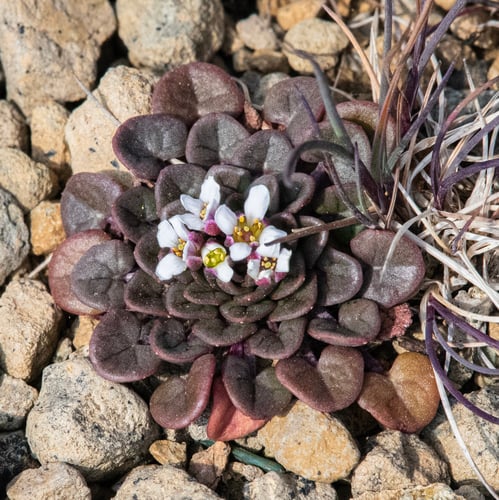
Cochlearia scotica
Northern Scurvy grass
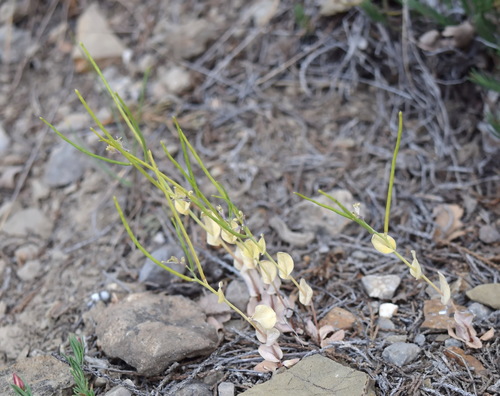
Conringia clavata
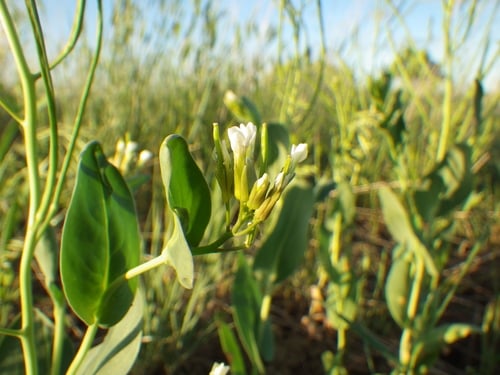
Conringia orientalis
Hare's-ear mustard, Wild cabbage, Treacle mustard
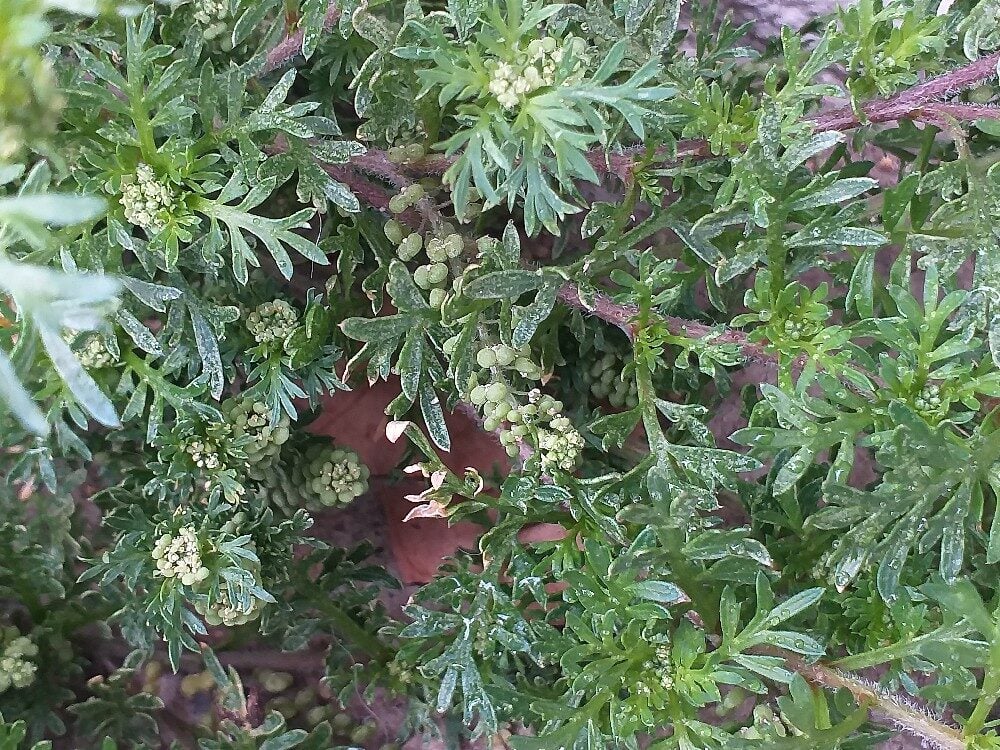
Coronopus didymus - (L.)Sm.
Swine Wartcress, Lesser swinecress
Coronopus squamatus - (Forssk.)Asch.
Crowfoot, Greater swinecress
Crambe abyssinica
Abyssinian kale, Crambe