Myrianthus arboreus
P.Beauv.
Giant yellow mulberry, Monkeyfruit
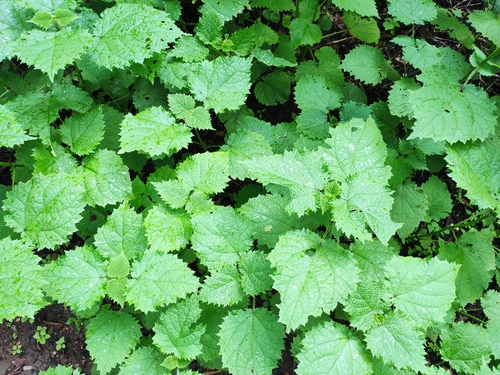
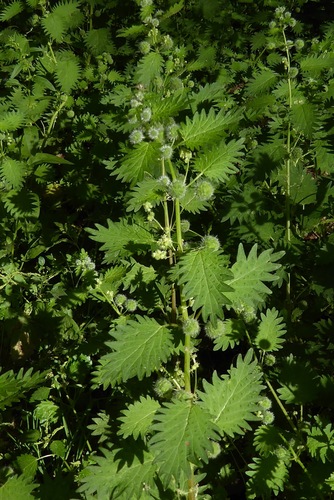
iNaturalist· cc-by-nc
(c) Beat Akeret, some rights reserved (CC BY-NC), uploaded by Beat Akeret
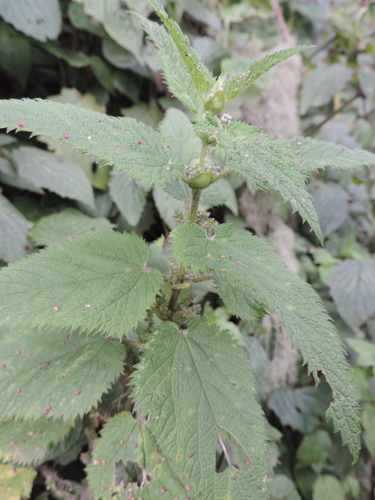
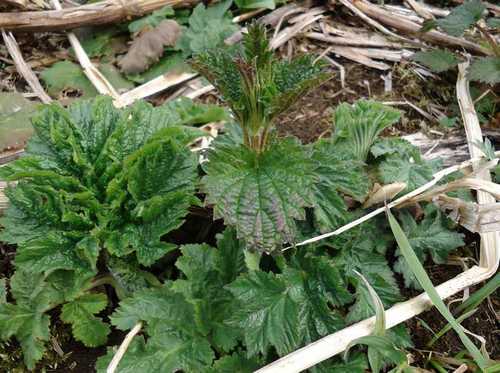
iNaturalist· cc-by-nc
(c) Carel Jongkind, some rights reserved (CC BY-NC), uploaded by Carel Jongkind
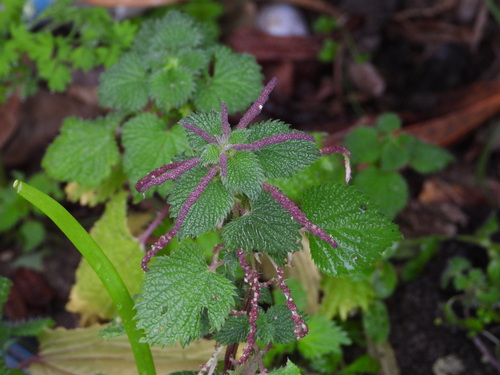
iNaturalist· cc-by-nc
(c) Bart Wursten, some rights reserved (CC BY-NC), uploaded by Bart Wursten
Description
Myrianthus arboreus is an evergreen Tree growing to 15 m (49ft) by 10 m (32ft) at a medium rate. See above for USDA hardiness. It is hardy to UK zone 10. The plant is not self-fertile. Suitable for: light (sandy), medium (loamy) and heavy (clay) soils and prefers well-drained soil. Suitable pH: mildly acid, neutral and basic (mildly alkaline) soils. It cannot grow in the shade. It prefers moist or wet soil.
Edible Uses
Oil. Young leaves - cooked. They are commonly eaten in a vegetable-soup - the soup being so highly considered by the local people as to evoke the saying that 'one will kill his child for the sake of ibishere soup'. Fruit - raw. The fruit contains 5 - 15 seeds, each surrounded by a sweet or acidulous pulp which is generally well-liked and commonly eaten. The fruit is heart-shaped and may attain 10 - 15 cm in diameter, it is very hard and green when unripe, but turns yellow and soft when mature. Seed - cooked. The seed contains about 45% oil, of which linoleic comprises about 93% of the whole. The kernel is about 10mm long by 5 - 7mm wide, it is enclosed in a woody pericarp amounting to 60 - 65% in weight of the whole. The seed also contains about 19% sugars and 30% proteins. The protein is unusually rich in cystine, which is of potential value to a population suffering from a chronic deficiency of sulphur-bearing amino acids.
Medicinal Uses
Antidiarrhoeal Antihaemorrhoidal Antitussive Cholagogue Dysentery Febrifuge Malaria Odontalgic Parasiticide. The bark is said to be antidysenteric, cholagogue and taenifuge. It is used in the treatment of chest-complaints. Scrapings of the bark, cooked in palm-oil, are taken to relieve sore-throat. The leaves are chopped up small are eaten raw with salt for treating heart-troubles; pregnancy complications; dysmenorrhoea; and incipient hernia. An extract of the leaves, combined with Alchornea spp., is used in the treatment of dysentery, and the leafy shoots are chewed for this same purpose. The liquid in which young leaf-flushes and a peeled green banana have been boiled is a medicine taken little and often to stop diarrhoea and vomiting. The leaves are an ingredient of a febrifuge given to small children. The leaf or leaf-petiole is beaten into a plaster for application to boils. Sap from the young leaves, or the terminal buds, is applied topically to toothache; applied to the chest to treat bronchitis; or is used as a throat-paint for laryngitis or sore throat. It is used as an analgesic for muscular pains, and is put into enemas for haemorrhoids. When combined with the leaves of Holarrhena floribunda and a chilli, it is used in an enema to relieve pain in the back and loins. The aerial roots yield an abundant amount of sap when cut up. This is drunk as an anti-tussive and anti-diarrhoeic, and as a remedy for haematuria and blennorrhoea. A vapour-bath made from the diced roots, combined with maleguetta pepper, is used in the treatment of headache. The whole fruit is boiled in sap from the tree or in palm wine or other fruit ferments to take as an emeto-purgative. It is preferred to the less active bark or leaves which may also be used for the same purpose. Several pentacyclic triterpenoids have been isolated from the wood and the roots. Euscaphic acid, myrianthic acid, tormentic acid, ursolicacid and a derivative of ursenoic acid have been isolated from stems. Myrianthinic acid was isolated from the bark. The wood also contains myrianthiphyllin, a lignan cinnamate. Bark extracts of Myrianthus arboreus have shown antiplasmodial, antimycobacterial and antitrypanosomal effects in vitro, which supports some of its uses in traditional medicine, e.g. To treat malaria.
Distribution
Tropical Africa - Guinea to Central African Republic and Uganda, south to Angola, DR Congo and Tanzania.
Where It Grows
AFRICA: Tanzania, Uganda, Central African Republic, Cameroon, Democratic Republic of the Congo, Congo, Gabon, Equatorial Guinea, Benin, Côte D Ivoire, Ghana, Guinea, Liberia, Nigeria, Sierra Leone, Angola.
Cultivation
A plant of moderate elevations in the moist tropics, being found from 700 - 1,200 metres. It is found in areas where the mean annual temperature is in the range 16 - 26°c and the mean annual rainfall is 1,400 - 4,000mm. Prefers a damp soil. Young plants can begin producing fruit when 4 - 5 years old from seed. The plant has mycorrhizal associations, thus helping to enrich the soil with nitrogen. A dioecious species, both male and female forms need to be grown if fruit and seed are required.
Propagation
Seed - best sown as soon as it is ripe. About 40% of the seed germinates within 1 month, but this rate can be improved by soaking the seed for 12 hours in warm water prior to sowing. The seed also germinates better if it has passed through the gut of an animal. Bud grafting and stem cuttings have been successfully used for propagation in experiments.
Other Uses
Fencing Fuel Mulch Oil Parasiticide Repellent Soap making Soil conditioner Teeth Wood. Agroforestry Uses: The leaves are enormous, to 70 cm across, digitately compound of 7 - 9 leaflets, the largest attaining 50 cm length by 25 cm breadth. When they fall and lie on the ground they form a good groundcover retaining moisture and rotting down to form a thick humus. Other Uses Lye can be extracted from the ash of the wood and this is used in making soap. Extracts of the plant have been shown to deter the termite Reticulitermes lucifugus. The yellowish-white wood is moderately light, soft, fibrous and difficult to work. It is used to make domestic utensils. Though perishable it is also used for fencing. The wood is used for fuel.
Synonyms
Also Known As
Giant yellow mulberry, Monkeyfruit, Anyankoma, Bohuma, Bokomu, Bongunguna, Bouma, Ciwele, Engakom, Fofoi, Isakama, Konde, Liwisa, Mdewerere, Mfusa, Mfutsa, Mhunsa, Mkonde, Mkwayaga, Ndigo, Ongo, Ujuju, Umufe, Unhana, bush pineapple