Urtica massaica
Mildbr. ex Peter
Maasai stinging nettle
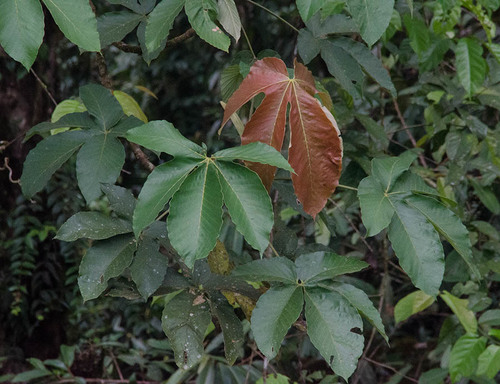
iNaturalist· cc-by-nc-sa
(c) Marco Schmidt, some rights reserved (CC BY-NC-SA), uploaded by Marco Schmidt
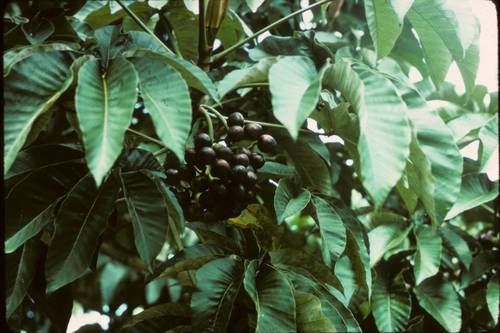
iNaturalist· cc-by-nc-sa
(c) Marco Schmidt, some rights reserved (CC BY-NC-SA)
Summary
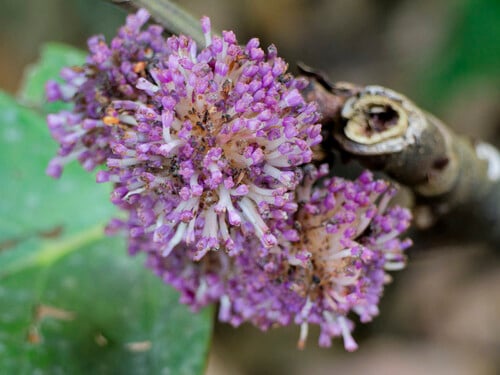
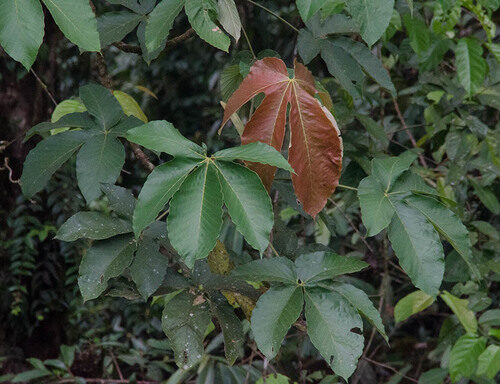
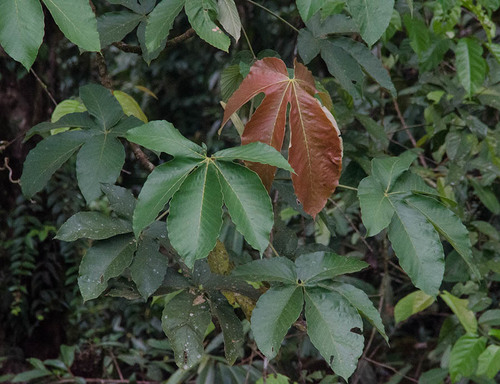
Source: WikipediaUrtica massaica is a species of flowering plant in the nettle family Urticaceae, referred to in English as the Maasai stinging nettle or forest nettle. It is native to Africa, where it can be found in the Democratic Republic of the Congo, Burundi, Rwanda, Kenya, Uganda, and Tanzania; it is found in natural glades and clearings, frequently near houses. This plant is a rhizomatous perennial herb up to 2 metres (6 ft 7 in) tall. It is covered in stinging hairs. The heart-shaped leaves are up to 13 centimetres (5.1 in) long by 10.5 centimetres (4.1 in) wide and have serrated edges. The plant is dioecious. The flowers are borne in panicles. This plant is used for food and medicine in several African nations. It is used in Rwanda to treat diarrhea. The Maasai use it to treat stomach ache. They are used in Kenya to treat malaria. Other medicinal uses include treatment of fractures and venereal diseases. The plant is also used to repel rats and to keep cattle out of crops. Gorillas eat the plant.
Description
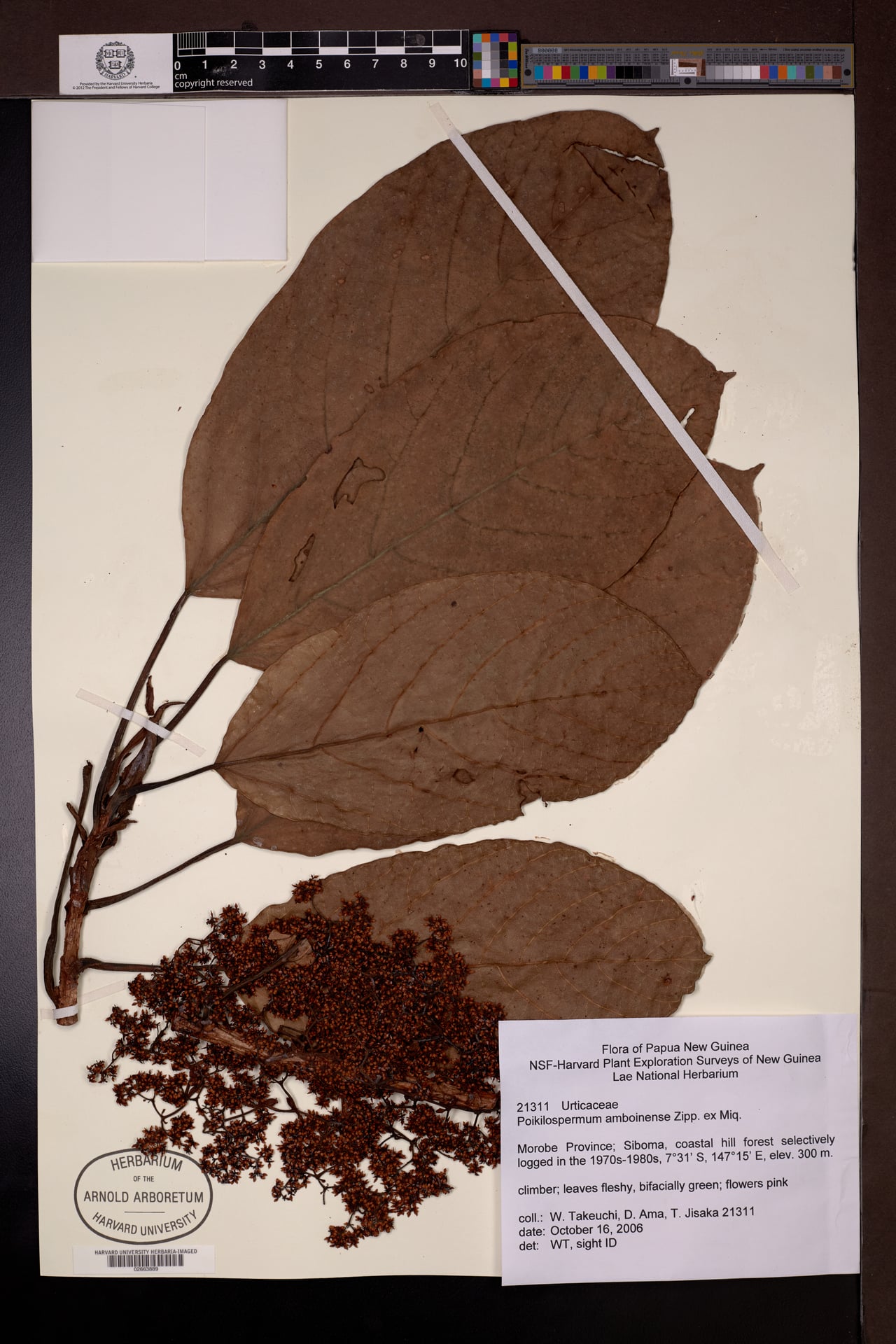
It is a stinging nettle. It is like Urtica simensis but is more robust and has double teeth around the edges of the leaves. It is a herb that keeps growing from year to year. It grows 2 m high. The stinging hairs are 2 mm long. The leaf stalks are 4.5 cm long. The leaf blades are 7-13 cm long by 6-11 cm wide. There are double teeth along the edge. The flowers are of one sex. The fruit is oval, flattened and dry. It is 1 mm long.
Edible Uses
The young leaves are wilted and boiled, then eaten as a vegetable and used as a minor local vegetable in some regions.
Traditional Uses
The young leaves are wilted, boiled and eaten as a vegetable.
This uses section is brief — help expand it
Medicinal Uses
A decoction of the roots is used as a remedy for stomach-ache. The leaves are used to treat malaria. The macerated roots and leaves are used for the treatment of hepatic diseases. The plant is used alone, and also in mixtures with other species, to treat numerous ailments, including bruises, injuries, fractures, venereal diseases, rheumatism and urethral leak.
Known Hazards
It has 2 mm-long stinging hairs and can become a serious weed problem.
Distribution
A tropical plant. In Kenya it grows in moist bushland between 1,500-3,250 m altitude. It grows in loose soils with plenty of organic matter.
Where It Grows
Africa, Burundi, Central Africa, Congo, East Africa, Kenya, Rwanda, Tanzania, Uganda,
Cultivation
Plants can be grown from seed or sections of rhizomes. Old plants can be cut back to stimulate new leaves.
Propagation
Seed - Division of the rhizomes.
Other Uses
The leaves are used as a repellent against rats and for the protection of crops from grazing cattle.
Production
Leaves are harvested with gloves to protect the hands. They are collected during the rainy season.
Other Information
It is fairly commonly used in some places. It is a minor local vegetable.
Notes
Caution: It can be a serious weed problem.
Nutrition
| Part | Moisture | kJ | kcal | Protein | Vit A | Vit C | Iron | Zinc |
|---|---|---|---|---|---|---|---|---|
| Leaves | 80.5 | — | — | 5.8 | — | 138.6 | — | — |
Also Known As
Ekicuraganyi, Endamejoi, Entameijoi, Ilmbasa, Ivasha, Ivava, Mpupu, Olnyai, Orugenyi, Siweek, Tufia
References (17)
- Agea, J. G., et al 2011, Wild and Semi-wild Food Plants of Bunyoro-Kitara Kingdom of Uganda: etc. Environmental Research Journal 5(2) 74-86
- Bosch, C.H., 2004. Urtica simensis Hochst. ex A.Rich. [Internet] Record from Protabase. Grubben, G.J.H. & Denton, O.A. (Editors). PROTA (Plant Resources of Tropical Africa), Wageningen, Netherlands. < http://database.prota.org/search.htm>. Accessed 23 October 2009
- East African Herbarium records, 1981,
- Glover, et al, 1966b,
- Godfrey, J. et al, 2013, Harvesting, preparation and preservation of commonly consumed wild and semi-wild food plants in Bunyoro-Kitara Kingdom, Uganda. Int. J. Med. Arom. Plants. Vol.3 No.2 pp 262-282
Show all 17 references Hide references
- Goode, P., 1989, Edible Plants of Uganda. FAO p 54
- Grivetti, L. E., 1980, Agricultural development: present and potential role of edible wild plants. Part 2: Sub-Saharan Africa, Report to the Department of State Agency for International Development. p 45
- Grubben, G. J. H. and Denton, O. A. (eds), 2004, Plant Resources of Tropical Africa 2. Vegetables. PROTA, Wageningen, Netherlands. p 540
- Jardin, C., 1970, List of Foods Used In Africa, FAO Nutrition Information Document Series No 2.p 109
- Martin, F.W. & Ruberte, R.M., 1979, Edible Leaves of the Tropics. Antillian College Press, Mayaguez, Puerto Rico. p 223
- Marshall, F., Agriculture and Use of Wild and Weedy Greens by the Piik ap Oom Okiek of Kenya. Economic Botany, Vo. 55, No. 1, pp. 32-47
- Maundu, P. et al, 1999, Traditional Food Plants of Kenya. National Museum of Kenya. 288p
- Mutie, F. M., et al, 2023, Important Medicinal and Food Taxa (Orders and Families) in Kenya, Based on Three Quantitative Approaches. Plants 2023, 12, 1145
- Nzigidahera, B., 2006, Assessment of Socio-cultural, Economic Characteristics and Livelihood of Riparian Population of the Kibira National Park. (Rukoma-Mutana locality). UNDP p 30
- Peters, C. R., O'Brien, E. M., and Drummond, R.B., 1992, Edible Wild plants of Sub-saharan Africa. Kew. p 197
- Ulian, T., et al, 2020, Unlocking plant resources to support food security and promote sustainable agriculture. Plants, People, Planet. 2020;2:421–445.
- World Checklist of Useful Plant Species 2020. Royal Botanic Gardens, Kew