Urtica pilulifera
L.
Roman nettle
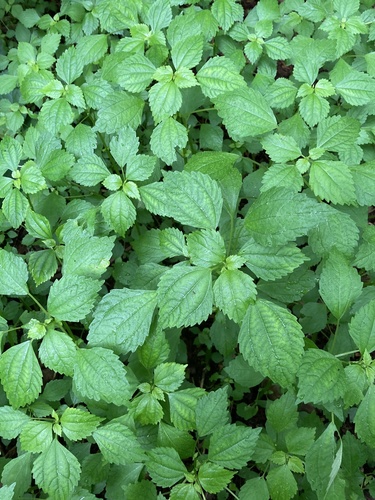
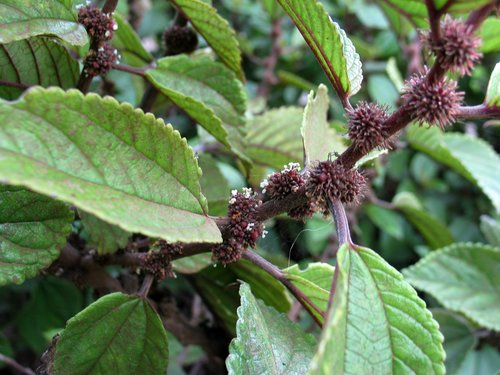
iNaturalist· cc-by-nc
(c) Sarah Sells, some rights reserved (CC BY-NC), uploaded by Sarah Sells
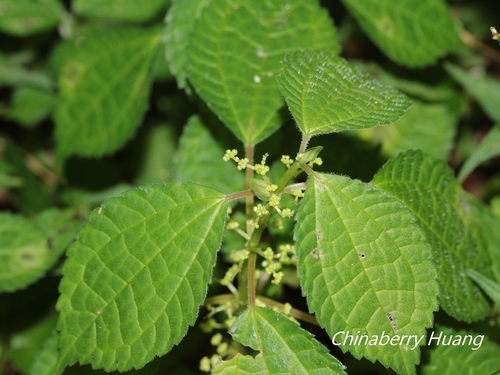
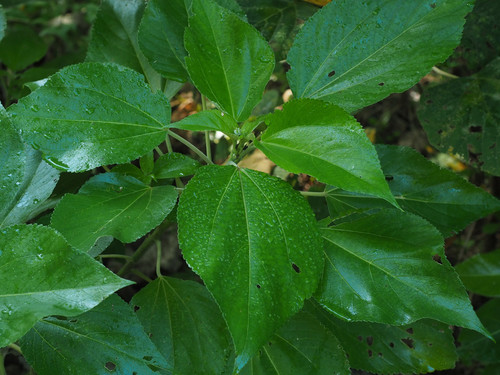
iNaturalist· cc-by-nc
(c) Сергей, some rights reserved (CC BY-NC)
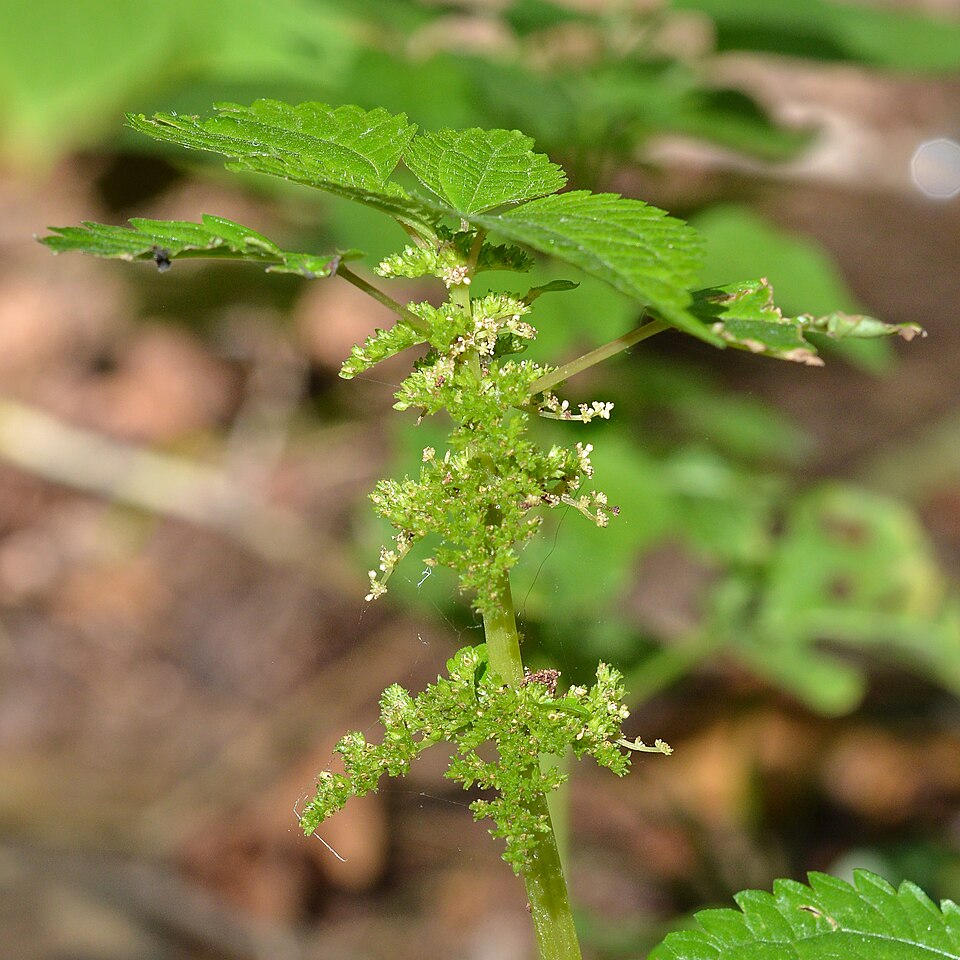
iNaturalist· cc-by-nc
(c) Сергей, some rights reserved (CC BY-NC)
Summary
Source: WikipediaUrtica pilulifera, also known as the Roman nettle, is a herbaceous annual flowering plant in the family Urticaceae.
Description
A medium sized herb. It grows each year from seed. It is hairy. The leaves are oval or heart shaped. They may or may not have teeth along the edge. The male and female flowers are on the same plant. The male flowers are in clusters in a raceme and the female flowers are in round heads. The fruit are in rounded clusters. They are 9-11 mm across.
Edible Uses
Young leaves are cooked and used as a potherb — a highly nutritious food, rich in vitamins and minerals, that makes an excellent spinach substitute and works well in soups and stews. Only young leaves should be harvested, and stout gloves are essential to avoid being stung. Although fresh leaves carry stinging hairs, thorough drying or cooking destroys them completely. The young shoots are used to brew nettle beer. An oil is also extracted from the seeds.
Traditional Uses
The leaves are used for herbal teas. The stems and young shoots are eaten raw in salads. They are also cooked. They are boiled then fried.
This uses section is brief — help expand it
Medicinal Uses
Nettles have a long history as a home herbal remedy. A tea made from the leaves has traditionally served as a tonic and blood purifier. The whole plant is antiasthmatic, antidandruff, astringent, depurative, diuretic, galactogogue, haemostatic, hypoglycaemic, and a stimulating tonic. An infusion is highly effective at stemming internal bleeding and is also used for anaemia, excessive menstruation, haemorrhoids, arthritis, rheumatism, and skin complaints, particularly eczema. Externally, the plant treats arthritic pain, gout, sciatica, neuralgia, haemorrhoids, and hair problems. For medicinal use, the plant is best harvested in May or June as it comes into flower and then dried for later use. This species merits further investigation for possible applications in kidney and urinary ailments. Nettle juice can be used as an antidote to the plant's own sting, and an infusion of the fresh leaves makes a healing and soothing lotion for burns. A homeopathic remedy is prepared from the fresh plant gathered while in flower and is used as a first-aid treatment for bites and stings, burns, hives, and breastfeeding problems.
Known Hazards
The leaves of the plants have stinging hairs, causing irritation to the skin. This action is neutralized by heat so the cooked leaves are perfectly safe and nutritious. However, only young leaves should be used because older leaves develop gritty particles called cystoliths which act as an irritant to the kidneys.
Distribution
It grows in waste and disturbed ground in Mediterranean countries.
Where It Grows
Africa, Algeria, Asia, Balkans, Bosnia, Croatia, Cyprus, Europe, Greece, India, Iraq, Italy, Jordan, Libya, Mediterranean, Middle East, Morocco, North Africa, North America, Palestine, Portugal, Saudi Arabia, Sicily, Slovenia, Tunisia, Turkey, Türkiye,
Cultivation
Prefers a nitrogen-rich soil. The best fibre is produced when plants are grown on deep fertile soils. Dislikes a shady position.
Propagation
Sow seed in spring in a cold frame.
Other Uses
The stems yield a strong flax-like fibre used for string, cloth, and good-quality paper, harvested as the plant begins to die back in early autumn. The growing plant raises the essential oil content of nearby plants, making them more resistant to insect pests. A hair wash made from an infusion of the leaves acts as a tonic and antidandruff treatment. A green dye is obtained from the leaves and stems; a yellow dye comes from the root. Oil extracted from the seeds is used as an illuminant in lamps.
Also Known As
Dalagan, Gezgezok, Gezo, Gurrais, Horriq, Isirgac, Isirgan otu, Qirrez, Qurrais
References (29)
- Al-Ismail, A. et al, 2007, Antioxidant Activities of some Edible Wild Mediterranean Plants. Ital. J. Food Sci. n. 3, vol. 19 - 2007 287
- Ali-Shtayeh, M. S., et al, 2008, Traditional knowledge of wild edible plants used in Palestine (Northern West Bank): A comparative study. J Ethnobiol Ethnomed. 4: 13
- Al-Qura'n, S. A., 2010, Ethnobotanical and Ecological Studies of Wild Edible Plants in Jordan. Libyan Agriculture Research Center Journal International 1(4):231-243
- Ambasta, S.P. (Ed.), 2000, The Useful Plants of India. CSIR India. p 664
- Ari, S., et al, 2015, Ethnobotanical survey of plants used in Afyonkarahisar-Turkey. Journal of Ethnobiology and Ethnomedicine 11:84
Show all 29 references Hide references
- Ben Ismail, H., 2013, Edible Wild Vegetables Used in North West of Tunisia. PARIPEX - Indian Journal of Reearch 2(9) :219-221
- Blamey, M and Grey-Wilson, C., 2005, Wild flowers of the Mediterranean. A & C Black London. p 35
- Demir, I. & Ayaz, N., 2022, Wild edible plants contributing to the traditional foods of Mardin (Turkey) Province. Indian Journal of Traditional Knowledge Vol 21(3), July 2022, pp 569-582
- Geraci, A., et al, 2018, The wild taxa utilized as vegetables in Sicily (Italy): a traditional component of the Mediterranean diet. Journal of Ethnobiology and Ethnomedicine (2018) 14:14
- Gunes, S. et al, 2018, Survey of wild food plants for human consumption in Karaisali (Adana-Turkey). Indian Journal of Traditional Knowledge. Vol. 17(2), April 2018, pp 290-298
- Hadjichambis, A. C., et al, 2007, Wild and semi-domesticated food plant consumption in seven circum-Mediterranean areas. International Journal of Food Sciences and Nutrition. 2007, 1-32.
- Hinnawi, N. S. A., 2010, An ethnobotanical study of wild edible plants in the Northern West Bank "Palestine". An-Najah National University. p 96
- http://cypruswildflowers.com
- http://www.botanic-gardens-ljubljana.com/en/plants,
- Jardin, C., 1970, List of Foods Used In Africa, FAO Nutrition Information Document Series No 2.p 109
- Kargioglu, M. et al, 2010, Traditional Uses of Wild Plants in the Middle Aegean Region. Human Ecology 38:429-450
- Kaya, O. M., et al, 2020, An ethnobotanical research in Sanhurfa central district and attached Villages (Turkey). Indian Journal of Traditional Knowledge. Vol. 19(1) pp 7-23
- Luczaj et al, 2013, Wild vegetable mixes sold in the markets of Dalmatia (southern Croatia). Journal of Ethnobiology and Ethnomedicine. 8:2
- Luczaj, L. et al, 2014, Wild Food Plants of Dalmatia (Croatia). in A. Pieroni, C. L. Quave (eds.), Ethnobotany and Biocultural Diversities in the Balkans, p 138
- Mahklouf, M. H., 2019, Ethnobotanical Study of Edible Wild Plants in Libya. European Journal of Ecology. 5(2): 30-40
- Martin, F.W. & Ruberte, R.M., 1979, Edible Leaves of the Tropics. Antillian College Press, Mayaguez, Puerto Rico. p 223
- Musselman, L. J., 2007, Figs, Dates, Laurel and Myrrh. Plants of the Bible and the Quran. Timber Press. p 203
- Nassif, F., & Tanji, A., 2013, Gathered food plants in Morocco: The long forgotten species in Ethnobotanical Research. Life Science Leaflets 3:17-54
- Pasta, S., et al, 2020, An Updated Checklist of the Sicilian Native Edible Plants: Preserving the Traditional Ecological Knowledge of Century-Old Agro-Pastoral Landscapes. Frontiers in Plant Science. Volume 11|Article 388
- Plants for a Future database, The Field, Penpol, Lostwithiel, Cornwall, PL22 0NG, UK. http://www.scs.leeds.ac.uk/pfaf/
- Rivera, D. et al, 2006, Gathered Mediterranean Food Plants - Ethnobotanical Investigations and Historical Development, in Heinrich M, Müller WE, Galli C (eds): Local Mediterranean Food Plants and Nutraceuticals. Forum Nutr. Basel, Karger, 2006, vol 59, pp 18–74
- Tukan, S. K., et al, 1998, The use of wild edible plants in the Jordanian diet. International Journal of Food Sciences and Nutrition. 49:225-235
- Yesil, Y., et al, 2019, Wild edible plants in Yeşilli (Mardin-Turkey), a multicultural area. Journal of Ethnobiology and Ethnomedicine (2019) 15:52
- Yesil, Y., et al, 2019, Traditional knowledge of wild edible plants in Hasankeyf (Batman Province, Turkey). Acta Societatis Botanicorum Poloniae. 88(3):3633