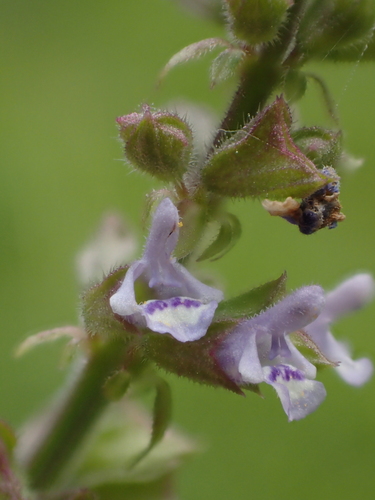
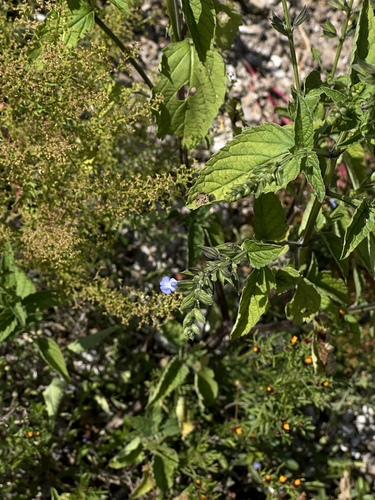
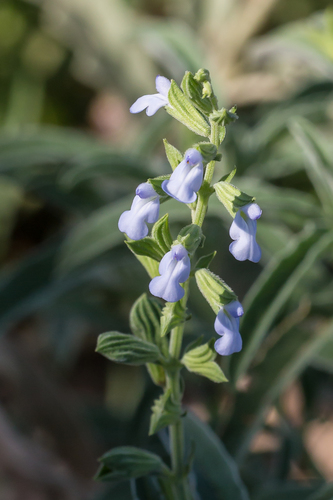
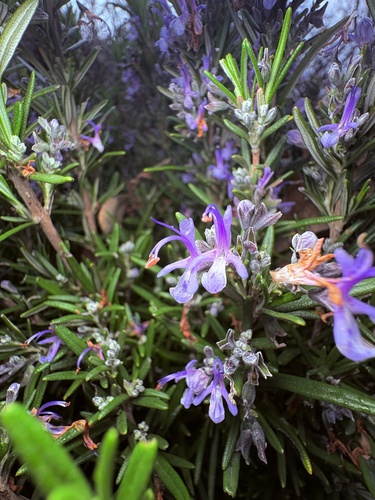
Mentha x villosa alopecuroides - (Hull.)Briq.
(Hull.)Briq.
Apple Mint, Bowles' Mint
gbif· cc0
Ingram, K.
gbif· cc0
Timothy Diamond
gbif· cc0
Ingram, K.
Description
Mentha x villosa alopecuroides is a PERENNIAL growing to 0.6 m (2ft) by 1 m (3ft 3in) at a fast rate. See above for USDA hardiness. It is hardy to UK zone 5 and is not frost tender. It is in flower from August to September. The species is hermaphrodite (has both male and female organs) and is pollinated by Insects. The plant is self-fertile. It is noted for attracting wildlife. Suitable for: light (sandy), medium (loamy) and heavy (clay) soils and can grow in heavy clay soil. Suitable pH: mildly acid, neutral and basic (mildly alkaline) soils. It can grow in semi-shade (light woodland) or no shade. It prefers moist soil.
Edible Uses
Tea. Leaves - raw or cooked. A strong spearmint flavour, they are used as a flavouring in salads or cooked foods, this is also the main species that is used to make mint sauce. A herb tea is made from the fresh or dried leaves.
Medicinal Uses
Antiseptic Carminative Febrifuge. Apple mint, like many other members of this genus, is often used as a domestic herbal remedy, being valued especially for its antiseptic properties and its beneficial effect on the digestion. Like other members of the genus, it is best not used by pregnant women because large doses can cause an abortion. A tea made from the leaves of most mint species has traditionally been used in the treatment of fevers, headaches, digestive disorders and various minor ailments. The leaves are harvested as the plant comes into flower and can be dried for later use. The essential oil in the leaves is antiseptic, though it is toxic in large doses.
Known Hazards
Although no records of toxicity have been seen for this species, large quantities of some members of this genus, especially when taken in the form of the extracted essential oil, can cause abortions so some caution is advised.
Distribution
Central and southern Europe, including Britain, Mediterranean region, Azores..
Where It Grows
(Mentha × villosa) Austria, Belgium, Czechia-Slovakia, France, Germany, Hungary, Italy, Switzerland
Cultivation
A very easily grown plant, it succeeds in most soils and situations so long as the soil is not too dry. Grows well in heavy clay soils. Prefers a slightly acid soil. A sunny position is best for the production of essential oils, but the plant also succeeds in partial shade. Apple mint is commonly grown in the herb garden. There is at least one named variety, 'Bowles mint' is said to be a superior form and it is the form usually cultivated commercially for mint sauce. Unlike most members of the genus, this species is resistant to the disease 'rust'. Most mints have fairly aggressive spreading roots and, unless you have the space to let them roam, they need to be restrained by some means such as planting them in containers that are buried in the soil. Hybridizes freely with other members of this genus. The whole plant has a strong aroma of spearmint. The flowers are very attractive to bees and butterflies. A good companion for growing near cabbages and tomatoes, helping to keep them free of insect pests. Members of this genus are rarely if ever troubled by browsing deer. Mint species are generally self-fertile. Mint leaves can be harvested throughout the growing season, from spring to autumn, but they are best harvested just before flowering for optimal flavor. Mint typically flowers from late spring to early summer. It is a fast-growing plant that often establishes itself quickly and spreads aggressively, making it suitable for quick ground cover in gardens.
Propagation
Seed - sow spring in a cold frame. Germination is usually fairly quick. Prick out the seedlings into individual pots when they are large enough to handle and plant them out in the summer. Mentha species are very prone to hybridisation and so the seed cannot be relied on to breed true. Even without hybridisation, seedlings will not be uniform and so the content of medicinal oils etc will vary. When growing plants with a particular aroma it is best to propagate them by division. Division can be easily carried out at almost any time of the year, though it is probably best done in the spring or autumn to allow the plant to establish more quickly. Virtually any part of the root is capable of growing into a new plant. Larger divisions can be planted out direct into their permanent positions. However, for maximum increase it is possible to divide the roots up into sections no more than 3cm long and pot these up in light shade in a cold frame. They will quickly become established and can be planted out in the summer.
Other Uses
Essential Repellent Strewing Agroforestry uses: Mint can be used as a ground cover, helping to suppress weeds and prevent soil erosion. Its strong aroma can also help deter pests. An essential oil is obtained from the whole plant. The plant repels insects and was formerly used as a strewing herb. Rats and mice intensely dislike the smell of mint. The plant was therefore used in homes as a strewing herb and has also been spread in granaries to keep the rodents off the grain.
Synonyms
Also Known As
Mentha × villosa, Apple Mint, Bowles' Mint