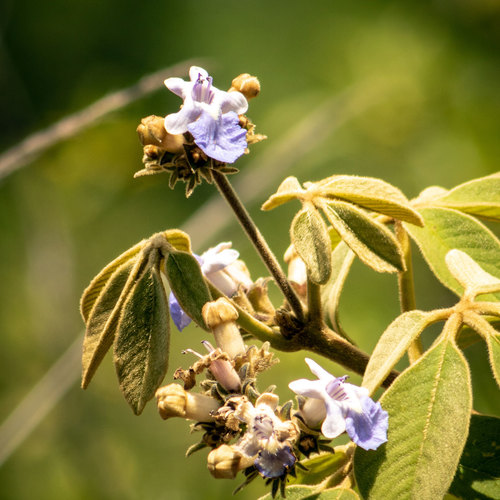
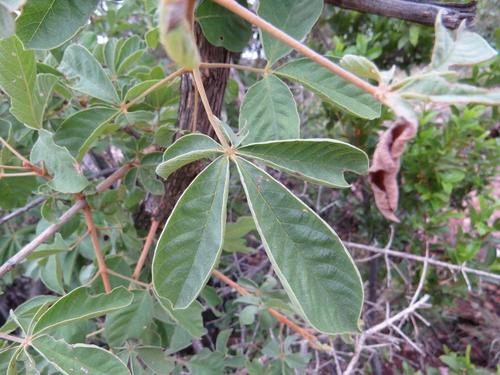
Salvia plebeia
R. Br.
iNaturalist· cc0
no rights reserved, uploaded by 葉子
iNaturalist· cc0
no rights reserved, uploaded by 葉子
iNaturalist· cc0
no rights reserved, uploaded by 葉子
Summary
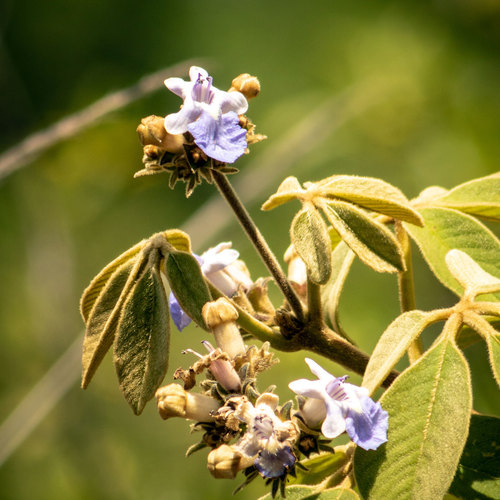
Source: WikipediaSalvia plebeia is an annual or biennial herb that is native to a wide region of Asia. It grows on hillsides, streamsides, and wet fields from sea level to 2,800 m (9,200 ft). S. plebeia grows on erect stems to a height of 15 to 90 cm (5.9 to 35.4 in) tall, with elliptic-ovate to elliptic-lanceolate leaves. Inflorescences are 6-flowered verticillasters in racemes or panicles, with a distinctly small corolla (4.5 mm (0.18 in)) that comes in a wide variety of colors: reddish, purplish, purple, blue-purple, to blue, and rarely white.
Description
A herb. It can grow for one or two years. The stems are erect. They are 15-90 cm high. It is robust and with many branches. It has grey hairs. The leaf stalk is 4-15 mm long. The leaf blade is oval or sword shaped and 2-6 cm long by 0.8-2.5 cm wide. The edges are with rounded teeth. There are 6 flowers in a ring. The flowers are very small. The fruit is a nut about 2 mm long. It is in a hairy covering.
Edible Uses
The leaves and flowers are both edible, though no preparation details are given. The seed is used as a condiment in a similar way to mustard.
Traditional Uses
The seeds are used as a mustard.
This uses section is brief — help expand it
Medicinal Uses
The plant is astringent, diuretic, and vermifuge. A paste made from the plant is applied to wounds between the toes caused by prolonged walking barefoot in muddy water. The seeds are used internally to treat diarrhoea, gonorrhoea, menorrhagia, and haemorrhoids.
Distribution
In China it grows on hillsides and in wet fields between sea level and 2800 m in most provinces. It tropical Queensland it grows from sea level to 200 m altitude.
Where It Grows
Afghanistan, Asia, Australia, China, Himalayas, India, Indochina, Indonesia, Iran, Japan, Korea, Laos, Malaysia, Middle East, Myanmar, Pakistan, Russia, SE Asia, Thailand, Tibet, Vietnam,
Cultivation
We have very little information on this species and do not know if it will be hardy in Britain, though judging by its native range it should succeed outdoors in many parts of this country. The following notes are based on the general needs of the genus, but this species is likely to tolerate much wetter conditions if its native habitat is anything to go by. Requires a very well-drained light sandy soil in a sunny position. Prefers a rich soil. Plants can be killed by excessive winter wet. Members of this genus are rarely if ever troubled by browsing deer.
Propagation
Sow seed in late spring in a greenhouse. Prick seedlings into individual pots when large enough and plant out in early summer.
Other Uses
None known.
Notes
There are about 900 Salvia species. It is used in medicine.
Synonyms
Also Known As
Li zhi cao, Kaka-buradi, Bhu-tulasi, Sathi, Samundar sok, Kammar kas, Jinjiga
References (7)
- Ambasta, S.P. (Ed.), 2000, The Useful Plants of India. CSIR India. p 544
- Flora of Pakistan. www.eFloras.org
- Hedrick, U.P., 1919, (Ed.), Sturtevant's edible plants of the world. p 592
- Li Hai-wen, Hedge, I.C., Lamiaceae. Flora of China. p
- Plants for a Future database, The Field, Penpol, Lostwithiel, Cornwall, PL22 0NG, UK. http://www.scs.leeds.ac.uk/pfaf/
Show all 7 references Hide references
- Prodr. 501. 1810
- Wild edible plants of Himachal Pradesh