Ephedra viridis
Coville
Mormon tea, Green joint-fir, Green ephedra
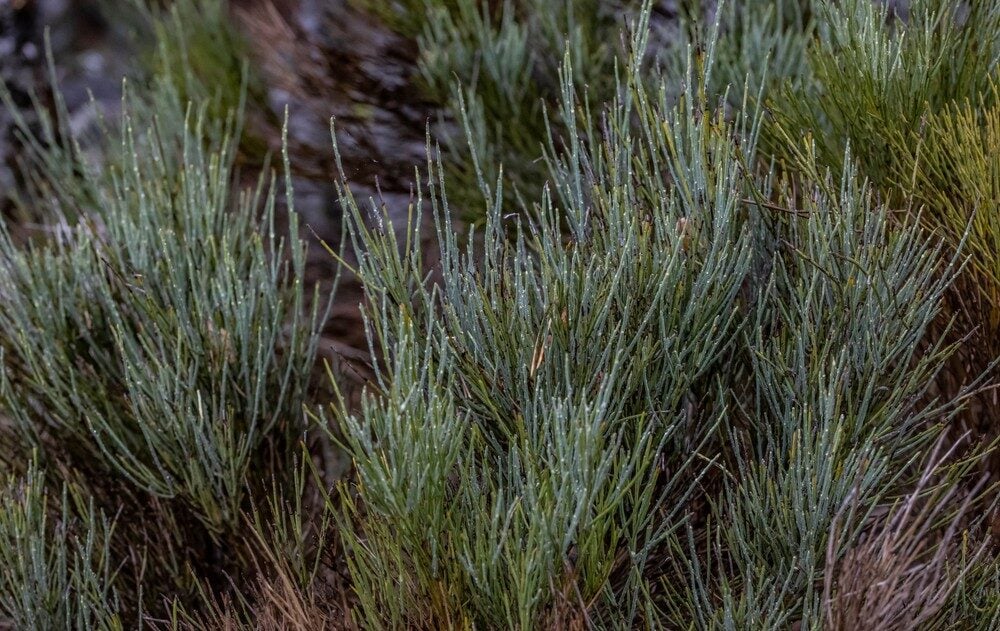
iNaturalist· cc-by-nc
(c) Alyssa Russell, some rights reserved (CC BY-NC), uploaded by Alyssa Russell
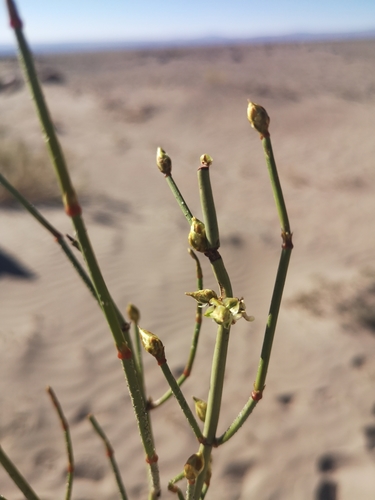
iNaturalist· cc-by-nc
(c) Dayne Galash, some rights reserved (CC BY-NC)
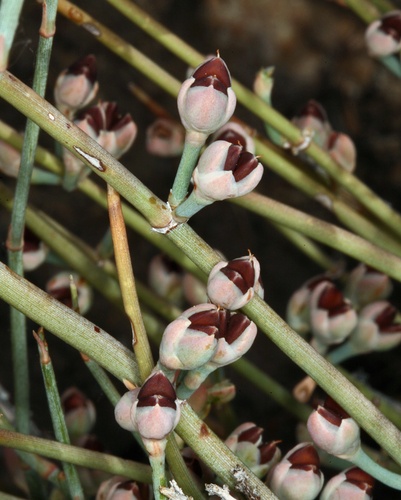
iNaturalist· cc-by-nc
(c) Curren Frasch, some rights reserved (CC BY-NC), uploaded by Curren Frasch
Summary
Source: WikipediaEphedra viridis, known by the common names green Mormon tea, Brigham tea, green ephedra, and Indian tea, is a species of Ephedra. It is indigenous to the Western United States, where it is a member of varied scrub, woodland, desert, and open habitats. It grows at 900–2,300 metres (3,000–7,500 ft) elevations.
Description
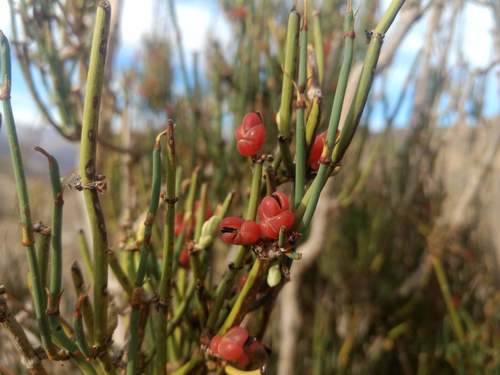
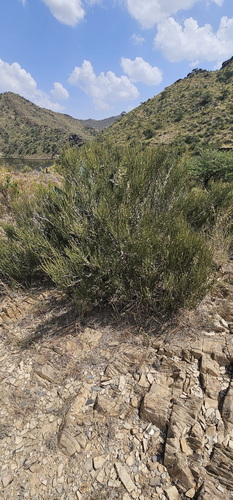
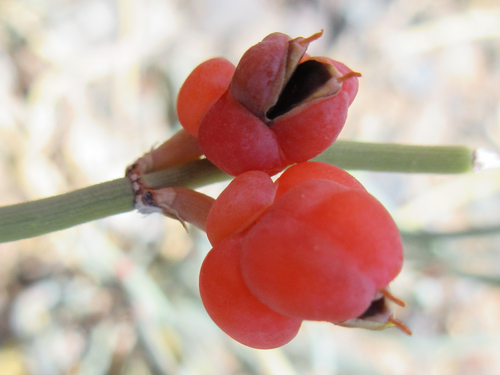
An erect evergreen shrub. It grows 1.2 m high and spreads 90 cm wide. The branches are thin and green. The leaves are long and narrow. The plants have separate male and female flower-like cones.
Edible Uses
The fruit is eaten raw and has a sweet flavour. The seed is cooked — it has a bitter flavour and is roasted and ground into a powder to make bread or mush. A delicious tea is made by steeping the green or dried twigs in boiling water; roasting the stems first is said to improve the flavour.
Traditional Uses
The twigs are broken into small pieces and used to make tea. Sugar, lemon juice or strawberry jam can be added. Roasting the twigs helps improve the flavour. The seeds are roasted and eaten or ground into flour.
Medicinal Uses
This plant has a wide reputation as a cure for syphilis. A strong decoction of the stems was drunk and a poultice of the pulverized or boiled stems applied to the sores. The stems act as a blood purifier, diuretic, and tonic. An infusion has been used in treating coughs and colds, anaemia, rheumatism, stomach ulcers and other disorders, and kidney problems. Dried, powdered stems are used as a dressing on sores and burns. Like most members of this genus, the stems contain the alkaloid ephedrine and are valuable for treating asthma and other respiratory complaints. Using the whole plant at much lower concentrations than isolated ephedrine rarely causes side-effects. While ephedra does not cure asthma, it often manages symptoms effectively. Stems can be used fresh or dried, typically as a tea, though they can also be eaten raw — young stems are best raw, older stems suit tea. Stems can be harvested any time of year and dried for later use.
Known Hazards
A tea can be made by boiling the stems, hence the common name, "green Mormon tea". The plant is used medicinally by both Native Americans and the ancient Chinese (using their own local species of the genus) to treat various afflictions including sexually transmitted diseases such as gonorrhea and syphilis, kidney diseases, and complications with menstruation. Native American tribes such as the Shoshone and Paiute boil tea using the stem of the plant and combined it with the bark of Purshia tridentata, another shrub. The Navajo have used the plant as a dye solution to produce a yellowish-green color on woolen rugs, whereas other species can produce a light tan or reddish dye. In modern medicine, the plant is used to treat sinus illnesses such as hay fever, common colds, and sinusitis. This use is supported by clinical trials, as it is a treatment for bronchial asthma. Because the plant can be used as an appetite suppressant, it is used illegally by some athletes to lose weight and build muscle. Because it is toxic, the plant should not be ingested without a doctor’s recommendation.
Distribution
It is a temperate plant. It does well in sandy soil and a sunny position. It suits hardiness zones 6-10.
Where It Grows
America, Australia, Mexico, North America, Tasmania, USA,
Cultivation
Requires a well-drained loamy soil and a sunny position. Established plants are drought resistant and are also lime tolerant. This species is not very hardy in Britain, it succeeds well in a cold greenhouse but is often killed outdoors by a combination of cold and wet conditions. Dioecious, male and female plants must be grown if fruit and seed is required.
Propagation
Seed is best sown as soon as it is ripe in autumn in a greenhouse, or in spring in a greenhouse using a sandy compost. Prick out seedlings into individual pots once large enough to handle and grow on for at least their first winter under glass. Plant out in spring or early summer after the last expected frosts, with some protection in their first winter. Can also be propagated by division in spring or autumn, or by layering.
Other Uses
The twigs, boiled with alum, produce a light tan dye.
Notes
There are about 40 Ephedra species.
References (10)
- Contr. U.S. Natl. Herb. 4:220. 1893
- Cundall, P., (ed.), 2004, Gardening Australia: flora: the gardener's bible. ABC Books. p 539
- Etherington, K., & Imwold, D., (Eds), 2001, Botanica's Trees & Shrubs. The illustrated A-Z of over 8500 trees and shrubs. Random House, Australia. p 281
- Facciola, S., 1998, Cornucopia 2: a Source Book of Edible Plants. Kampong Publications, p 94
- Hibbert, M., 2002, The Aussie Plant Finder 2002, Florilegium. p 92
Show all 10 references Hide references
- Kermath, B. M., et al, 2014, Food Plants in the Americas: A survey of the domesticated, cultivated and wild plants used for Human food in North, Central and South America and the Caribbean. On line draft. p 337
- Kiple, K.F. & Ornelas, K.C., (eds), 2000, The Cambridge World History of Food. CUP p 1816
- Moerman, D. F., 2010, Native American Ethnobotany. Timber Press. p 211
- Plants for a Future database, The Field, Penpol, Lostwithiel, Cornwall, PL22 0NG, UK. http://www.scs.leeds.ac.uk/pfaf/
- Reis, S. V. and Lipp, F. L., 1982, New Plant Sources for Drugs and Foods from the New York Botanical Garden herbarium. Harvard. p 7