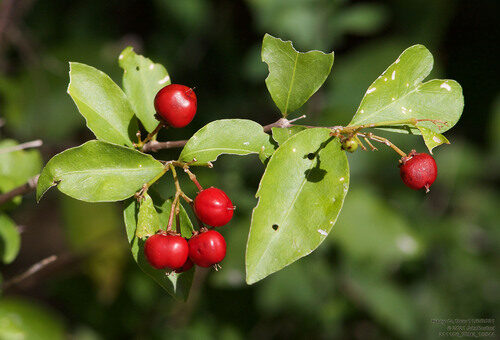
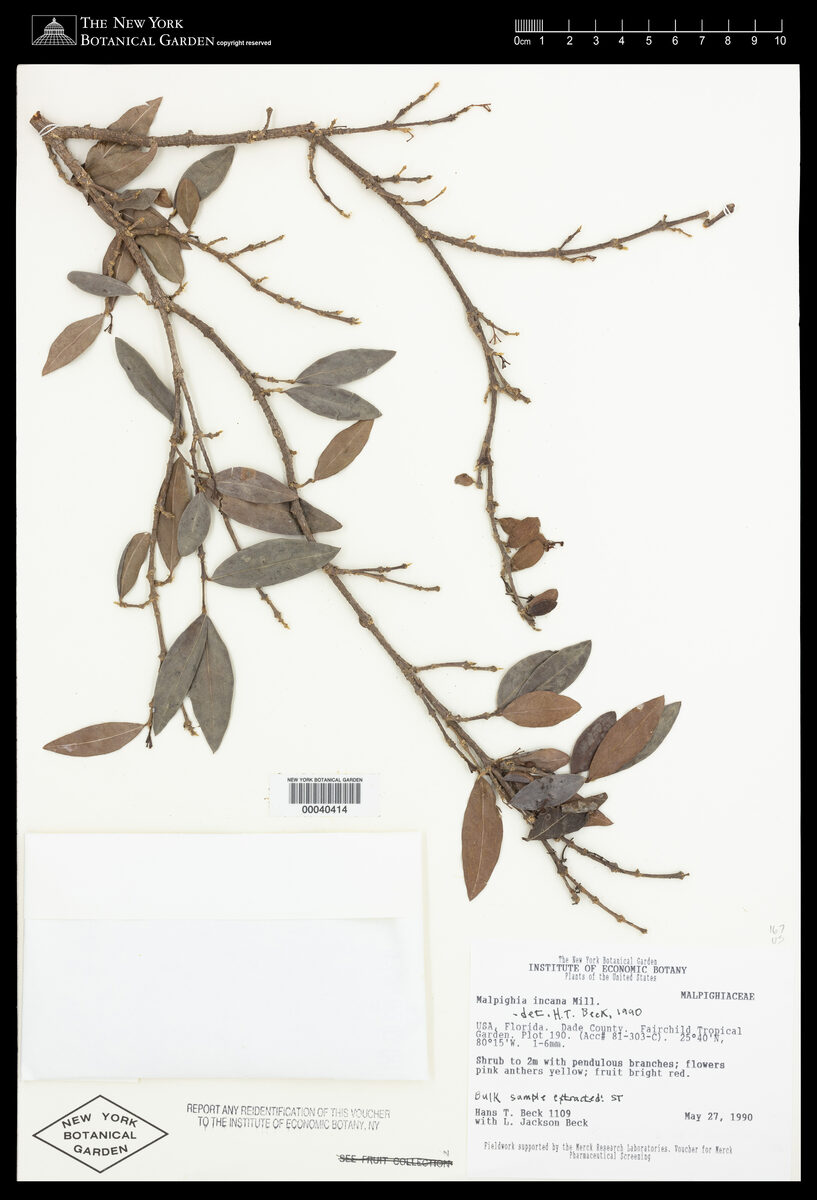
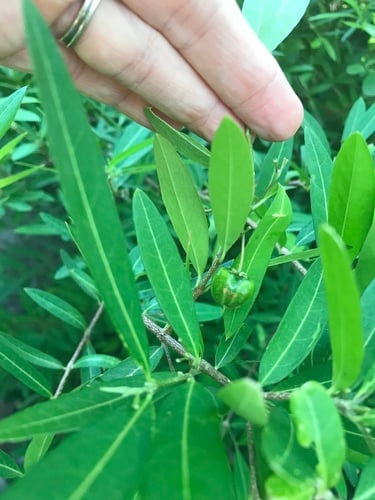
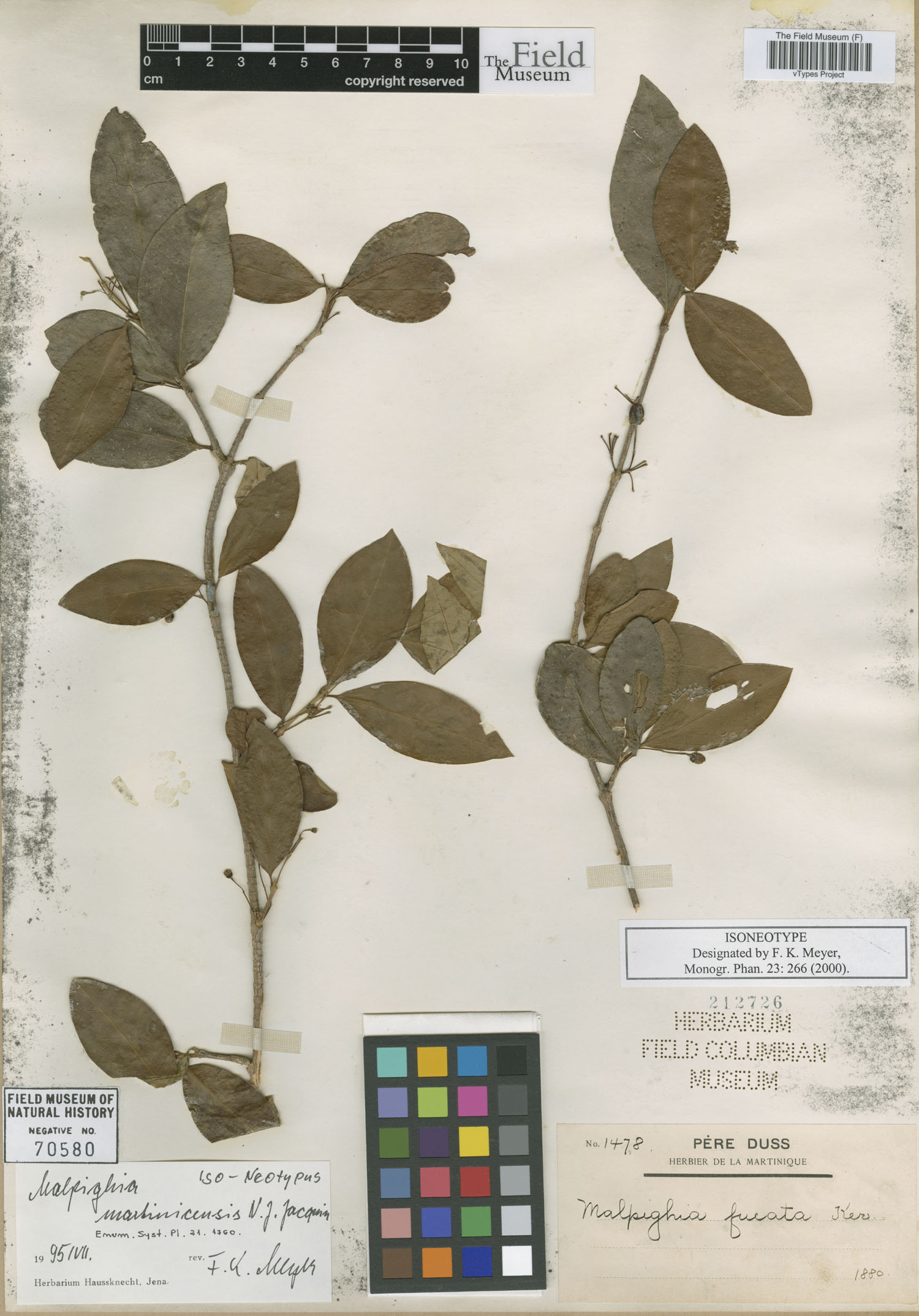
Malpighia emarginata
DC.
Acerola, Barbados Cherry
iNaturalist· cc-by-nc
(c) suchihfen, some rights reserved (CC BY-NC)
iNaturalist· cc-by-nc-nd
(c) Rogério Gribel, some rights reserved (CC BY-NC-ND), uploaded by Rogério Gribel
iNaturalist· cc-by-nc
(c) gena of Jesus, some rights reserved (CC BY-NC), uploaded by gena of Jesus
Description
Malpighia emarginata is an evergreen Shrub growing to 4 m (13ft) by 4 m (13ft) at a medium rate. See above for USDA hardiness. It is hardy to UK zone 10 and is frost tender. It is noted for attracting wildlife. Suitable for: light (sandy), medium (loamy) and heavy (clay) soils and prefers well-drained soil. Suitable pH: mildly acid and neutral soils and can grow in very acid and saline soils. It can grow in semi-shade (light woodland) or no shade. It prefers moist soil and can tolerate drought. The plant can tolerates strong winds but not maritime exposure.
Edible Uses
Drink. Fruit - raw or cooked. The bright red fruit can range in flavour from sweet to somewhat acid. As well as being eaten out of hand, they can also be stewed, made into juices, sauces, jellies, jams, wines or purees. The fruits are very rich in vitamin C (1 - 4 g per 100 g juice). They are widely used in the preparation of vitamin tablets and other nutritional supplements. The juice is added to other juices in order to improve their nutritional value. Plants can produce 2 - 3 crops of fruit a year.
Medicinal Uses
Dysentery Vitamin CThe fruits are considered beneficial against liver problems, diarrhoea, dysentery, coughs and colds. The bark exudes a gum that is recommended as a pectoral. Known historically as a natural source of ascorbic acid (Vitamin C). Ascorbic acid levels in fresh acerola fruit are in the range of 1.5 to 4% by weight. A glass of acerola juice (180-ml) contains 35mg/ml of ascorbic acid the same as 14 litres of orange Juice.
Distribution
C. America - Mexico to northern S. America and the Caribbean.
Where It Grows
NORTHERN AMERICA: Mexico, Guerrero, Oaxaca, Yucatán, SOUTHERN AMERICA: Belize, Guatemala, French Guiana, Venezuela, Colombia, Ecuador,
Cultivation
Easily grown in good soil and a sunny position. Seedlings can fruit when only 2 - 3 years old but are not always of as good quality as their parents. Flowering Time: Mid-Spring, Late Spring/Early Summer. Bloom Color: Pink. Spacing: 15-18 in. (38-45 cm) 18-24 in. (45-60 cm) 24-36 in. (60-90 cm) 36-48 in. (90-120 cm) 4-6 ft. (1.2-1.8 m) 6-8 ft. (1.8-2.4 m). Dwarf varieties are available with a compact habit growing to approx 1.5m (5ft).
Propagation
Seed - Cuttings
Other Uses
Grown as an edible hedge.
Synonyms
Also Known As
Acerola, Barbados Cherry, West Indian Cherry, Wild Crapemyrtle, Cereza