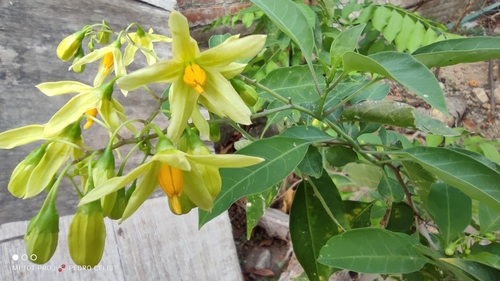
Lycium barbarum
L.
Goji, Box Thorn, Matrimony vine
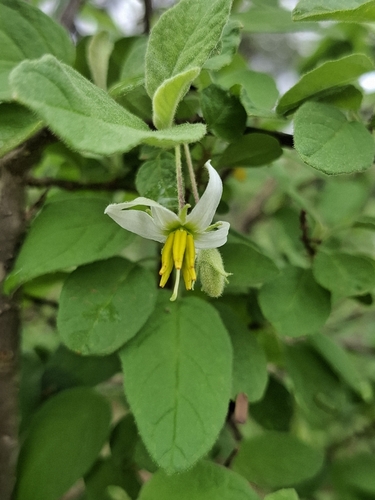
iNaturalist· cc-by-nc
(c) gizzy, some rights reserved (CC BY-NC), uploaded by gizzy
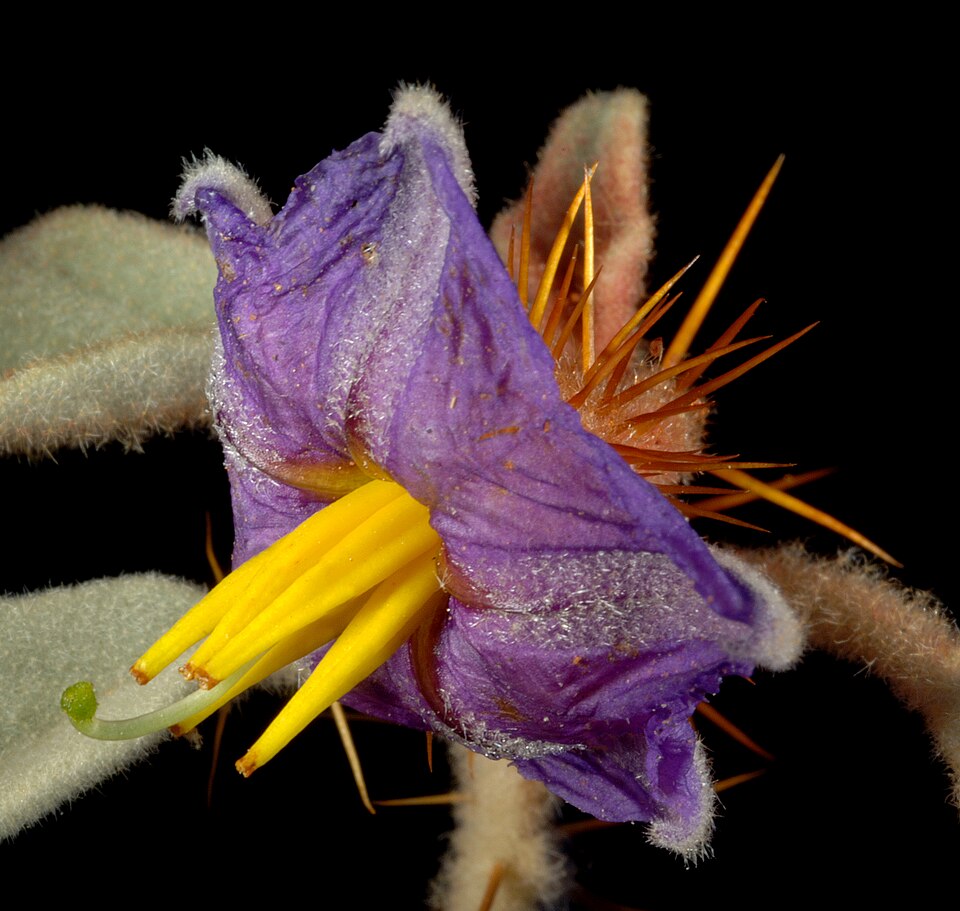
iNaturalist· cc-by-nc
(c) Susan J. Hewitt, some rights reserved (CC BY-NC), uploaded by Susan J. Hewitt
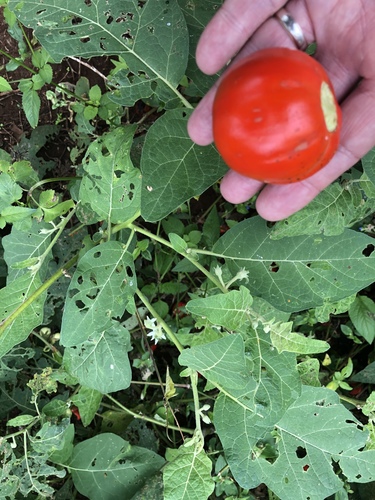
iNaturalist· cc-by-sa
(c) Douglas Goldman, some rights reserved (CC BY-SA), uploaded by Douglas Goldman
Description
Lycium barbarum is a deciduous Shrub growing to 2.5 m (8ft) by 4 m (13ft) at a medium rate. See above for USDA hardiness. It is hardy to UK zone 7. It is in flower from June to August, and the seeds ripen from August to October. The species is hermaphrodite (has both male and female organs) and is pollinated by Bees. The plant is self-fertile. It is noted for attracting wildlife. Suitable for: light (sandy), medium (loamy) and heavy (clay) soils, prefers well-drained soil and can grow in nutritionally poor soil. Suitable pH: mildly acid, neutral and basic (mildly alkaline) soils. It can grow in semi-shade (light woodland) or no shade. It prefers moist soil. The plant can tolerate maritime exposure.
Edible Uses
Tea. Fruit - raw or cooked. The fruit is a berry about 2cm in diameter. A mild sweet liquorice flavour. Only the fully ripe fruits should be eaten. Young shoots - cooked. Used mainly as a flavouring, they can also be lightly cooked for 3 - 4 minutes and used as a vegetable, the flavour is somewhat cress-like but has also been described as peppermint-like. The leaves wilt rapidly once they have been harvested. Some caution is advised, see notes at top of the page. The leaves are a tea substitute.
Medicinal Uses
Antibacterial Anticholesterolemic Antipyretic Cancer Diuretic Hypoglycaemic Ophthalmic Purgative Skin Tonic VasodilatorA sweet tonic decoction made from the fruits is used to lower blood pressure and blood cholesterol levels. It acts mainly on the liver and kidneys. The fruit is taken internally in the treatment of high blood pressure, diabetes, poor eyesight, vertigo, lumbago, impotence and menopausal complaints. The fruit is harvested when fully ripe and is dried for later use. The root bark is a bitter, cooling, antibacterial herb that controls coughs and lowers fevers, blood pressure and blood cholesterol levels. It is taken internally in the treatment of chronic fevers, internal haemorrhages, nosebleeds, tuberculosis, coughs, asthma etc. It is applied externally to treat genital itching. The bark is harvested in the winter and dried for later use. Diuretic, purgative,. The plant has a long history of medicinal use, both as a general, energy restoring tonic and also to cure a wide range of ailments from skin rashes and eyesight problems to diabetes. A tonic tea is made from the leaves. The fruit of many members of this genus is a very rich source of vitamins and minerals, especially in vitamins A, C and E, flavanoids and other bio-active compounds. It is also a fairly good source of essential fatty acids, which is fairly unusual for a fruit. It is being investigated as a food that is capable of reducing the incidence of cancer and also as a means of halting or reversing the growth of cancers.
Known Hazards
Although no records of toxicity have been seen, some caution should be exercised with this species, particularly with regard to its edible leaves, since it belongs to a family that often contains toxins. However, use of the leaves is well documented and fairly widespread in some areas. The unripe fruit might also be suspect though the ripe fruit is wholesome.
Distribution
Original habitat is obscure but probably S.E. Europe to S.W. Asia. Naturalized in Britain.
Where It Grows
TEMPERATE ASIA: China (Gansu Sheng, Hebei Sheng (north), Nei Mongol Zizhiqu, Ningxia Huizi Zizhiqu, Qinghai Sheng, Shanxi Sheng (north), Sichuan Sheng, Xinjiang Uygur Zizhiqu)
Cultivation
An easily grown plant, it does not require a rich soil, flowering and fruiting better in a well-drained soil of moderate quality. Succeeds in impoverished soils, but more fertile soils are best if the plant is being grown for its edible young shoots. Requires a sunny position. Some plants at Kew are growing well in light shade. Tolerates maritime exposure. Plants are hardy to about -15°c. There are some named varieties, selected for their ornamental value. Plants are very tolerant of pruning and can regrow from old wood. Any trimming is best carried out in the spring. Plants produce suckers freely and can become invasive when in a suitable position. Otherwise they can be difficult to establish. There is much confusion over the naming of this species. Most, if not all, of the plants being grown as L. chinense or L. europaeum are in fact this species. In garden design, as well as the above-ground architecture of a plant, root structure considerations help in choosing plants that work together for their optimal soil requirements, including nutrients and water. Goji berries are usually harvested in late summer to early autumn when the berries are fully ripe and have turned bright red. Lycium species generally flower in late spring to early summer producing small, tubular flowers that can be purple or white. Lycium species are moderately fast-growing plants. Depending on growing conditions, they often reach a height of about 1 to 3 meters (3 to 10 feet) within a couple of years. Lycium species, including Goji berries, are self-fertile, meaning they can produce fruit from their own flowers.
Propagation
Seed - sow early spring in a greenhouse. Germination is usually good and fairly quick. Prick out the seedlings into individual pots when they are large enough to handle and grow them on in the greenhouse for their first winter. Plant out in late spring or early summer. Pinch out the shoot tips of the young plants in order to encourage bushy growth. Cuttings of half-ripe wood, 5 - 10cm with a heel if possible, July/August in individual pots in a frame. Good percentage. Cuttings of mature wood of the current season's growth, autumn to late winter in a cold frame. High percentage. Division of suckers in late winter. Very easy, the suckers can be planted out direct into their permanent positions. Layering.
Other Uses
Hedge Hedge Soil stabilization Agroforestry uses: Due to its dense growth, goji can be used in agroforestry systems as a hedgerow or windbreak. It also contributes to soil health and attracts beneficial insects. Can be grown as an informal hedge, succeeding in maritime exposure. Plants have an extensive root system and can be planted to stabilize sandy banks.
Synonyms
Also Known As
Chinese matrimony vine, Chirchitta, Chirmethi, Duke of Argyle's teaplant, Ganger, Gangro, Goji berry, Gou qi zi, Kangu, Khatai, Kichar, Kutyafa, Licium, Morali, Ning xia gou qi, Wolfberry. Also known as: Baies de Goji, Baies de Lycium, Barberry Matrimony Vine, Chinese Boxthorn, Di Gu Pi, Digupi, Épine du Christ, Fructus Lycii, Fructus Lycii Berry, Fruit de Lycium, Goji, Goji Berry, Goji Chinois, Goji de l’Himalaya, Goji Juice, Gou Qi Zi, Gouqizi, Jus de Goji, Kuko, Lichi, Licium Barbarum, Litchi, Lychee, Lyciet, Lyciet Commun, Lyciet de Barbarie, Lycii Berries, Lycii Fruit, Lycium Fruit, Matrimony Vine, Ning Xia Gou Qi.