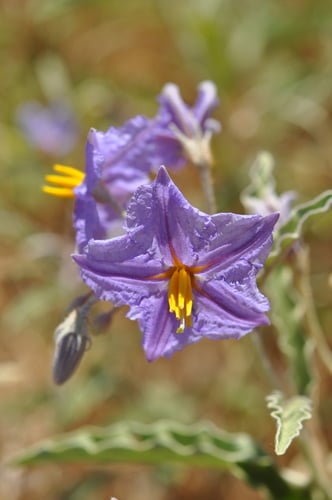
Solanum septemlobum
Bunge
Nightshade
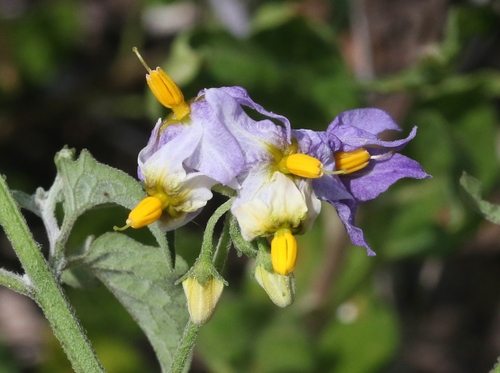
iNaturalist· cc-by-nc
(c) sunwenhao90, some rights reserved (CC BY-NC), uploaded by sunwenhao90
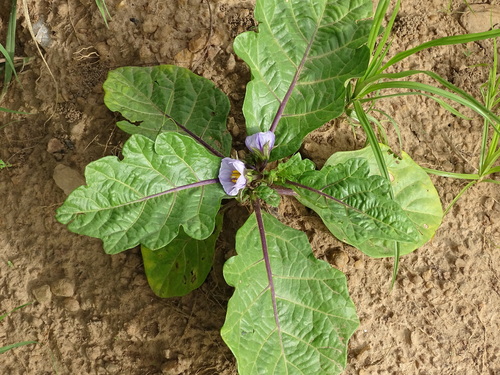
iNaturalist· cc-by-nc
(c) sunwenhao90, some rights reserved (CC BY-NC), uploaded by sunwenhao90
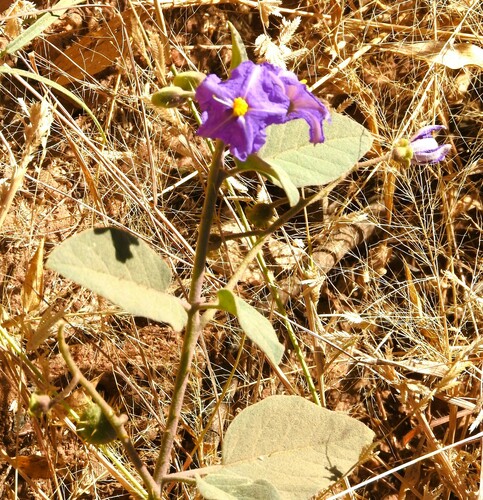
iNaturalist· cc-by-nc
(c) ladybirds, some rights reserved (CC BY-NC)
Summary
A perennial growing to 2m tall with hermaphrodite flowers. Tolerates light sandy, medium loamy, and heavy clay soils across mildly acidic to basic pH ranges. Can grow in semi-shade or full light and prefers moist soil.
Description
A perennial growing to 2m tall with hermaphrodite flowers. Tolerates light sandy, medium loamy, and heavy clay soils across mildly acidic to basic pH ranges. Can grow in semi-shade or full light and prefers moist soil.
Edible Uses
Leaves are cooked as a famine food only when other sources are unavailable. Caution is advised.
Traditional Uses
The leaves are boiled then eaten with oil and salt. The fruit are eaten raw.
This uses section is brief — help expand it
Medicinal Uses
None known
Known Hazards
Toxicity concerns require cautious use; see plant toxicity notes.
Distribution
It is a temperate plant.
Where It Grows
Asia, China, Inner Mongolia,
Cultivation
We have very little information on this species and do not know if it will succeed in Britain, though judging by its native range it could succeed outdoors in many parts of the country. The following notes are based on the general needs of the genus. Succeeds in most soils.
Propagation
Sow seed in early spring in a warm greenhouse. Pot seedlings individually when large enough and transplant after the final frost.
Other Uses
None known Special Uses
Notes
There are about 1400 Solanum species.
Also Known As
Yexihongshi
References (3)
- Jia, X., et al, 2022, Ethnobotany of wild edible plants in multiethnic areas of the Gansu–Ningxia–Inner Mongolia junction zone. Journal of Ethnobiology and Ethnomedicine 18:53
- Plants for a Future database, The Field, Penpol, Lostwithiel, Cornwall, PL22 0NG, UK. http://www.scs.leeds.ac.uk/pfaf/
- READ,