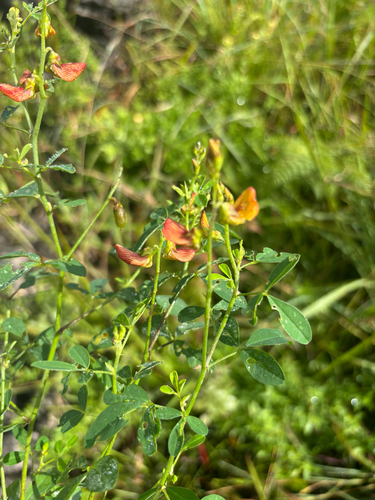
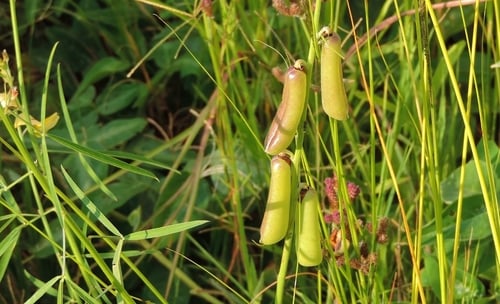
Glycine spp.
Various
Perennial Soybean
gbif· cc-by-nc
sgrove
gbif· cc-by-nc
sgrove
gbif· cc-by-nc
sgrove
Description
Glycine spp. is a PERENNIAL growing to 0.6 m (2ft) by 0.3 m (1ft in) at a fast rate. See above for USDA hardiness. It is hardy to UK zone 7. It can fix Nitrogen. Suitable for: light (sandy) and medium (loamy) soils and prefers well-drained soil. Suitable pH: mildly acid, neutral and basic (mildly alkaline) soils. It can grow in semi-shade (light woodland). It prefers moist soil.
Edible Uses
Carbon Farming Solutions - Staple Crop: protein-oil (The term staple crop typically refers to a food that is eaten routinely and accounts for a dominant part of people's diets in a particular region of the world). Research at the University of Illinois has crossed Glycine max (annual soybean) with Glycine tomentella (perennial) which could lead to the production of a perennial edible soybean.
Medicinal Uses
See individual species.
Known Hazards
In some species the raw mature seed is toxic and must be thoroughly cooked before being eaten.
Distribution
Cultivated origin.
Where It Grows
Coming Soon
Cultivation
Hypothetical Crop Management: Standard Staple Crop: Protein-oil. Climate: hypothetical. Humidity: semi-arid to humid. Carbon Farming Solutions - Cultivation: hypothetical. Management: standard (Describes the non-destructive management systems that are used in cultivation).
Propagation
See individual plant entries.
Other Uses
Oil. See individual plant entries.
Synonyms
Also Known As
Glycine spp. Glycine species. Perennial Glycine. Perennial Soybean