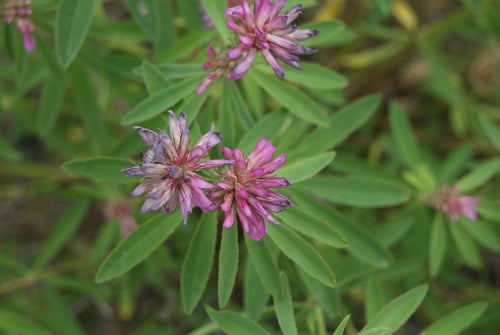
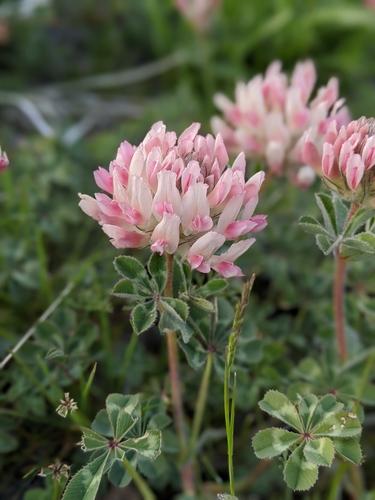
Entada parvifolia
Merr.
Kati-u
gbif· cc0
President and Fellows of Harvard College
gbif· cc0
President and Fellows of Harvard College
gbif· cc0
President and Fellows of Harvard College
Description
A climbing vine. The branches are slender, round and smooth. The leaves have two rows of leaflets and are slightly covered with soft downy hairs when young. The leaflets are oblong, papery and about 8 pairs with the edges rolled lengthwise. The leaf stalks are short. The pods are narrowly oblong, flattened and 10 to 25 cm long. They are 4 to 5 cm wide. The seeds are shiny, round, flattened and about 2 cm across.
Edible Uses
The young leaves are cooked and eaten.
Traditional Uses
The young leaves are cooked and eaten.
This uses section is brief — help expand it
Distribution
A tropical plant. They are found in the Philippines in areas of shrub at low altitude throughout the country especially in Zambales. In Taiwan it grows between 100-600 m above sea level.
Where It Grows
Asia, Japan, Pacific, Philippines, Ryukyu, SE Asia, Taiwan,
Propagation
Seed - it has a hard seedcoat and may benefit from scarification before sowing to speed up germination. This can usually be done by pouring a small amount of nearly boiling water on the seeds (being careful not to cook them!) and then soaking them for 12 - 24 hours in warm water. By this time they should have imbibed moisture and swollen - if they have not, then carefully make a nick in the seedcoat (being careful not to damage the embryo) and soak for a further 12 hours before sowing.
Other Uses
The stems are rich in saponins and have been used as a soap substitute.
Notes
There are about 30 Entada species. They occur in the tropics. Also as Mimosaceae.
References (1)
- Monsalud, M.R., Tongacan, A.L., Lopez, F.R., & Lagrimas, M.Q., 1966, Edible Wild Plants in Philippine Forests. Philippine Journal of Science. p 490