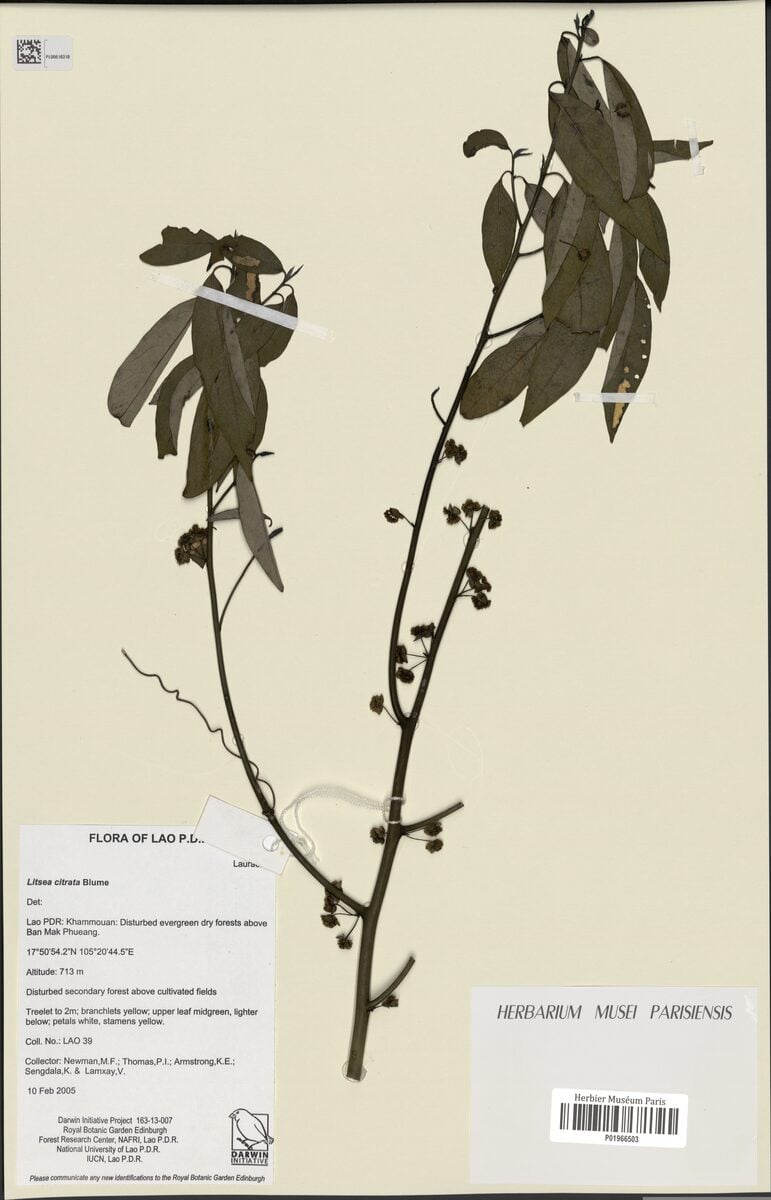
Endiandra palmerstonii
(Bailey) C. White & Francis
Queensland Walnut, Black Walnut
iNaturalist· cc-by-nc
(c) Damon Tighe, some rights reserved (CC BY-NC), uploaded by Damon Tighe
iNaturalist· cc-by-nc
(c) ryanthughes, some rights reserved (CC BY-NC)
Summary
Source: WikipediaEndiandra palmerstonii, popularly known as Queensland walnut or black walnut, is a rainforest tree of northern Queensland. It was named after the Australian prospector Christie Palmerston. Queensland walnut has been used as a furniture timber. It is also used to make guitars. The nut was an important food source for Aboriginal Australians. It was initially classified Cryptocarya palmerstonii by Frederick Manson Bailey in 1891, and received its present classification from his grandson C. T. White in 1920.
Description
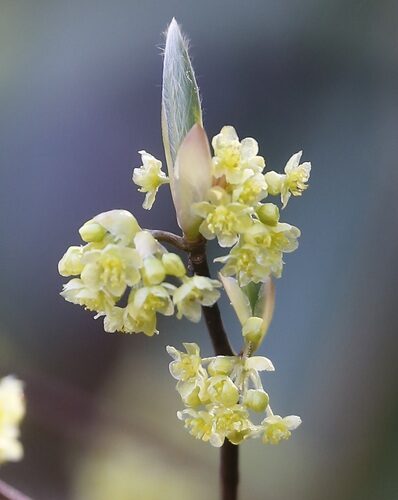
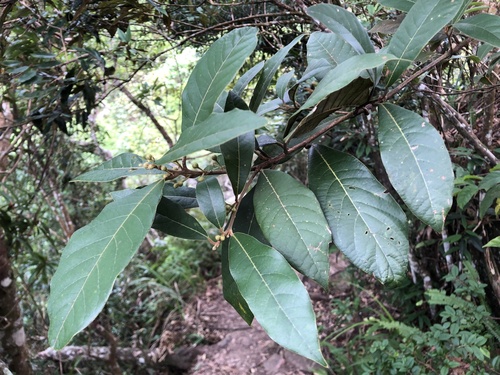
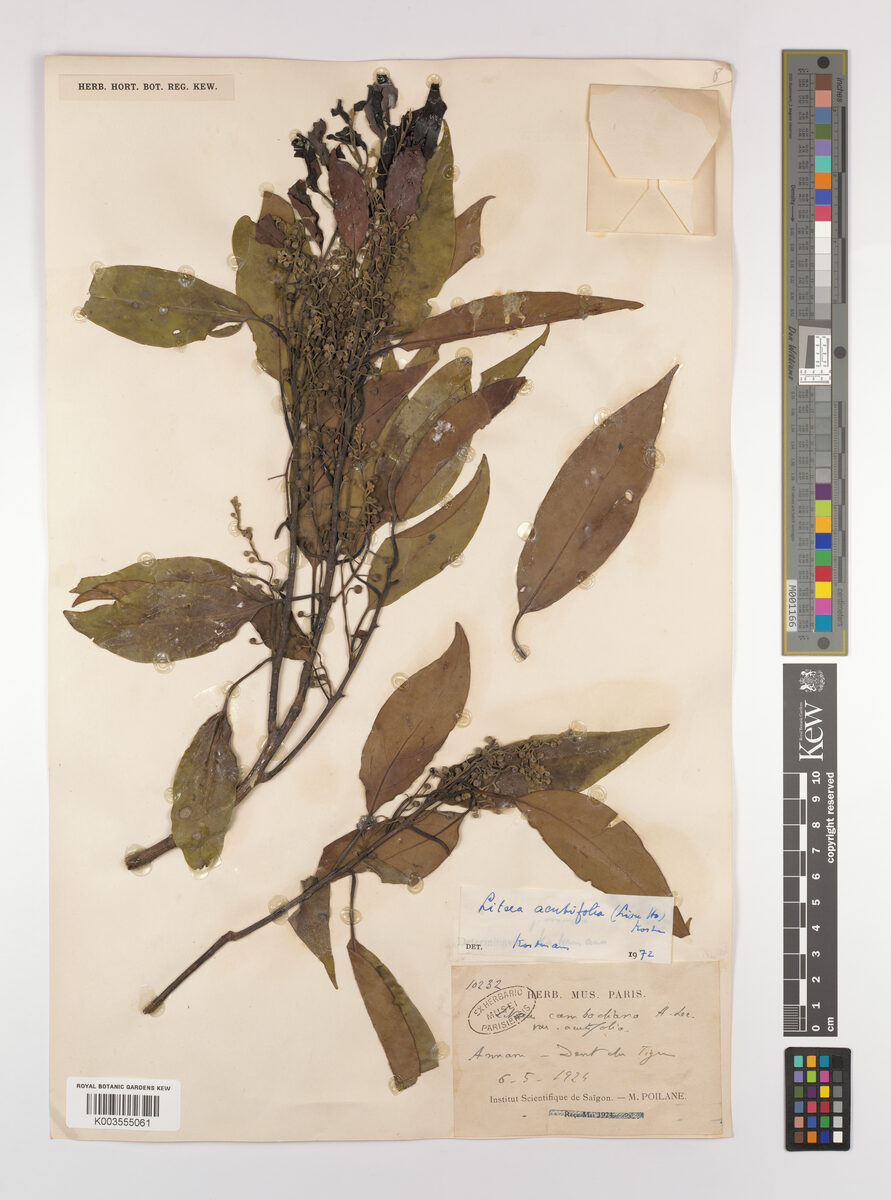
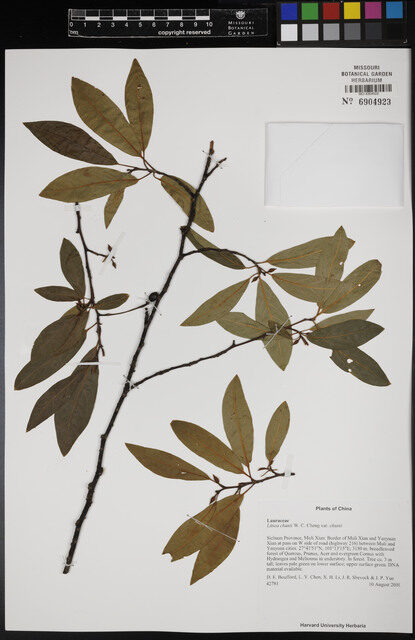
A large tree. It grows 20-25 m high and spreads 8-15 m wide. It has a spreading crown. The leaves are oval and the veins are hairy. They are dark green and shiny above and paler underneath. They are 10-15 cm long by 4-7 cm wide. New growth is covered with fine brown hairs. The flowers are greenish. They are 0.3 cm across. They are produced in panicles 4-8 cm long in the axils of the upper leaves. The fruit are pink and round. They are ribbed and 4-6 cm across. The seeds are 2.5 cm across. They are enclosed in a hard shell.
Edible Uses
The seeds are eaten after roasting, pounding, and extensive washing in running water to remove the hard shell.
Traditional Uses
The seeds are eaten after roasting, pounding and washing them extensively in running water.
This uses section is brief — help expand it
Distribution
A tropical plant. It grows in rainforest in Northeast Queensland in Australia. It grows from sea level to 1100 m altitude. It will grow in most soils. It is best in a sunny position. It is damaged by frost of drought.
Where It Grows
Australia*,
Cultivation
Plants are grown from fresh seed.
Other Uses
The heartwood resembles walnut (Juglans regia). It varies in colour from light or pinkish brown to dark brown, often with pinkish, greyish-green or blackish streaks; the sapwood is light brown, 8 - 10cm wide. The grain is generally interlocked and frequently wavy giving a broken stripe figure when quartered; texture is medium; without distinctive odour or taste when dry; lustrous. The silica content is 0.19 - 1.08%. The wood is durable; it works rather well provided cutting edges are kept sharp; silica deposits cause rapid dulling of knives so carbide-tipped cutters should be used; gluing is satisfactory. It is used for furniture, cabinetwork, decorative veneers, panelling, joinery and millwork, flooring etc.
Production
Plants are fast growing.
Notes
There are about 30-100 Endiandra species.
Synonyms
References (13)
- Beasley, J., 2011, Plants of Tropical North Queensland - the compact guide. Footloose publications. p 91
- Bodkin, F., 1991, Encyclopedia Botanica. Cornstalk publishing, p 380
- Cherikoff V. & Isaacs, J., The Bush Food Handbook. How to gather, grow, process and cook Australian Wild Foods. Ti Tree Press, Australia p 199
- Cooper, W. and Cooper, W., 2004, Fruits of the Australian Tropical Rainforest. Nokomis Editions, Victoria, Australia. p 261
- Cribb, A.B. & J.W., 1976, Wild Food in Australia, Fontana. p 86
Show all 13 references Hide references
- Elliot, W.R., & Jones, D.L., 1984, Encyclopedia of Australian Plants suitable for cultivation. Vol 3. Lothian. p 404
- Jones D, L, 1986, Ornamental Rainforest Plants in Australia, Reed Books, p 166
- Lazarides, M. & Hince, B., 1993, Handbook of Economic Plants of Australia, CSIRO. p 90
- Menninger, E.A., 1977, Edible Nuts of the World. Horticultural Books. Florida p 10
- Morley, B.D., & Toelken, H.R., (Eds), 1983, Flowering Plants in Australia. Rigby. p 44 (As Cryptocarya palmerstonii)
- Queensland Dept. Agric. Bot. Bull. 22:36. 1920
- Townsend, K., 1994, Across the Top. Gardening with Australian Plants in the tropics. Society for Growing Australian Plants, Townsville Branch Inc. p 180
- Wickens, G.E., 1995, Edible Nuts. FAO Non-wood forest products. FAO, Rome. p 138