Encephalartos hildebrandtii
A. Braun & C. D. Bouche
Kaffir Bread, Hottentot bread, Mombasa cycad
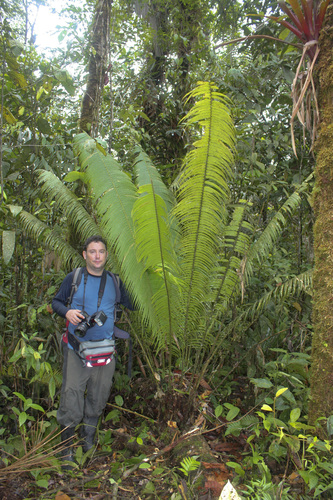
iNaturalist· cc-by-nc
(c) Gwili Gibbon, some rights reserved (CC BY-NC)
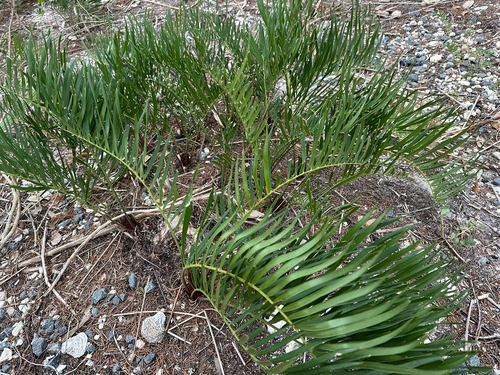
iNaturalist· cc-by-nc
(c) Gwili Gibbon, some rights reserved (CC BY-NC)
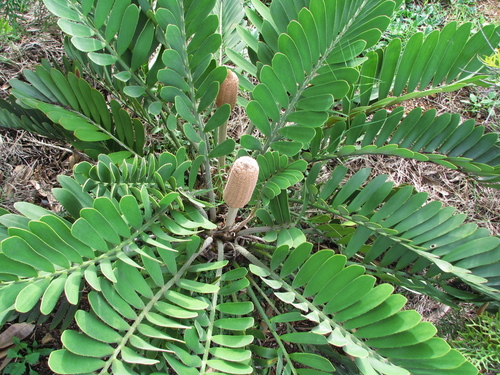
iNaturalist· cc-by-nc
(c) Ryan E. Gray, some rights reserved (CC BY-NC)
Summary
Source: WikipediaEncephalartos hildebrandtii is a species of cycad in the family Zamiaceae. It is native to Kenya and Tanzania at elevations from sea level to 600 metres (2,000 ft). The species is named for the German explorer Johann Maria Hildebrandt.
Description
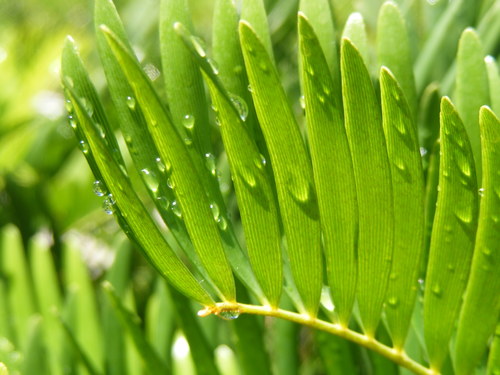
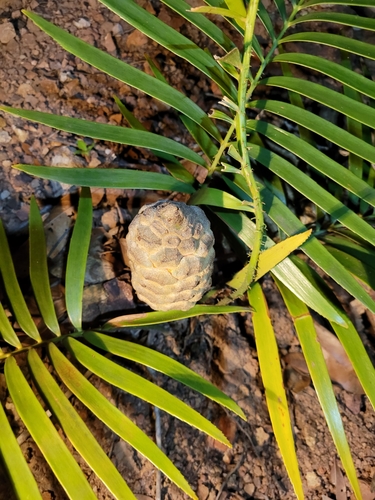
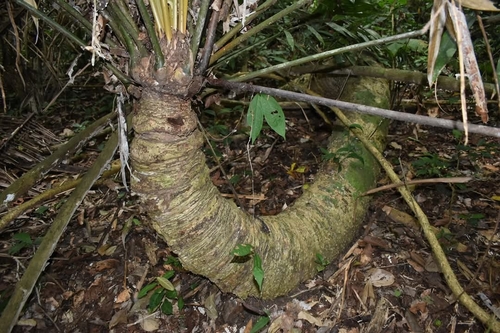
A medium to large sized cycad. The trunk can be 6 m tall. There are new suckers near the base. The young leaves are reddish or brown. They have fine hairs. The mature leaves form a rounded crown. They are 2-3 m long by 30-60 cm wide. The leaf stalk is 2-7 cm long and it is swollen at the base. The leaflets are narrow and the lower leaflets from short spines. The cones are different. The male cones are 20-50 cm long by 5-9 cm wide. They are greenish yellow and with 3-8 on each stem. The fruit stalks are 5-25 cm long. The female cones are 28-60 cm long by 15-25 cm wide. They are barrel shaped and there are 2-4 on each stem. The fruit stalks are 4-6 cm long. The seeds are 3-3.8 cm long by 1.5-2 cm wide. They can be red, yellow or orange and are angular.
Edible Uses
The seeds are processed into flour after boiling and drying. The starch from the trunk can be extracted by chopping, fermenting for a week, washing in hot water, sun-drying, and pounding into flour for use in porridge. The plant serves as a famine food source.
Traditional Uses
Flour is prepared from the seeds after they have been boiled and dried. Caution: The seeds are eaten as a famine food but are reported to cause liver cancer. The starch of the trunk can be extracted and used for food. It is chopped and heaped for a week to allow fermentation then it is washed in hot water and sun dried before pounding into flour and using in porridge.
Known Hazards
Consumption of the seeds can lead to liver cancer. We have no further specific information for this species, but most if not all members of this genus are believed to contain toxins. The two main toxic compounds that have been identified are cycasin and macrozamin. When ingested in sufficient quantities, these compounds are extremely poisonous to humans and many other animals, and have been shown to cause liver damage and cancer. Cycasin and macrozamin have a cumulative effect upon the body and are suspected of causing neurological disorders when ingested in small amounts over long periods of time. There is a long history of human use of this genus as a starch-rich food, but it should be noted that the plants needed to be treated in various ways in order to remove any toxic principles. Caution should be exercised even with properly prepared foods, since even then regular consumption may lead to severe health problems and death. Since many of these species are becoming increasingly rare in the wild, this is probably a food best left to times of food shortage when other, better foods, are not available.
Distribution
They suit tropical and subtropical climates. They need a sunny position and good drainage. They cannot tolerate frost. It grows in sparse deciduous forests and in grassland. They grow from sea level to 600 m altitude. They grow in regions with hot humid summer climates and mild dry winter climates. These places have a summer rainfall of 1000-1400 mm per year. It suits hardiness zones 10-12.
Where It Grows
Africa, Asia, Australia, East Africa, Indonesia, Kenya, Mozambique, SE Asia, Singapore, South Africa*, Southern Africa, Tanzania, Uganda, Zanzibar,
Cultivation
Plants are grown from seed or by removal of suckers. Suckers transplant easily.
Propagation
Seeds - best sown as soon as they are ripe, though the seeds of many species will take a few months to finish maturing the embryo before they are ready to germinate. Sow the seeds in a tray in a freely-draining medium and place in moderate shade. Bottom heat at about 27°c will hasten seed germination dramatically. Young roots are quite brittle and once germination takes place, the root grows rapidly. It is important to pot up the seedlings at this time in order to give them enough root-space. Grow on the plants in pots until large enough to plant out. Division of off-sets or suckers is best carried out just before the plant comes in to new growth at the start of the growing season.
Other Uses
A clear yellow to pale brown gum can be obtained from the plant.
Other Information
It is a famine food.
Notes
There are 52 Encephalartos species.
Also Known As
Balacha, Icheli, Mgwede, Mkamwa, Mkwanga, Msapo, Muka, Sikas mombasa
References (21)
- Burkill, I.H., 1966, A Dictionary of the Economic Products of the Malay Peninsula. Ministry of Agriculture and Cooperatives, Kuala Lumpur, Malaysia. Vol 1 (A-H) p 937
- Cundall, P., (ed.), 2004, Gardening Australia: flora: the gardener's bible. ABC Books. p 536
- Dale, I. R. and Greenway, P. J., 1961, Kenya Trees and Shrubs. Nairobi. p 2
- Dharani, N., 2002, Field Guide to common Trees & Shrubs of East Africa. Struik. p 90
- Etherington, K., & Imwold, D., (Eds), 2001, Botanica's Trees & Shrubs. The illustrated A-Z of over 8500 trees and shrubs. Random House, Australia. p 279
Show all 21 references Hide references
- Facciola, S., 1998, Cornucopia 2: a Source Book of Edible Plants. Kampong Publications, p 247
- http://www.fao.org/forestry/25323-096344a3de335832e8f363c3ac5184a66.pdf
- HILDEBRANDT,
- Index sem. hort. berol. 1874:18. 1875?
- Jardin, C., 1970, List of Foods Used In Africa, FAO Nutrition Information Document Series No 2.p 15
- Jones, D.L., 2000, Cycads of the world. Reed New Holland. p 197
- Menninger, E.A., 1977, Edible Nuts of the World. Horticultural Books. Florida p 163
- Pakia, M., 2000, Plant Ecology and Ethnobotany of two sacred forests (Kayas) at the Kenya Coast. M. Sc. Thesis.
- Peters, C. R., O'Brien, E. M., and Drummond, R.B., 1992, Edible Wild plants of Sub-saharan Africa. Kew. p 7
- PRAIN,
- Ruffo, C. K., Birnie, A. & Tengnas, B., 2002, Edible Wild Plants of Tanzania. RELMA p 300
- Sukarya, D. G., (Ed.) 2013, 3,500 Plant Species of the Botanic Gardens of Indonesia. LIPI p 828
- THIERET,
- Wickens, G.E., 1995, Edible Nuts. FAO Non-wood forest products. FAO, Rome. p179
- WILLIAMS,
- World Checklist of Useful Plant Species 2020. Royal Botanic Gardens, Kew