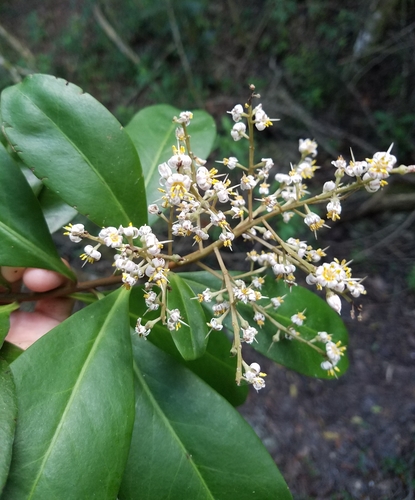
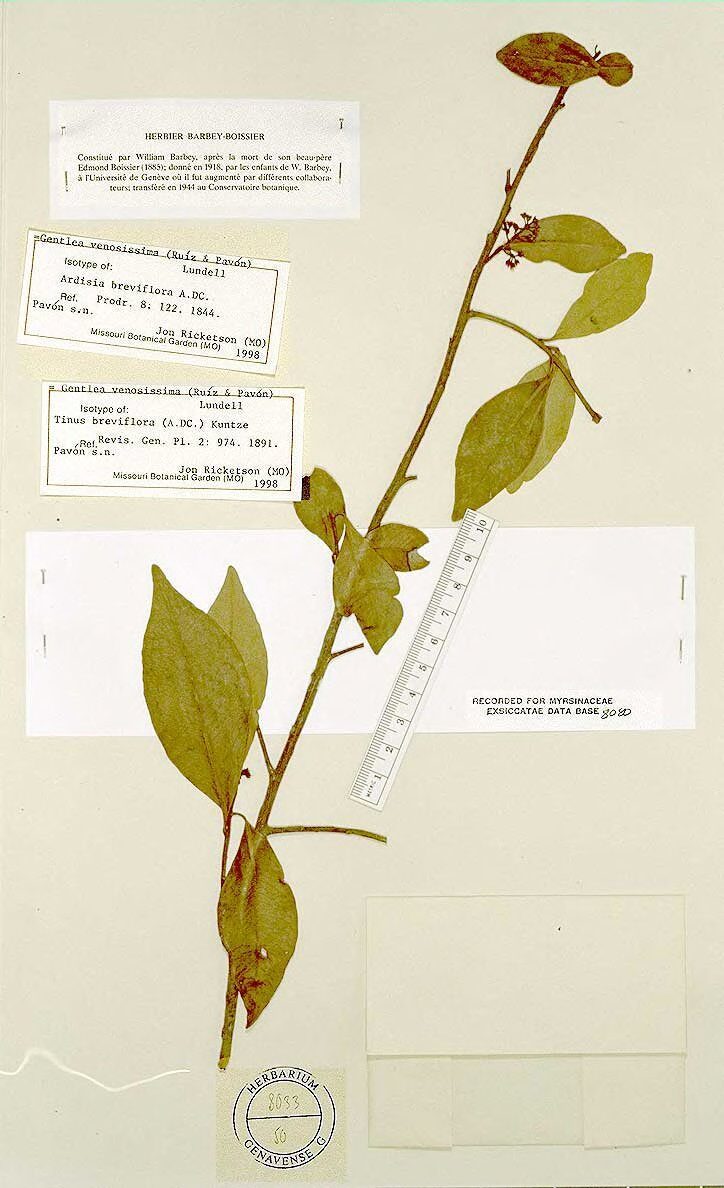
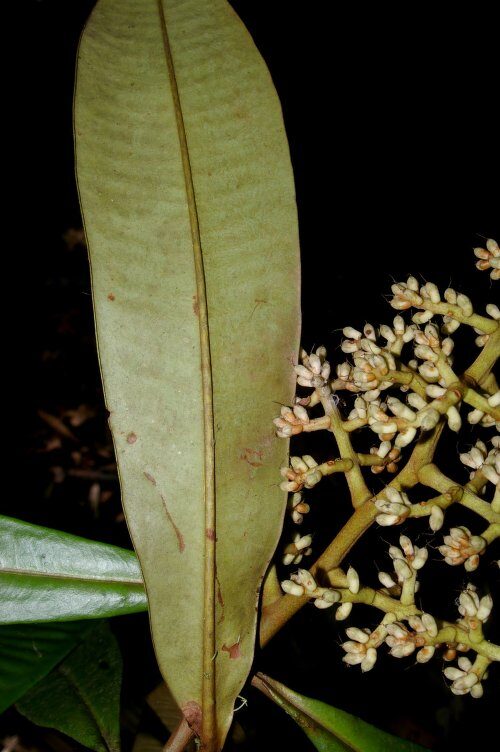
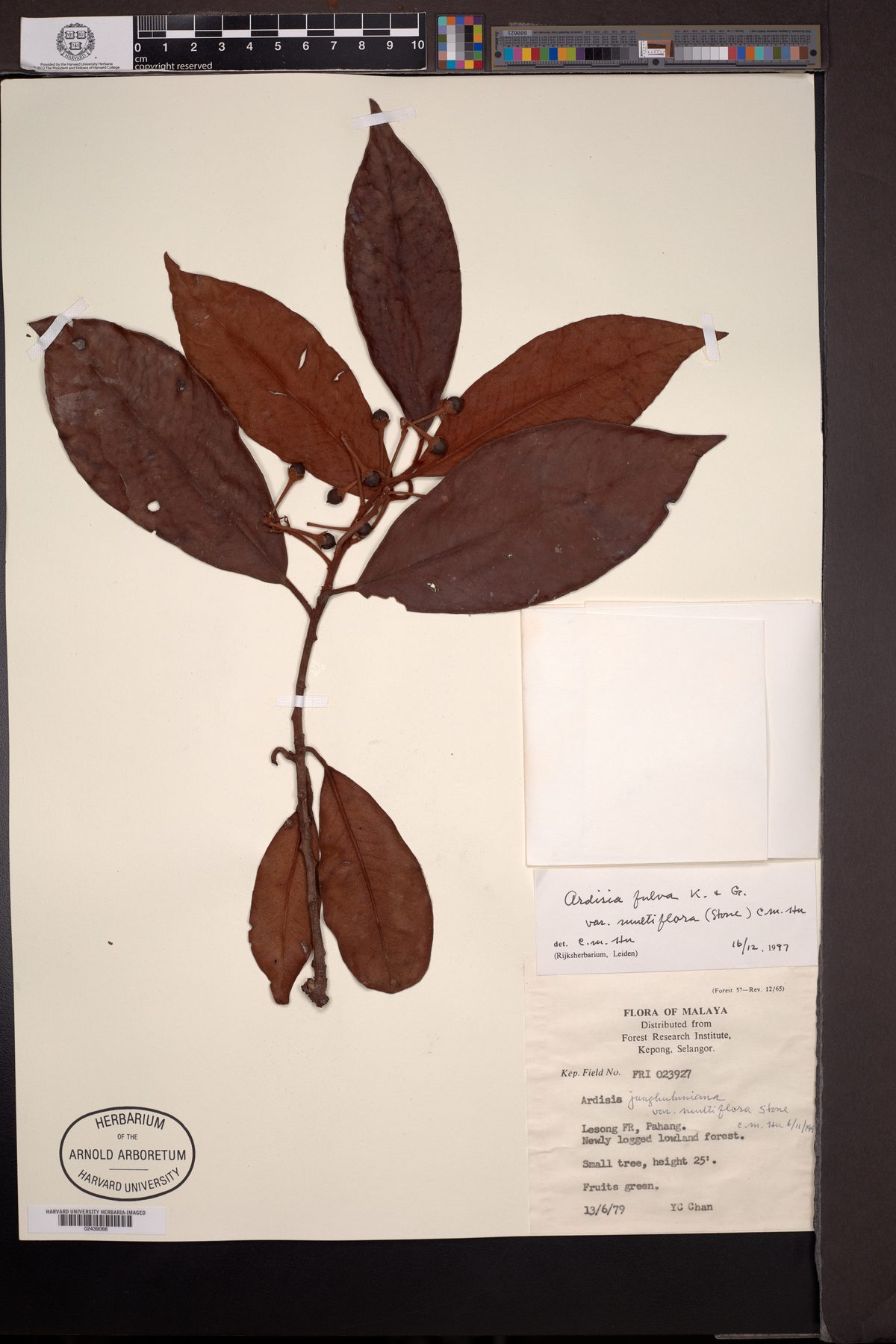
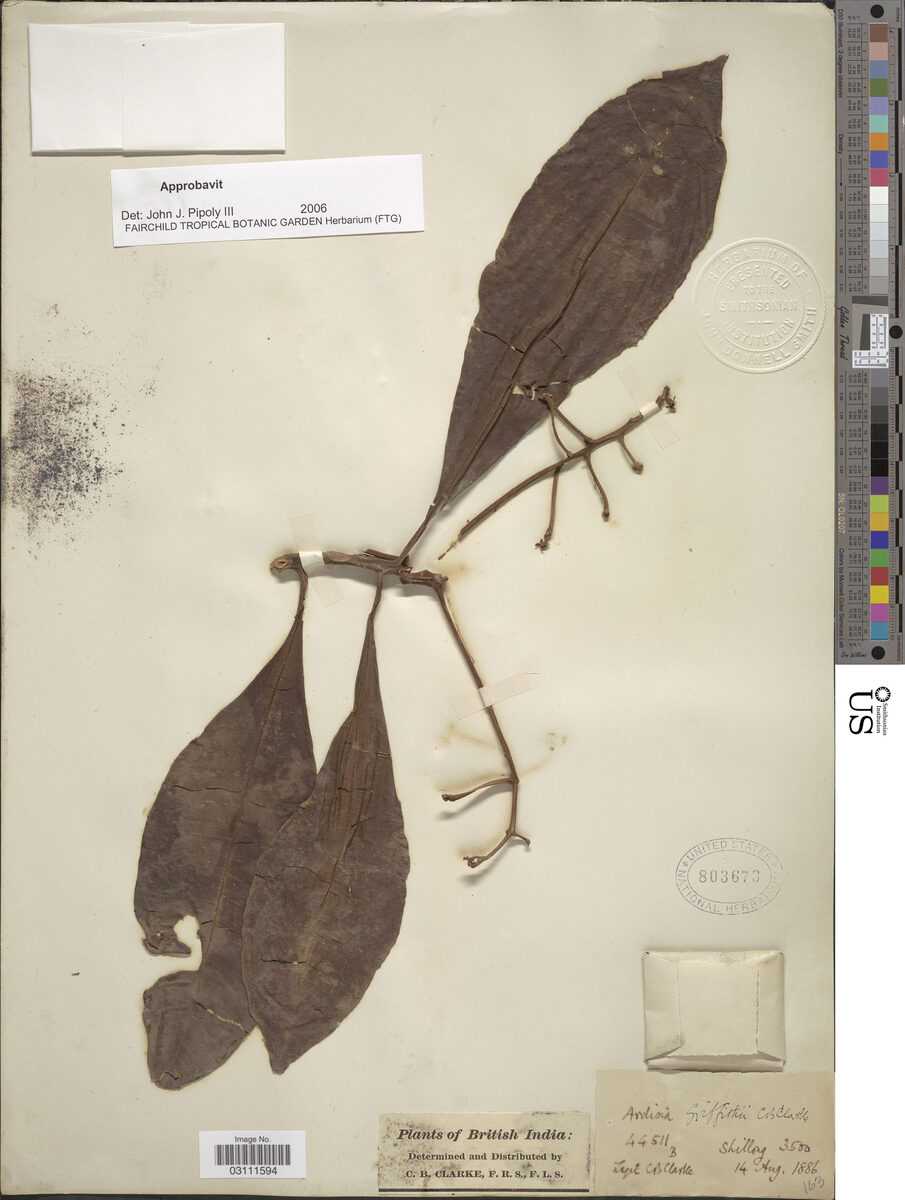
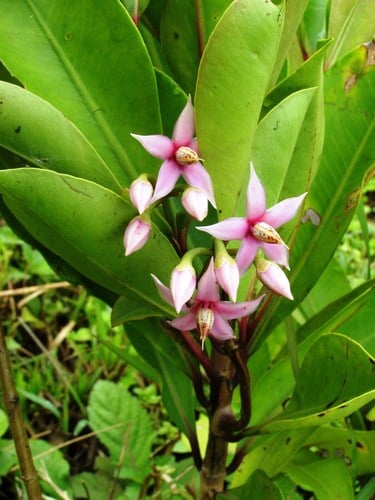
Ardisia complanata
Wall.
iNaturalist· cc-by-nc
(c) Klowitz Tsai, some rights reserved (CC BY-NC), uploaded by Klowitz Tsai
iNaturalist· cc-by-nc
(c) amirfaruq, some rights reserved (CC BY-NC)
Description
A tropical shrub or small tree with narrow, sword-shaped leaves, belonging to the Primulaceae family.
This description is brief — help expand it
Edible Uses
The leaves and shoots are used in curries with fish.
Traditional Uses
The leaves and shoots are used in curries with fish.
This uses section is brief — help expand it
Medicinal Uses
The plant (part not specified) is used in the treatment of liver disease, cough and diarrhoea. A paste made from the leaf is applied topically to treat herpes zoster or a kind of measles. In the course of screening for antioxidants in Thai medicinal plants, the extract of the fruits of this species showed relatively high scavenging activity. A phytochemical study on the bark of this plant reported the isolation of the medicinally active compounds rapanone and ilexol.
Distribution
It is a tropical plant.
Where It Grows
Andamans, Asia, Australia, Bangladesh, Cambodia, Christmas Island, India, Indonesia, Malaysia, Myanmar, Northeastern India, Sri Lanka, Thailand, Vietnam,
Cultivation
Species in this genus generally prefer a well-drained humus rich soil in partial shade in a position sheltered from cold drying winds.
Other Uses
The plant ()part not specified) is the source of a dye.
Notes
Also put in the family Myrsinaceae.
Synonyms
Also Known As
Nal tenga
References (1)
- Saikia, M., 2015, Wild edible vegetables consumed by Assamese people of Dhemaji District of Assam, NE India and their medicinal values. Archives of Applied Science Research, 2015, 7 (5):102-109 (As Ardisia colorata)