Embelia laeta
(L.) Mez
Sour embelia
iNaturalist· cc-by-nc
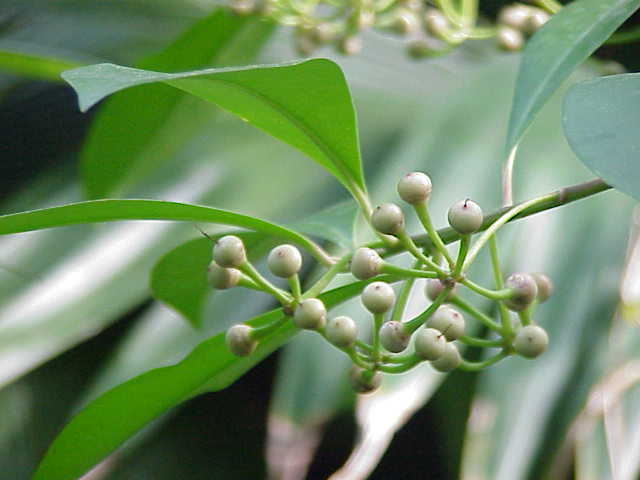
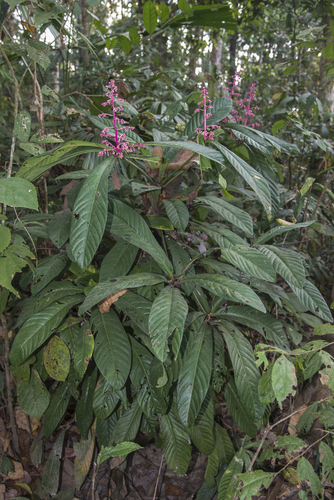
(c) Lijin Huang (紫楝), some rights reserved (CC BY-NC), uploaded by Lijin Huang (紫楝)
iNaturalist· cc-by-nc
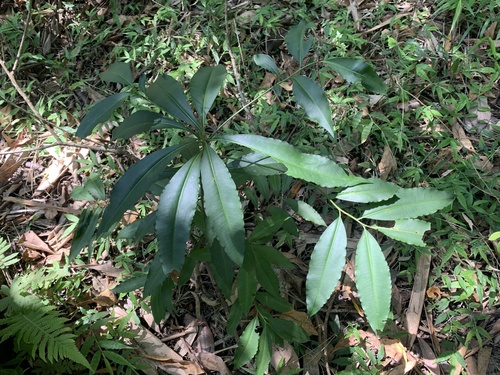
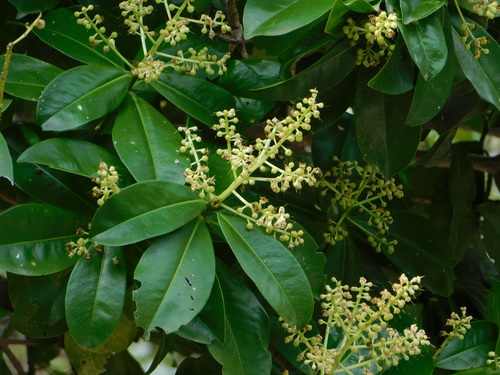
(c) malcolmcheng, some rights reserved (CC BY-NC)
iNaturalist· cc-by-nc
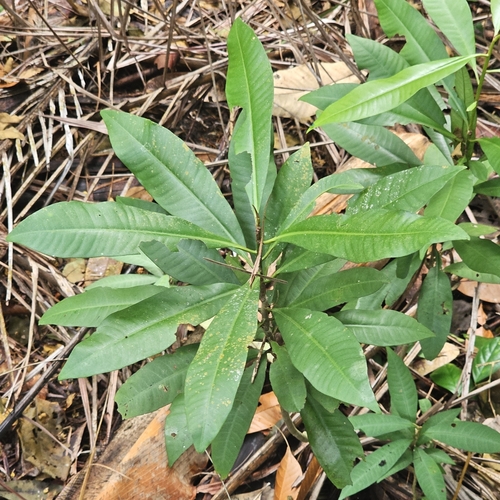
(c) Alan Kwok (King Lun), Ada Tai (Ah Heung) / 阿達蘭 AdAlan, some rights reserved (CC BY-NC), uploaded by Alan Kwok (King Lun), Ada Tai (Ah Heung) / 阿達蘭 AdAlan
Description
A shrub. It grows to 1 m high. The branches are straight but flexible. They are 1.5-2 mm across. The leaf stalk is 5-9 mm long. The leaves are oval. It is 3-6 cm long by 1.5-2 cm wide but can be larger or smaller. They are papery and dull. The base is wedge shaped and the edges can curl. There are 6-10 side veins each side of the midrib but these are not easy to see. The flowering stalk is in the axils of the leaves. There are 3-15 flowers. The flowers are white or yellowish. The flower groups are 1 cm long. The petals are 1-1.5 mm high. The fruit are round and 5-8 mm across. There are 2 subspecies based on the hairiness of the branches.
Edible Uses
The fruit and leaves are eaten. The young leafy shoots and roots are traditionally used for tea.
Traditional Uses
The roots and young leafy shoots are used for tea.
This uses section is brief — help expand it
Medicinal Uses
The roots and young leafy shoots are used for tea in traditional practice.
Distribution
A tropical plant. They grow in S China. It grows between 100-2,000 m above sea level. In Yunnan.
Where It Grows
Asia, Cambodia, China, Hainan, Indochina, Laos, SE Asia, Taiwan, Thailand, Vietnam,
Other Information
It is sold in local markets in China.
Notes
There are about 140 Embelia species. Also put in the family Myrsinaceae.
Nutrition
| Part | Moisture | kJ | kcal | Protein | Vit A | Vit C | Iron | Zinc |
|---|---|---|---|---|---|---|---|---|
| Leaves | — | — | — | — | 63 | — | — | — |
Also Known As
Ngut hoa-trang, Ngut trang, Re vui, Shan yan Suan ji, Suan teng zi, Suen Kwo
References (9)
- Aiguo, C. & Zhiling, D., 2001, Managing Agricultural Resources for Biodiversity Conservation. Case Study Yunnan, Southwest China. Environment Liaison Center International. p 41
- Altschul, S.V.R., 1973, Drugs and Foods from Little-known Plants. Notes in Harvard University Herbaria. Harvard Univ. Press. Massachusetts. no. 3223
- Chen Jie, Pipoly 3, J. J., Myrsinaceae. Flora of China.
- H. G. A. Engler, Pflanzenr. IV. 236(Heft 9):326. 1902
- Hu, Shiu-ying, 2005, Food Plants of China. The Chinese University Press. p 614
Show all 9 references Hide references
- Li, D. et al, 2017, Ethnobotanical survey of herbal tea plants from the traditional markets in Chaoshan, China. Journal of Ethnopharmacology. 205 (2017) 195-206
- Mot So Rau Dai an Duoc O Vietnam. Wild edible Vegetables. Ha Noi 1994, p 200
- Pham-Hoang Ho, 1999, An Illustrated Flora of Vietnam. Nha Xuat Ban Tre. p 682
- Van Sam, H. et al, 2008, Uses and Conservation of Plant Species in a National Park. A case study of Ben En, Vietnam. Economic Botany 62:574-593