Lysimachia arvensis
(L.) U.Manns & Anderb.
Scarlet pimpernel, Shepherd's weather glass
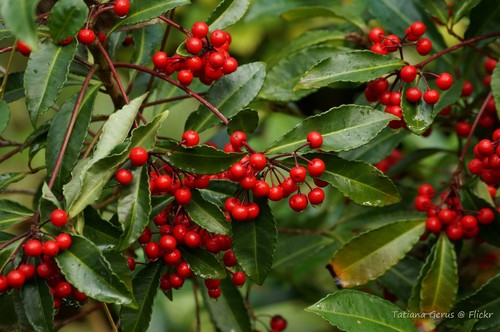
iNaturalist· cc-by-sa
(c) Douglas Goldman, some rights reserved (CC BY-SA), uploaded by Douglas Goldman
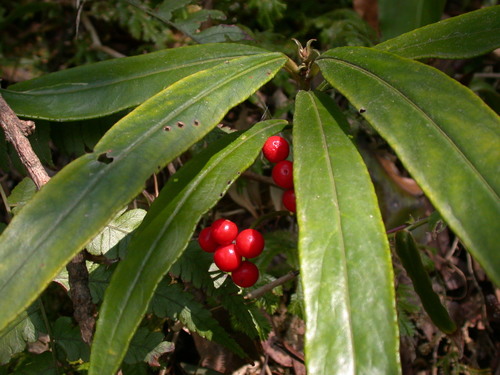
iNaturalist· cc-by-nc
(c) Kathy Ward, some rights reserved (CC BY-NC), uploaded by Kathy Ward
iNaturalist· cc-by-nc
(c) Sara Fonseca, some rights reserved (CC BY-NC), uploaded by Sara Fonseca
Summary
Source: WikipediaLysimachia arvensis, syn. Anagallis arvensis, commonly known as scarlet pimpernel, red pimpernel, red chickweed, poor man's barometer, poor man's weather-glass, shepherd's weather glass or shepherd's clock, is a species of low-growing annual plant with brightly coloured flowers, most often scarlet but also bright blue and sometimes pink. The native range of the species is Europe and Western Asia and North Africa. The species has been distributed widely by humans, either deliberately as an ornamental flower or accidentally. L. arvensis is now naturalised almost worldwide, with a range that encompasses the Americas, Central and East Asia, the Indian subcontinent, Malesia, the Pacific Islands, Australasia and Southern Africa. This common European plant is generally considered a weed and is an indicator of light soils, though it grows opportunistically in clay soils as well. The origin of the name pimpernel comes from late Middle English pympernele [1400–50], derived from Middle French pimprenelle, from Old French piprenelle, and ultimately from Vulgar Latin *piperīnella (piper 'pepper' + -īn- '-ine' + -ella diminutive suffix). The flower serves as the emblem of the fictional hero the Scarlet Pimpernel.
Description
An annual herb. It grows 20 cm high. The stems branch from the base and can be creeping. It has a square stem. This can be 40 cm long. It has very small scattered hairs. The leaves do not have leaf stalks. They are produced opposite one another. Leaves are 1.5-2.5 cm long by 0.5-1.5 cm wide. They are oval and have a shiny upper surface. The flowers occur singly. They grow in the axils of leaves and they are blue or orange. The flowers close at the approach of bad weather. The fruit is a round capsule.
Edible Uses
Young tender shoots can be cooked as a vegetable or used in salads.
Traditional Uses
The young tender shoots are cooked as a vegetable. They are also used in salads. CAUTION: Toxic oils and a toxic glycoside have been isolated from these plants.
Medicinal Uses
This species is used in medicine.
Known Hazards
Toxic oils and a toxic glycoside have been isolated from these plants.
Distribution
It is a temperate plant. In Nepal it grows up to about 2000 m altitude. It is self sown in moist places. It is common on waste land, hillsides and coastal sands in Europe. Tasmania Herbarium.
Where It Grows
Africa, Argentina, Asia, Australia, Bahrain, Bhutan, Brazil, Britain*, Central Asia, Chile, Cuba, Dominican Republic, East Africa, Ethiopia, Europe*, France, Germany, Greece, Haiti, Himalayas, India, Iran, Iraq, Ireland, Italy, Jamaica, Japan, Mediterranean, Mexico, Middle East, Myanmar, Nepal, Norfolk Island, North America, Pakistan, Portugal, Russia, SE Asia, South America, Spain, Sri Lanka, Sudan, Taiwan, Tajikistan, Tasmania, Turkey, Türkiye, Uruguay, USA, West Indies, Zimbabwe,
Cultivation
Plants are grown from seed.
Notes
There are 20-28 Anagallis species. This one is used in medicine.
Synonyms
Also Known As
Anagallide, Armale, Ayn al got, Cat's eye, Dhabbar, Fare kulagi, Hierba de pollo, Hnget-ma-no-khin-sa, Jabonera, Jonkmari, Morgellina, Poor Man's weatherglass, Shepherd's clock
References (32)
- Ambasta S.P. (Ed.), 2000, The Useful Plants of India. CSIR India. p 38 (As Anagallis arvensis)
- Bircher, A. G. & Bircher, W. H., 2000, Encyclopedia of Fruit Trees and Edible Flowering Plants in Egypt and the Subtropics. AUC Press. p 26 (As Anagallis arvensis)
- Blamey, M and Grey-Wilson, C., 2005, Wild flowers of the Mediterranean. A & C Black London. p 168 (As Anagallis arvensis)
- Bodkin, F., 1991, Encyclopedia Botanica. Cornstalk publishing, p 78 (As Anagallis arvensis)
- Brown, D., 2002, The Royal Horticultural Society encyclopedia of Herbs and their uses. DK Books. p 119 (As Anagallis arvensis)
Show all 32 references Hide references
- Curtis, W.M., 1993, The Student's Flora of Tasmania. Part 3 St David's Park Publishing, Tasmania, p 467 (As Anagallis arvensis)
- Dashorst, G.R.M., and Jessop, J.P., 1998, Plants of the Adelaide Plains & Hills. Botanic Gardens of Adelaide and State Herbarium. p 112 (As Anagallis arvensis)
- Diaz-Betancourt, M., et al, 1999, Weeds as a future source for human consumption. Rev. Biol. Trop. 47(3):329-338 (As Anagallis arvensis)
- Dogan, Y., 2012, Traditionally used wild edible greens in the Aegean Region of Turkey. Acta Societatis Botanicorum Poloniae 81(4): 329-342 (As Anagallis arvensis)
- Flora of Australia Volume 49, Oceanic Islands 1, Australian Government Publishing Service, Canberra. (1994) p 154(As Anagallis arvensis)
- Flora of Pakistan. www.eFloras.org (As Anagallis arvensis)
- Harris, S., Buchanan, A., Connolly, A., 2001, One Hundred Islands: The Flora of the Outer Furneaux. Tas Govt. p 105 (As Anagallis arvensis)
- Hedrick, U.P., 1919, (Ed.), Sturtevant's edible plants of the world. p 52
- Hussey, B.M.J., Keighery, G.J., Cousens, R.D., Dodd, J., Lloyd, S.G., 1997, Western Weeds. A guide to the weeds of Western Australia. Plant Protection Society of Western Australia. p 204 (As Anagallis arvensis)
- Hyde-Wyatt, B.H. & Morris D.I., 1975, Tasmanian Weed Handbook. Dept of Ag Tasmania. p 79 (As Anagallis arvensis)
- Irving, M., 2009, The Forager Handbook, A Guide to the Edible Plants of Britain. Ebury Press p 255 (As Anagallis arvensis)
- Joshi, N., et al, 2007, Traditional neglected vegetables of Nepal: Their sustainable utilization for meeting human needs. Tropentag 2007. Conference on International Agricultural Research for Development. (As Anagallis arvensis)
- Lamp, C & Collet F., 1989, Field Guide to Weeds in Australia. Inkata Press. p 20 (As Anagallis arvensis)
- Loughmiller, C & L., 1985, Texas Wildflowers. A Field Guide. University of Texas, Austin. p 202 (As Anagallis arvensis)
- Manandhar, N.P., 2002, Plants and People of Nepal. Timber Press. Portland, Oregon. p 87 (As Anagallis arvensis)
- Molla, A., Ethiopian Plant Names. http://www.ethiopic.com/aplants.htm (As Anagallis arvensis)
- Morley, B. & Everard, B., 1970, Wild Flowers of the World. Ebury press. Plate 33 (As Anagallis arvensis)
- Morley, B.D., & Toelken, H.R., (Eds), 1983, Flowering Plants in Australia. Rigby. p 119 (As Anagallis arvensis)
- Paczkowska, G . & Chapman, A.R., 2000, The Western Australian Flora. A Descriptive Catalogue. Western Australian Herbarium. p 463 (As Anagallis arvensis)
- Phillips, D.C., 1988, Wild Flowers of Bahrain. A Field Guide to Herbs, Shrubs, and Trees. Privately published. p 157 (As Anagallis arvensis)
- Plants for a Future, The Field, Penpol, Lostwithiel, Cornwall, PL22 0NG, UK. http://www.scs.leeds.ac.uk/pfaf/ (As Anagallis arvensis)
- Plants of Haiti Smithsonian Institute http://botany.si.edu/antilles/West Indies (As Anagallis arvensis)
- Psaroudaki, A., et al, 2015, Genetic structure and population diversity of eleven edible herbs of Eastern Crete. Journal of Biological Research-Thessaloniki, 22:7 (As Anagallis arvensis)
- Rangel-Landa, S., et al, 2017, Sociocultural and ecological factors influencing management of edible and non-edible plants: the case of Ixcatlan, Mexico. Journal of Ethnobiology and Ethnomedicine. 13:59 (As Anagallis arvensis)
- Sp. pl. 1:148. 1753 (As Anagallis arvensis)
- Tasmanian Herbarium Vascular Plants list p 46 (As Anagallis arvensis)
- World Checklist of Useful Plant Species 2020. Royal Botanic Gardens, Kew