Elaeocarpus stipularis
Blume
iNaturalist· cc-by-nc-nd
(c) loupok, some rights reserved (CC BY-NC-ND)
iNaturalist· cc-by
(c) Adam Kamal, some rights reserved (CC BY)
Summary
Source: WikipediaElaeocarpus stipularis is a tree in the Elaeocarpaceae family. It is found from the Aru Islands, eastern Indonesia, to Philippines, and through Mainland Southeast Asia to Odisha, India. It has edible fruit, its wood is used and some medical uses are ascribed to it.
Description
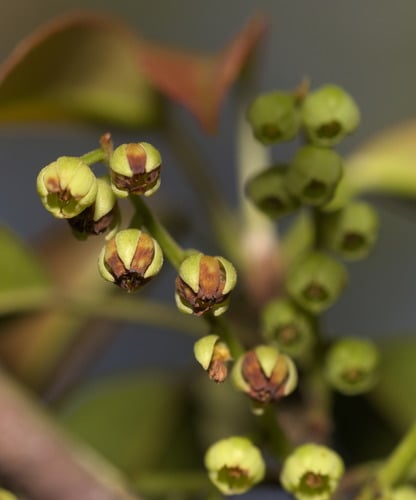
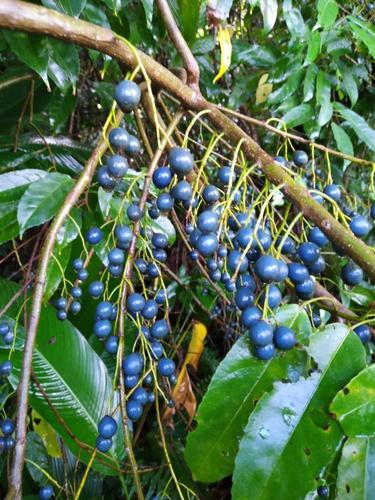
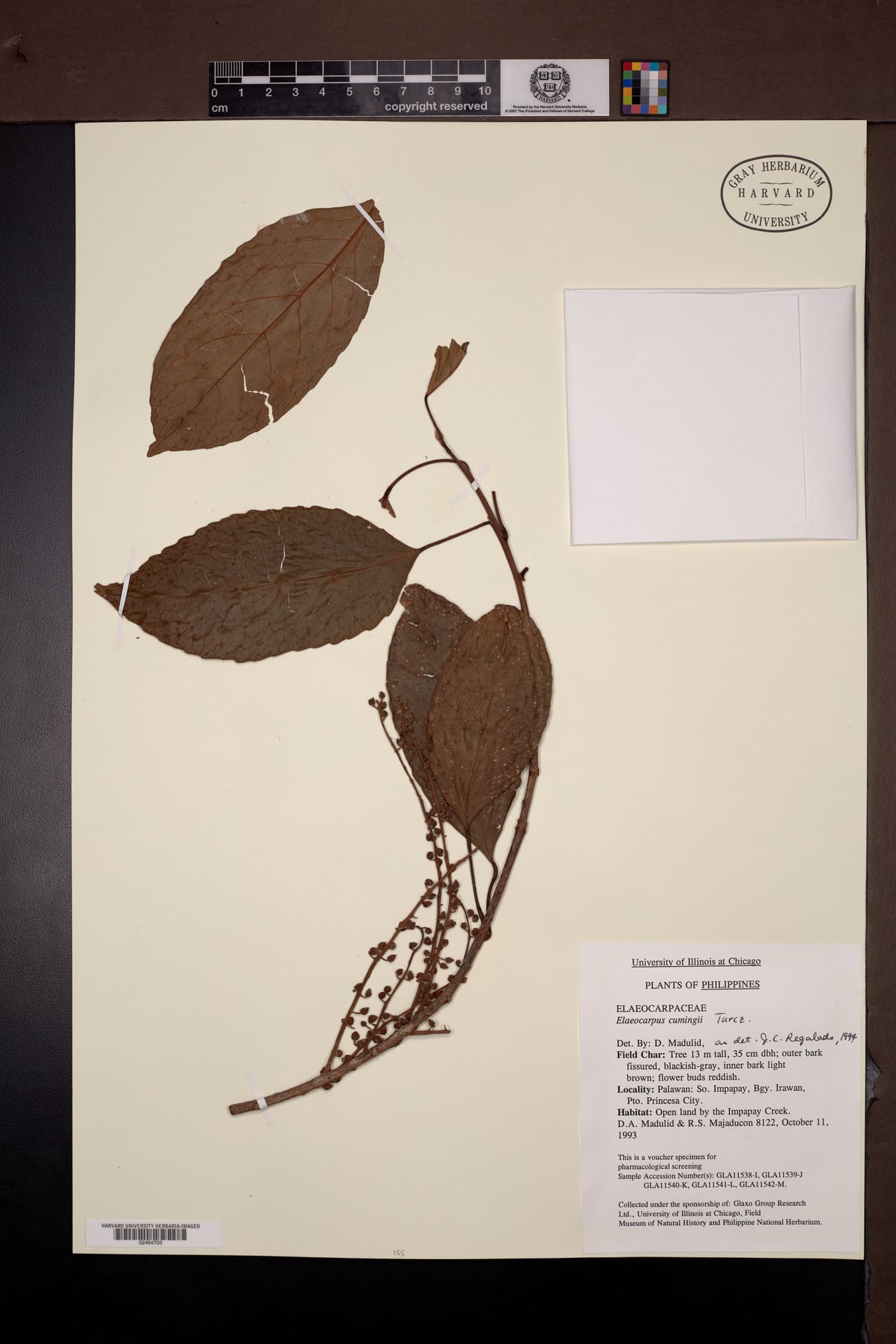
A tree. The trunk is 15 cm across. It grows 8-30 m high. The bark is light brown and cracked. The leaves are drooping. The leaves are shiny and dark green. Old leaves are bright red. The leaves are 7-25 cm long by 3-9 cm wide. They are narrowly oval with a pointed tip. The young leaves have velvety hairs. The flowers are 1.5 cm across and white. They are in unbranched sprays 7-13 cm long. There are 30-40 yellow stamens on a raised orange disk. The fruit is hard and green. They are 2-4 cm across. They have an oily pulp and a wrinkled stone with 1-3 seeds. Fruit are edible.
Edible Uses
The fruit is edible.
Medicinal Uses
The trunk of the species is used to make short-lived constructions in Cambodia, while the twigs are often used as firewood. Amongst inhabitants of southern Shan State, Myanmar, the fruit of the var. siamensis are eaten. The bark of the taxa is used by the Karo people of Sumatera to treat impotence. The Temuan people living in the Ayer Hitam Forest of Selangor, Malaysia, use a poultice of pulped leaves of the tree to treat sores.
Distribution
A tropical plant. It grows in forests, including swamps up to 1,200 m above sea level. It can grow on basic and poor soils as well as clay soils.
Where It Grows
Andaman Islands, Asia, Brunei, India, Indochina, Indonesia, Laos, Malaysia, Myanmar, Sarawak, SE Asia, Thailand, Vietnam,
Cultivation
The plant is usually found in the wild on alluvial sites with ultrabasic or poor sandy to clay soils. We have no more specific information for this species, but members of this genus generally grow well in full sun to moderate shade, requiring a fertile, moist but well-drained soil.
Propagation
The seed of most species in this genus is covered by a hard, woody shell and can be very slow and erratic to germinate, sometimes taking 2 years or more. Filing down the shell, or cracking it (being very careful not to damage the seed) in order to allow the ingress of moisture can help to greatly speed up germination. Sow the seed in containers in light shade. When the seedlings are large enough to handle, prick them out into individual pots and grow them on until large enough to plant out, Cuttings of almost ripe shoots, in a sandy soil in a frame. The leaves should be left on the stem.. Many species strike readily from cuttings.
Other Uses
The heartwood is light-yellowish white to pink-brown, it is not distinctly demarcated from the sapwood. The texture is moderately fine and even, with straight to shallowly interlocked grain. The wood is soft to moderately hard; light in weight to moderately heavy; weak; not very durable. It seasons fairly slowly with slight end and surface checking; shrinkage is fairly low. It is easy to resaw and cross-cut; planing is easy and leaves a moderately smooth finish; nailing properties are good. A general purpose wood, it is suitable for purposes such as general planking, shuttering, boxes, crates, wooden pallets, match splints, veneer and plywood.
Notes
There are about 360 Elaeocarpus species mostly in the tropics.
Synonyms
Also Known As
Belensi, Com la-be, Deruman pelandok, Jambu kelawar, Kungkurad, Medang api, Medang kelawar, Medang miang, Pensi antu
References (6)
- Bijdr. 121. 1825
- Burkill, I.H., 1966, A Dictionary of the Economic Products of the Malay Peninsula. Ministry of Agriculture and Cooperatives, Kuala Lumpur, Malaysia. Vol 1 (A-H) p 918
- Chai, P. P. K. (Ed), et al, 2000, A checklist of Flora, Fauna, Food and Medicinal Plants. Lanjak Entimau Wildlife Sanctuary, Sarawak. Forestry Malaysia & ITTO. p 167
- Gardner, S., et al, 2000, A Field Guide to Forest Trees of Northern Thailand, Kobfai Publishing Project. p 95
- Pham-Hoang Ho, 1999, An Illustrated Flora of Vietnam. Nha Xuat Ban Tre. p 474
Show all 6 references Hide references
- Slik, F., www.asianplant.net