Elaeis guineensis
Jacq.
African Oil palm
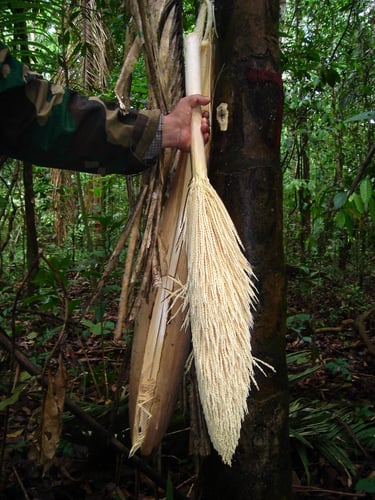
iNaturalist· cc-by-nc
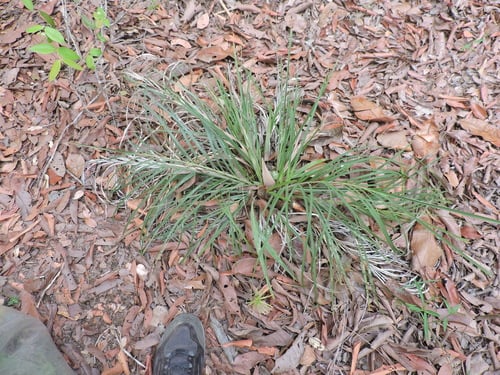
(c) Scamperdale, some rights reserved (CC BY-NC)
iNaturalist· cc-by-nc
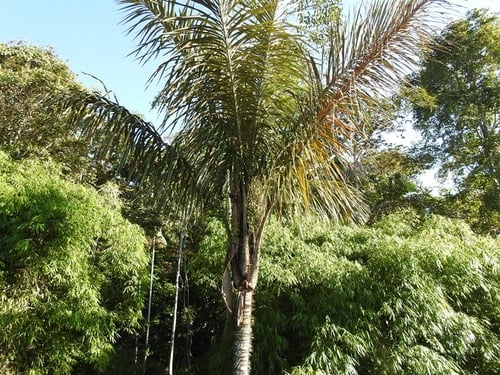
(c) Robin Heymans, some rights reserved (CC BY-NC)
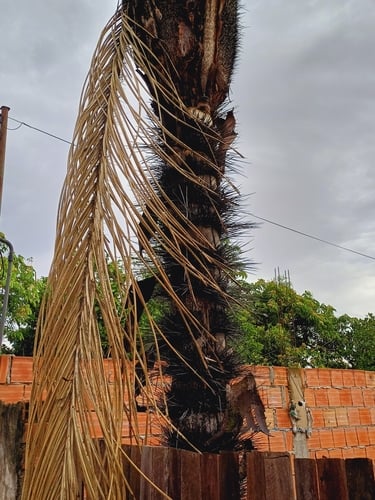
iNaturalist· cc-by
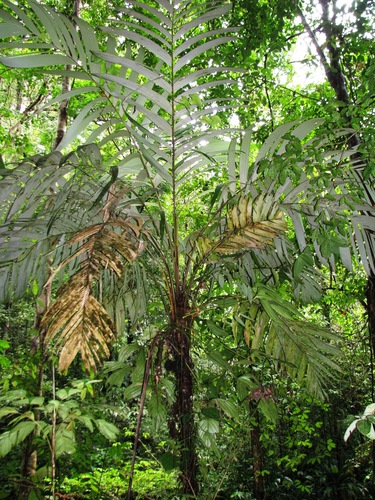
(c) Fabrício Mil Homens Riella, some rights reserved (CC BY), uploaded by Fabrício Mil Homens Riella
Summary
Source: WikipediaElaeis guineensis is a species of palm commonly just called oil palm but also sometimes African oil palm or macaw-fat. The first Western person to describe it and bring back seeds was the French naturalist Michel Adanson. It is native to west and southwest Africa, specifically the area between Angola and The Gambia; the species name, guineensis, refers to the name for the area called Guinea, and not the modern country Guinea now bearing that name. The species is also now naturalised in Madagascar, Sri Lanka, Malaysia, Indonesia, Central America, Cambodia, the West Indies, and several islands in the Indian and Pacific Oceans. The closely related American oil palm E. oleifera and a more distantly related palm, Attalea maripa, are also used to produce palm oil. E. guineensis was domesticated in West Africa along the south-facing Atlantic coast. There is insufficient documentation and as of 2019 insufficient research to make any guesses as to when this occurred. Human use of oil palms may date as far back as 5,000 years in Egypt; in the late 1800s, archaeologists discovered palm oil in a tomb at Abydos, Egypt, dating back to 3000 BCE (but this information needs further investigation, due to recent reviews. The oil found in Abydos may be just date oil or even animal fats). It is the principal source of palm oil. Oil palms can produce much more oil per unit of land area than most other oil-producing plants (about nine times more than soy and 4.5 times more than rapeseed).
Description
An unbranched palm with a stout erect stem. The stem is rough due to the leaf bases which remain attached. It grows to 20-30 m tall. The trunk is about 75 cm across. The crown consists of about 40 open leaves. These hang downwards. The leaves develop from the bud as a tightly rolled shoot which later opens. The palm crown spreads 5-9 m across. Casual roots grow from the lower 1 m of the base of the trunk. Many roots also grow just under the soil and spread out for 20 m around the palm. The leaves are about 7.5 m long. The leaves have spines along the leaf stalk. These leaves are made up of many leaflets (100-160 pairs). These are slender, long and thin and rich green. These are held at different levels along the midrib (Almost two rows). The flowers are of one sex only. The male flowers occur with a spiny tip. The female flowers are on long stalks. They are 30-45 cm long. The fruit is a large round bunch of small fruits. These are 4 cm long by 2 cm across. There can be 200 fruit in a bunch.
Edible Uses
Two distinct oils are extracted from this plant: palm oil from the fruit and palm kernel oil from the seed, obtained in a volume ratio of approximately 9:1. Palm oil has a wide range of culinary uses including margarine, vegetable ghee, bakery fats, ice cream, and cooking oil. In West Africa, unrefined red palm oil is an essential dietary staple, added directly to soups and sauces for richness, and used as a frying oil for snacks such as bean cakes and fried plantain. Its 10% linoleic acid content makes it an excellent source of carotene, important in reducing vitamin A deficiency and nutritional blindness. Adding palm oil to cereal preparations significantly increases their calorific density, which is especially beneficial for young children. Palm kernel oil is similar in composition to coconut oil and is used in margarine, ice cream, confectionery, and cooking, sometimes combined with coconut oil. Boiled and pounded nuts yield palm nut butter, a thick red liquid used in Ghana and Liberia for palm butter soup and other dishes. The soft interior of the apical bud is eaten as a heart-of-palm vegetable, though harvesting it kills the tree since the plant is single-stemmed and cannot produce side branches. Palm wine is made in West Africa by tapping the unopened male inflorescences or the stem just below the apex of felled trees, then fermenting the sap.
Traditional Uses
The outer layer of the fruits yields an orange cooking oil. The kernel also produces oil. The palm cabbage is edible. The sap tapped from the male flower is used to make wine. The oily fruit are sometimes eaten but can cause nausea. The leaves are burnt and used as a vegetable salt.
Medicinal Uses
Traditional medicinal uses in Africa are numerous. Preparations from the palm heart are used to treat gonorrhoea, menorrhagia, and perinatal abdominal pain, and are considered laxative, anti-emetic, and diuretic. Leaf sap is used in preparations for skin conditions. The roots are used as an analgesic. The oil from the pulp is emollient and used as an excipient for herbal ointments, and is applied in the treatment of suppurations, whitlows, and leg swellings caused by erysipelas and Filaria infestations.
Distribution
A tropical plant. They need a temperature above 18°C. They suit the hot humid tropics. They grow between 16°N and 15°S in Africa. These palms do well in rich moist soil. A rainfall above 2,000 mm is needed for good production. They need a sunny position. They are drought and frost tender. It grows from sea level to 900 m above sea level. It grows in areas with a mean annual temperature between 27-35°C. It grows in areas with a mean annual rainfall between 2,000-3,000 mm. Plantations are established in West New Britain in Papua New Guinea and palms occur in some other areas of the country. In Cairns Botanical Gardens. It suits hardiness zones 10-12. In Yunnan.
Where It Grows
Africa*, Amazon, Andaman Is., Angola, Asia, Australia, Bangladesh, Benin, Bolivia, Bougainville, Brazil, Burkina Faso, Burundi, Cambodia, Cameroon, Central Africa, Central African Republic, CAR, Central America, Chad, China, Colombia, Congo DR, Congo R, Costa Rica, Côte d'Ivoire, Cuba, Dominican Republic, East Africa, East Timor, Ecuador, El Salvador, Ethiopia, FSM, Fiji, Gabon, Gambia, Ghana, Guiana, Guianas, Guinea, Guinée, Guinea-Bissau, Guyana, Haiti, Honduras, India, Indochina, Indonesia, Ivory Coast, Kenya, Liberia, Madagascar, Malawi, Malaysia, Mali, Mexico, Mozambique, Myanmar, Nicaragua, Niger, Nigeria, Pacific, Papua New Guinea, PNG, Peru, Philippines, Pohnpei, Puerto Rico, Rwanda, Sahel, Sao Tome and Principe, SE Asia, Senegal, Seychelles, Sierra Leone, Singapore, Solomon Islands, Southern Africa, South America, Sri Lanka, Sudan, Suriname, Tanzania, Timor-Leste, Togo, Trinidad-Tobago, Uganda, Venezuela, Vietnam, West Africa, West Indies, Zambia,
Cultivation
Plants succeed in moist to very wet tropical climates up to elevations of 1,300m. Commercial cultivation is below 700m and preferably lower than 300 m. It grows best in areas where annual daytime temperatures are within the range 20 - 35°c, but can tolerate 12 - 38°c. The plant is quite tolerant, though, and succeeds in southern China where there are light frosts and mean daily temperatures can drop below 10°c for weeks on end. It prefers a mean annual rainfall in the range 1,500 - 3,000mm, but tolerates 1,000 - 8,000mm. Optimally, there should be at least 150 mm of rain each month of the year, ideally falling mostly at night. Plants grow well in full sun, even when small. Grows and thrives on wide range of tropical soils, provided they have adequate water supply. Requires a humus-rich soil. Waterlogged, highly lateritic, extremely sandy, stony or peaty soils should be avoided. Tolerant of temporary flooding, provided the water is not stagnant. Prefers a pH range 4.5 - 6, tolerating 3.2 - 8. The root system is adventitious, forming a dense mat with a radius of 3 - 5m in the upper 40 - 60cm of the soil. Some primary roots are directly below the base of the trunk descending for anchorage for more than 1.5m; the roots produce pneumatodes under very moist conditions. It is a succession species favoured by slash and burn, and its gene pool has expanded as farmers clear land and create more open habitat for the germination of its seeds. Plants can commence bearing 3 years after the seed has germinated. The plant produces both male and female flowers, but not usually at the same time. An individual inflorescence will be all male or all female flowers; after a series of inflorescences of one sex the plant will then produce a series of inflorescences of the opposite sex. Plants flower all year. The fruit is produced in clusters approx 100 fruits. The inflorescence is produced from about every second leaf axil. There are up to 1,500 deep violet fruits (ripening to orange-red) in each roundish dense cluster, weighing 30 kg or more. Yields of 5 tonnes of oil per hectare have been obtained from mature plants. Spacing: 15-20 ft. (4.7-6 m) 20-30ft. (6-9m) .
Propagation
Pre-soak seed for 24 hours in warm water and sow in containers; germination takes 2–5 months. Commercially, seeds are placed in intact 500-gauge polythene bags arranged on wooden boxes in a germinator at 39–40°C for 75–80 days. They are then soaked in cold water for 3 days with the water changed every 24 hours, drained, dried in shade, and kept at room temperature. Seeds are examined every 2 weeks — drying seeds are sprayed with water and germinated seeds are removed for potting. This method achieves an 80% germination rate.
Other Uses
Oil palm can be used to rehabilitate degraded land; in Sumatra it has been successfully established on abandoned farmland overtaken by Imperata cylindrica. About 10% of palm oil production — particularly inferior grades and refining residues — is used to manufacture soaps, detergents, candles, resins, lubricating greases, cosmetics, glycerol, and fatty acids. Palm oil is also used in the steel industry for sheet-steel manufacturing and tin plating, and epoxidized palm oil serves as a plasticizer and stabilizer in PVC plastics. Palm kernel oil is non-drying and is used as an alternative to coconut oil in high-quality soaps, lubricants, and as a source of short- and medium-chain fatty acids for producing fatty alcohols, esters, amines, amides, and other chemical components used in surface-active agents, plastics, lubricants, and cosmetics. In Togo, pressed fruits are dried and formed into cakes used as cooking fuel. Empty bunches, fibre, and mill effluent (approximately 0.5 tonnes of sludge per tonne of milled fruit) can be converted into organic fertilizers. Palm fronds are used for thatch, though they are less suited to this than coconut palm fronds due to irregular leaflet insertion. Leaflets are woven into baskets and mats, leaflet midribs are made into brooms, and rachises are used for fencing. Young leaflets yield a fine strong fibre used for fishing lines, snares, and strainers. Seed shells are polished and carved into ornamental rings and beads, and are also valued as a high-calorific fuel for blacksmiths' furnaces. Palm trunks from replanting provide material suitable for paper and board production, though this has not yet attracted significant commercial interest.
Production
The early growth of seedlings is slow. Palms commence bearing after about 4-6 years. When mature they produce 2-6 bunches per year. The flower bud does not develop until about 9 months after the leaf containing it has opened. Bright sunny weather helps the development of female flowers. Male flowers are more common in wet cloudy weather. Fruit matures 5-9 months after flowering. A bunch can weigh 18-25 kg. Palms live for many years. Individual trees can live for 200 years.
Other Information
A major cash crop but also significant as a food by farmers in many areas. It is sold in local markets. It is cultivated.
Notes
There are 2 Elaeis species.
Nutrition
| Part | Moisture | kJ | kcal | Protein | Vit A | Vit C | Iron | Zinc |
|---|---|---|---|---|---|---|---|---|
| Seed dried | 11.5 | 2454 | 587 | 6.6 | — | — | — | — |
| Seed | 28 | 2247 | 538 | 1.6 | 18 | 9 | 4 | — |
Synonyms
Also Known As
Abura yashi, Aobara, Apwuraiasi, Asomme, Atchichi, Aye, Ba di ngasi, Ba di nsamba, Balia, Be yiya, Bemintchi, Caiauke, Corojo de Guinea, Dendes, Doung breng, Earra, Ebinazi, Ekpe, Igi okpe, Ikye, Isa, Ivile, Kanjindo, Kepala sawit, Kibila, Kikasi, Kwakwa, Lara, Libala, Loombo, Macaw-fat, Mchikichi, Mintchame, Mjenga, Mubira, Munazi, Mupomu, Ngazi, Nkula, N'queme, N'teen, Nsamba, Ochi, Oil palm, Palma africana, Palmeir de oleo, Palmeira de azeite, Palmeira dendem, Palmera, Palmier-a-huile, Quem, Ribe, Sihtan, Si-ohn, Tchin, Tem-em-eih, Tem-o, Tire, Toun, Tsingilo, Tugueih, Vin de palme, You zong
References (102)
- Alyegba, S. S. et al, 2013, Ethnobotanical Survey of Edible Wild Plants in Tiv Communities of Benue State, Nigeria. Journal of Natural Sciences Research. Vol.3, No.7
- Ambasta, S.P. (Ed.), 2000, The Useful Plants of India. CSIR India. p 191
- Aniama, S. O., et al, 2016, Ethnobotanical documentaton of some plants among Igala people of Kogi State (Nigeria). The International Journal Of Engineering And Science (IJES). 5(4) pp 33-42
- Ataga, C.D. & van der Vossen, H.A.M., 2007. Elaeis guineensis Jacq. [Internet] Record from Protabase. van der Vossen, H.A.M. & Mkamilo, G.S. (Editors). PROTA (Plant Resources of Tropical Africa), Wageningen, Netherlands. < http://database.prota.org/search.htm>. Accessed 15 October 2009.
- Balick, M.J. and Beck, H.T., (Ed.), 1990, Useful palms of the World. A Synoptic Bibliography. Colombia p 301 (As Elaeis melanococca), 395 (As Elaeis melanococca),
Show all 102 references Hide references
- Belem, M., et al, 2017, Strategy of Conservation and Protection of Wild Edible Plants Diversity in Burkina Faso. ANADOLU 27 (2) 2017, 82- 90
- Bernholt, H. et al, 2009, Plant species richness and diversity in urban and peri-urban gardens of Niamey, Niger. Agroforestry Systems 77:159-179
- Billong Fils, P. E., et al, 2020, Ethnobotanical survey of wild edible plants used by Baka people in southeastern Cameroon. Journal or Ethnobiology and Ethnomedicine. 16:64 p 8
- Bodkin, F., 1991, Encyclopedia Botanica. Cornstalk publishing, p 376
- Bremness, L., 1994, Herbs. Collins Eyewitness Handbooks. Harper Collins. p 53
- Brickell, C. (Ed.), 1999, The Royal Horticultural Society A-Z Encyclopedia of Garden Plants. Convent Garden Books. p 393
- Brouk, B., 1975, Plants Consumed by Man. Academic Press, London. p 235
- Burkill, H. M., 1985, The useful plants of west tropical Africa, Vol. 4. Kew.
- Burkill, I.H., 1966, A Dictionary of the Economic Products of the Malay Peninsula. Ministry of Agriculture and Cooperatives, Kuala Lumpur, Malaysia. Vol 1 (A-H) p 908
- Catarino, L., et al, 2016, Ecological data in support of an analysis of Guinea-Bissau's medicinal flora. Data in Brief 7 (2016):1078-1097
- Chai, P. P. K. (Ed), et al, 2000, A checklist of Flora, Fauna, Food and Medicinal Plants. Lanjak Entimau Wildlife Sanctuary, Sarawak. Forestry Malaysia & ITTO. p 163
- Chapman, J. D. & Chapman, H. M., 2001, The Forest Flora of Taraba and Andamawa States, Nigeria. WWF & University of Canterbury. p 211
- Cobley, L.S. (rev. Steele, W.M.) 2nd Ed., 1976, An Introduction to the Botany of Tropical Crops. Longmans. p 312
- Coe, F. G., and Anderson, G. J., 1996, Ethnobotany of the Garifuna of Eastern Nicaragua. Economic Botany 50(1) pp 71-107
- Coe, F. G. and Anderson, G. J., 1999, Ethnobotany of the Sumu (Ulwa) of Southeastern Nicaragua and Comparisons with Miskitu Plant Lore. Economic Botany Vol. 53. No. 4. pp. 363-386
- Cundall, P., (ed.), 2004, Gardening Australia: flora: the gardener's bible. ABC Books. p 532
- Dale, I. R. and Greenway, P. J., 1961, Kenya Trees and Shrubs. Nairobi. p 11
- D'Ambrosio, U., & Puri, R. K., 2016, Foodways in transition: food plants, diet and local perceptions of change in a Costa Rican Ngäbe community. Journal of Ethnobiology and Ethnomedicine (2016) 12:3 p 22
- Danforth, R.M., & Boren, P.D., 1997, Congo Native fruits. Twenty-five of the best. Privately published. p 28
- Dharani, N., 2002, Field Guide to common Trees & Shrubs of East Africa. Struik. p 288
- Diarra, N. et al, 2016, Etude ethnobotanique des plantes alimentaires utilisées en période de soudure dans les régions Sud du Mali. Int. J. Biol. Chem. Sci. 10(1): 184-197
- Dibong, S. D., et al, 2011, Inventory and Biodiversity of species edible wild fruits sold in the markets of Douala, Cameroon. International Journal of Applied Biology and Pharmaceutical Technology. 2(3).
- Diop, A. l., et al, 2021, Cultural importance of wild edible plants in three sympatric communities: Agni, Akyé and Gwa in the Department of Alépé (Southeast of Côte d’Ivoire). Ethnobotany Research and Applications 22:35. p 6
- Djihounouck, Y., et al, 2018, Diversité Et Importance Socio-Economique Des Espèces Fruitières Sauvages Comestibles En Zone Kasa (Sud-Ouest Du Sénégal). European Scientific Journal December 2018 edition Vol.14, No.36 ISSN: 1857 – 7881
- Djihounouck, Y., et al, 2021, Ethnobotanical Uses of Non-cultivated Edible Fruit Species in the Department of Oussouye (South Senegal). Journal of Food Research; Vol. 10, No. 4 p 20
- Etherington, K., & Imwold, D., (Eds), 2001, Botanica's Trees & Shrubs. The illustrated A-Z of over 8500 trees and shrubs. Random House, Australia. p 276
- Facciola, S., 1998, Cornucopia 2: a Source Book of Edible Plants. Kampong Publications, p 28
- Focho, D. A., et al, 2009, Ethnobotanical survey of Trees in Fundong, Northwest Region, Cameroon. Journal of Ethnobiology and Ethnomedicine, 5:17
- Fowler, D. G., 2007, Zambian Plants: Their Vernacular Names and Uses. Kew. p 64
- French, B.R., 1986, Food Plants of Papua New Guinea, A Compendium. Asia Pacific Science Foundation p 342
- French, B.R., 2010, Food Plants of Solomon Islands. A Compendium. Food Plants International Inc. p 280
- Gibbons, M., 1993, Palms. Compact study Guide and Identifier. Sandstone. p 40
- Gibbons, M., 2003, A pocket guide to Palms. Chartwell Books. p 103
- Grubben, G. J. H. and Denton, O. A. (eds), 2004, Plant Resources of Tropical Africa 2. Vegetables. PROTA, Wageningen, Netherlands. p 561
- Hahn, K., et al, 2018, The Use of Wild Plants for Food: a National Scale Analysis for Burkina Faso (West Africa) Flora et Vegetatio Sudano-Sambesica 21, 25-33
- Hardon, J.J., 1979, Oil palm, in Simmonds, N.W., (ed), Crop Plant Evolution. Longmans. London. p 225
- Hawthorne, W.& Marshall, C., 2013, Nimba Western Area Iron Ore Concentrator Mining Project Environmental and Social Impact Assessment. AcelorMittel Liberia. p 476
- Hedrick, U.P., 1919, (Ed.), Sturtevant's edible plants of the world. p 286
- Heywood, V.H., Brummitt, R.K., Culham, A., and Seberg, O., 2007, Flowering Plant Families of the World. Royal Botanical Gardens, Kew. p 348
- Hibbert, M., 2002, The Aussie Plant Finder 2002, Florilegium. p 91
- Hwang, L. C., et al, 2020, Traditional Botanical Uses of Non-Timber Forest Products (NTFP) in Seven Counties in Liberia. ACS Symposium Series; American Chemical Society: Washington, DC, 2020.
- Janick, J. & Paul, R. E. (Eds.), 2008, The Encyclopedia of Fruit & Nuts. CABI p 118
- Jardin, C., 1970, List of Foods Used In Africa, FAO Nutrition Information Document Series No 2.p 33, 76
- Johnson, D.V., 1998, Tropical palms. Non-wood Forest products 10. FAO Rome. p 131
- Jones, D.L., 1994, Palms throughout the World. Smithtonian Institution, Washington. p 211
- Jones, D.L., 2000, Palms of Australia 3rd edition. Reed/New Holland. p 156
- Kalman, D. S., et al, 2013, Efficacy and safety of Elaeis guineensis and Ficus deltoidea leaf extracts in adults with pre-diabetes. Nutrition Journal, 12:36
- Katende, A.B., Birnie, A & Tengnas B., 1995, Useful Trees and Shrubs for Uganda. Identification, Propagation and Management for Agricultural and Pastoral Communities. Technical handbook No 10. Regional Soil Conservation Unit, Nairobi, Kenya. p 260
- Kew Plants of the World Online
- Latham, P., 2004, Useful Plants of Bas-Congo province. Salvation Army & DFID p 119
- Lautenschläger, T., et al, 2018, First large-scale ethnobotanical survey in the province of Uíge, northern Angola. Journal of Ethnobiology and Ethnomedicine (2018) 14:51
- Lord, E.E., & Willis, J.H., 1999, Shrubs and Trees for Australian gardens. Lothian. p 96
- Manvell, A., 2011, Use of Non-Timber Forest Products around Sapo National Park, Liberia (Report B) p 52
- Marcia, M. J., et al, 2011, Palm Uses in Northwestern South America: A Quantitative Review. Bot. Rev. (2011) 77:462-570
- Martin, F.W. & Ruberte, R.M., 1979, Edible Leaves of the Tropics. Antillian College Press, Mayaguez, Puerto Rico. p 210
- Martin, F. W., et al, 1987, Perennial Edible Fruits of the Tropics. USDA Handbook 642 p 47
- Mawunu, M., et al, 2020, First Survey of the Edible Non-Wood Forest Products Sold in Uige Province, Northern Angola. European Journal of Agriculture and Food Sciences. Vol. 2, No. 6
- Menninger, E.A., 1977, Edible Nuts of the World. Horticultural Books. Florida p 133
- Miguel, E., et al, 1989, A checklist of the cultivated plants of Cuba. Kulturpflanze 37. 1989, 211-357
- Mutie, F. M., et al, 2023, Important Medicinal and Food Taxa (Orders and Families) in Kenya, Based on Three Quantitative Approaches. Plants 2023, 12, 1145
- N'Diaye, M., et al.,2003, Principle fruits of gathering consumed and marketed in Guinea. Fruits, Vol. 58: 99-116
- Nkeoua, G. & Boundzanga, G. C., 1999, Donnees sur les produits forestieres non ligneux en Republique du Congo. FAO. p 26
- Omawale, 1973, Guyana's edible plants. Guyana University, Georgetown p 59
- Peters, C. R., O'Brien, E. M., and Drummond, R.B., 1992, Edible Wild plants of Sub-saharan Africa. Kew. p 37
- Phon, P., 2000, Plants used in Cambodia. © Pauline Dy Phon, Phnom Penh, Cambodia. p 269
- Purseglove, J.W., 1972, Tropical Crops. Monocotyledons. Longmans p 479
- Riffle, R.L. & Craft, P., 2003, An Encyclopedia of Cultivated Palms. Timber Press. p 333
- Roa, J. A. G. & Boada, D. S. G., 2018, Fundación para el Fortalecimiento de la Fruticultura y Plantas Alimenticias no Convencionales en Colombia.
- Sambou, A., et al, 2016, The contribution of trees and palms to a blanced diet in three rural villages of the Fatick Province, Senegal. FORESTS, TREES AND LIVELIHOODS, 2016 VOL. 25, NO. 3, 212–225
- Schuler, S., (Ed.), 1977, Simon & Schuster's Guide to Trees. Simon & Schuster. No. 53
- Segnon, A. C. & Achigan-Dako, E. G., 2014, Comparative analysis of diversity and utilization of edible plants in arid and semi-arid areas in Benin. Journal of Ethnobiology and Ethnomedicine 2014, 10:80
- Segura, S. et al, 2018, The edible fruit species in Mexico. Genet Resour Crop Evol (2018) 65:1767–1793
- Seidemann J., 2005, World Spice Plants. Economic Usage, Botany, Taxonomy. Springer. p 143
- Select. stirp. amer. hist. 280, t. 172. 1763
- Small, E., 2009, Top 100 Food Plants. The world's most important culinary crops. NRC Research Press. p 374
- Sukarya, D. G., (Ed.) 2013, 3,500 Plant Species of the Botanic Gardens of Indonesia. LIPI p 777
- Terashima, H., et al, 1992, Ethnobotany of the Lega in the Tropical Rainforest of Eastern Zaire (Congo): Part Two, Zone de Walikale, African Study Monographs, Suppl. 19:1-60
- Terashima, H., & Ichikawa, M., 2003, A comparative ethnobotany of the Mbuti and Efe hunter-gatherers in the Ituri Forest, Democratic Republic of Congo. African Study Monographs, 24 (1, 2): 1-168, March 2003
- Termote, C., et al, 2011, Eating from the wild: Turumbu, Mbole and Bali traditional knowledge of non-cultivated edible plants, District Tshopo, DRCongo, Gen Resourc Crop Evol. 58:585-618
- Terra, G.J.A., 1973, Tropical Vegetables. Communication 54e Royal Tropical Institute, Amsterdam, p 45
- Torre, de la L., et al, 2008, Enciclopedia de las Plantas Útiles del Ecuador. Herbario QCA. Pontificia Universidad Católica del Ecuador. p 200
- Tugume, P. & Nyakoojo, C., 2020, Traditional use of wild edible plants in the communities adjacent to Mabira Central Forest Reserve, Uganda. Ethnobotany Research & Applications 20:15 (2020)
- Udo, E. S., et al, 2009, Life-form and Density of Valuable Non-timber Plants in Ukpom Community Forest, Akwa Ibom State, Nigeria. African Research Review 3(3) p 7
- Vael, L., 2015, Ethnobotanical study of the plant use in the natural landscape of two mestizo communities in the Ucayali region of the Peruvian Amazon. Universiteit Gent.
- van Roosmalen, M.G.M., 1985, Fruits of the Guianan Flora. Utrecht Univ. & Wageningen Univ. p 348
- van Wyk, B., 2005, Food Plants of the World. An illustrated guide. Timber press. p 184
- Vasquez, R. and Gentry, A. H., 1989, Use and Misuse of Forest-harvested Fruits in the Iquitos Area. Conservation Biology 3(4): 350f
- Vickery, M.L. and Vickery, B., 1979, Plant Products of Tropical Africa, Macmillan. p 27
- White, F., Dowsett-Lemaire, F. and Chapman, J. D., 2001, Evergreen Forest Flora of Malawi. Kew. p 102
- Wickens, G.E., 1995, Edible Nuts. FAO Non-wood forest products. FAO, Rome. p165
- Wiersema, J. H. & Leon, B., 2013, World Economic Plants. A Standard Reference CRC Press. 2nd Ed. p 267
- Williams, C.N., Chew, W.Y., and Rajaratnam, J.A., 1989, Tree and Field Crops of the Wetter Regions of the Tropics. Longman, p 197
- Williamson, J., 2005, Useful Plants of Malawi. 3rd. Edition. Mdadzi Book Trust. p 104
- World Checklist of Useful Plant Species 2020. Royal Botanic Gardens, Kew
- www.worldagroforestrycentre.org/treedb/
- Xu, You-Kai, et al, 2004, Wild Vegetable Resources and Market Survey in Xishuangbanna, Southwest China. Economic Botany. 58(4): 647-667.
- Zuchowski W., 2007, Tropical Plants of Costa Rica. A Zona Tropical Publication, Comstock Publishing. p 388