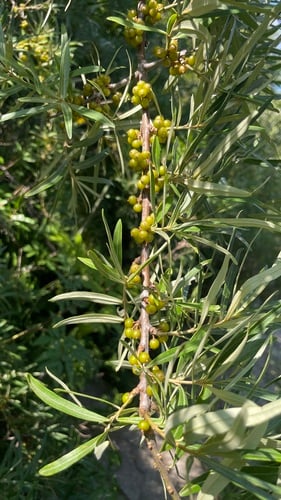
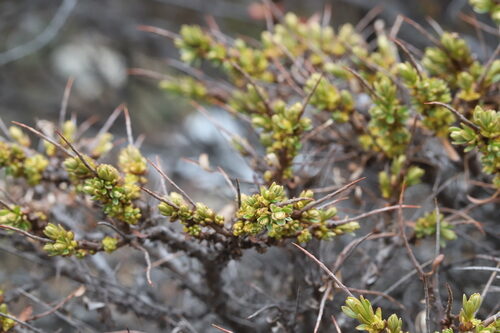
Elaeagnus x ebbingei
Boom.
iNaturalist· cc-by-nc
(c) Anton Gjeldum, some rights reserved (CC BY-NC)
iNaturalist· cc-by-nc
(c) Anton Gjeldum, some rights reserved (CC BY-NC)
iNaturalist· cc-by-nc
(c) Nicola Addelfio, some rights reserved (CC BY-NC)
Summary
Evergreen shrub reaching 5m tall and wide with fast growth. Hardy to UK zone 6 and tolerant of frost. Year-round foliage with flowers from October to January and seed ripening April to May. Hermaphroditic, bee-pollinated, and self-fertile. Fixes atmospheric nitrogen. Grows in light, medium, or heavy soils with good drainage preferred; tolerates poor soil fertility. Accepts mildly acidic to basic pH. Thrives in full shade to full sun. Drought-tolerant and handles maritime exposure well.
Description
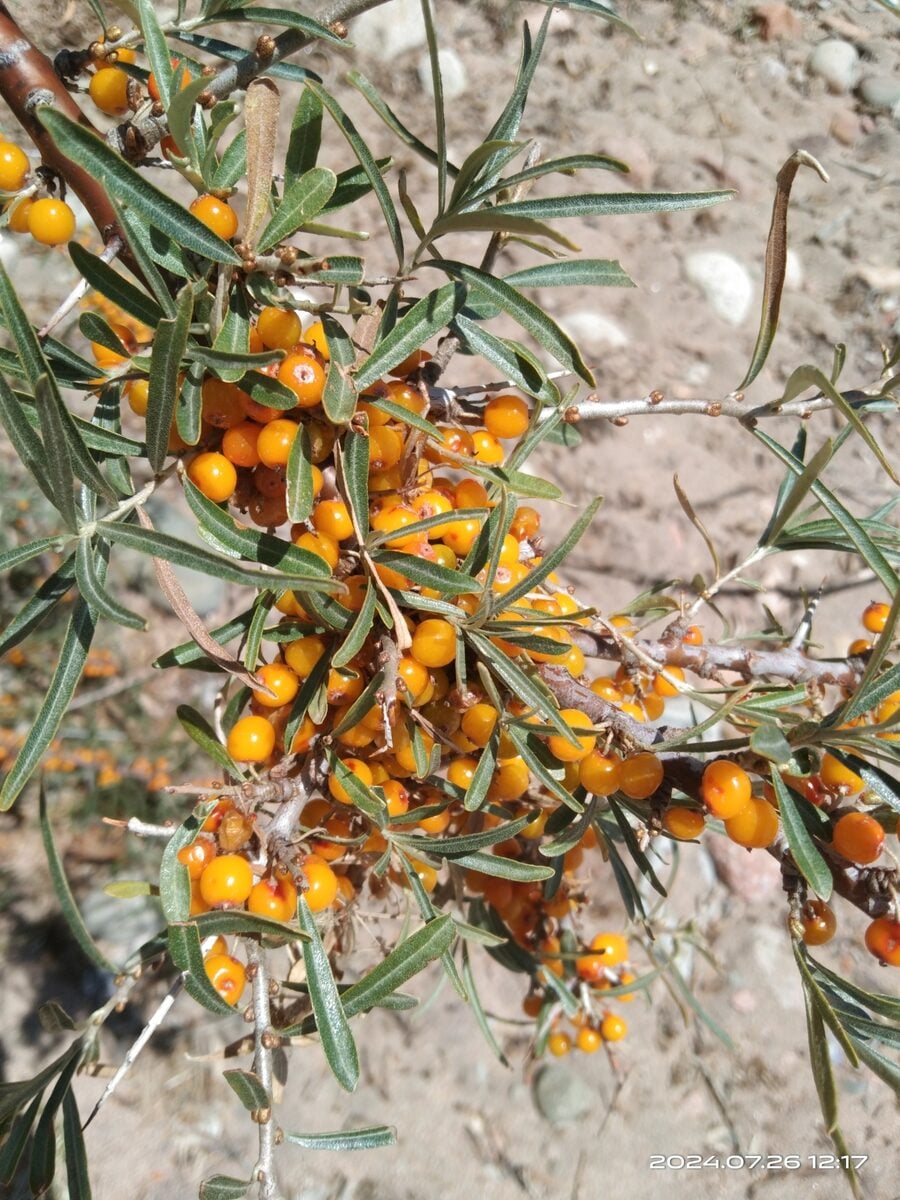
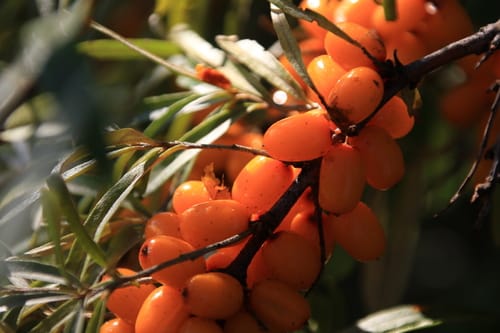
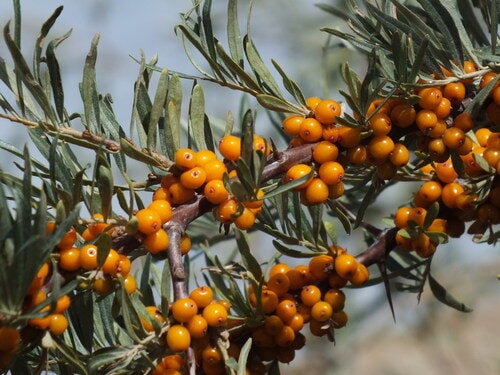
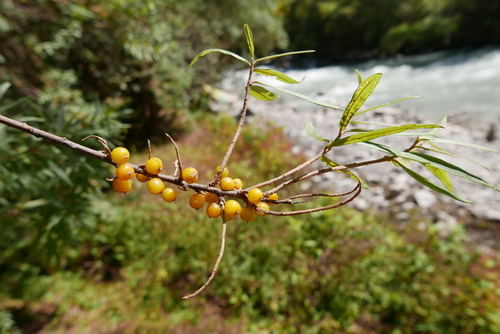
A dense evergreen shrub. It grows 3.5 m tall and spreads 3.5 m wide. The leaves are dark green and glossy. They are silvery underneath. They are 10 cm long. The flowers are creamy white with silver scales. They have a scent. The fruit are orange-red. They are 2 cm across.
Edible Uses
The fruit is a reasonable size at about 20mm long and 13mm wide, though it does contain a large seed. When fully ripe — deep red in colour and very soft — it has a rich flavour with a pleasant slight acidity. If not fully ripe it will be astringent. The flavour improves further if the fruit is stored for a day or two after picking. It ripens intermittently over about 6 weeks from early to mid April through to May. The seed can also be eaten raw or cooked alongside the fruit, though the seed casing is rather fibrous and has a taste vaguely like peanuts.
Traditional Uses
The fruit are eaten when fully ripe. The seeds can also be eaten.
This uses section is brief — help expand it
Medicinal Uses
Like many in its genus, the fruit is a very rich source of vitamins and minerals — particularly vitamins A, C and E — along with flavonoids and other bio-active compounds. It is also a fairly good source of essential fatty acids, which is unusual for a fruit. It is being investigated for its potential to reduce the incidence of cancer and to halt or reverse cancer growth.
Distribution
It suits hardiness zones 6-9.
Where It Grows
Australia,
Cultivation
A very easily grown plant, it succeeds in most soils that are well-drained. Prefers a soil that is only moderately fertile, succeeding in poor soils and in dry soils. A drought resistant plant once established, it can be grown on top of Cornish hedges (drystone walls with earth between two vertical layers of stones). It is very tolerant of shade and grows well under trees. Plants are very tolerant of maritime exposure, growing well right by the coast. Plants are hardy to about -20°c, but they can be deciduous in very cold winters. Fruiting as it does in early April to May, this plant has excellent potential as a commercial fruit crop in Britain. The fruit is of a reasonable size and when fully ripe is very acceptable for dessert. It should be fairly easy to selectively breed for improved fruit size and flavour. Not all plants bear many fruits, though many specimens have been seen that produce very heavy crops on a regular basis. Since this is a hybrid species, yields may be improved by growing a selection of cultivars or one of the parent plants nearby for cross pollination. E. pungens is perhaps the best candidate for this and its cultivar E. pungens 'Variegata' has been seen on a number of occasions with good crops of fruit next to E. x ebbingei plants that are also laden with fruit. The cultivar E. x ebbingei 'Gilt Edge' is also probably a good pollinator. Other cultivars worth looking at are 'Salcombe Seedling', which is said to flower more abundantly than the type and 'Limelight', which has been seen with a good crop of fruits even on small bushes. This species has a symbiotic relationship with certain soil bacteria, these bacteria form nodules on the roots and fix atmospheric nitrogen. Some of this nitrogen is utilized by the growing plant but some can also be used by other plants growing nearby. An excellent companion plant, when grown in orchards it can increase yields from the fruit trees by up to 10%. Plants produce very aromatic flowers in late autumn and early winter. This species is notably resistant to honey fungus. Sometimes whole branches die out for no apparent reason. This happens most frequently when it is grafted onto E. multiflora. These branches should be removed from the plant. In garden design, as well as the above-ground architecture of a plant, root structure considerations help in choosing plants that work together for their optimal soil requirements including nutrients and water. Elaeagnus species are relatively fast-growing shrubs or small trees, typically reaching maturity in 3 to 5 years. They can grow to heights of 1 to 5 meters (3 to 16 feet) depending on the species and growing conditions. Fruits from Elaeagnus species are usually harvested in late summer to early autumn, depending on the species and local climate. Elaeagnus species generally flower in late spring to early summer depending on the specific species and environmental conditions. Many Elaeagnus species are self-fertile, meaning they can produce fruit without needing another plant for cross-pollination.
Propagation
This is a hybrid and will not breed true from seed. If that is acceptable, seed is best sown as soon as it is ripe in a cold frame, where it should germinate freely within 4 weeks, though it may take 18 months. Stored seed can be very slow to germinate, often taking more than 18 months. A warm stratification of 4 weeks followed by 12 weeks of cold stratification can help. Prick out seedlings into individual pots as soon as they are large enough to handle and plant out when at least 15cm tall. Cuttings of half-ripe wood, 7–10cm with a heel, are best taken in June and placed in a frame in July/August — rooting is rather slow but a good percentage usually strike. Cuttings of mature wood from the current year's growth, 10–12cm with a heel, taken in November in a frame and left for 12 months give a fair to good percentage. Layering in September/October takes 12 months.
Other Uses
Plants can be grown as a hedge in very exposed positions and tolerate maritime exposure well, including salt winds. They are also tolerant of regular trimming and grow vigorously — faster than E. macrophylla. They can be planted in gaps at the base of an established shelterbelt, where they will in time fill the empty spaces and climb into the lower parts of the trees. As nitrogen fixers, they make good companion plants and improve the growth of neighbouring species.
Production
It is fast growing.
Notes
There are 45 Elaeagnus species.
Synonyms
Also Known As
Elaeagnus × ebbingei is a synonym of Elaeagnus × submacrophylla.
References (6)
- Brickell, C. (Ed.), 1999, The Royal Horticultural Society A-Z Encyclopedia of Garden Plants. Convent Garden Books. p 392
- Cundall, P., (ed.), 2004, Gardening Australia: flora: the gardener's bible. ABC Books. p 532
- Lyle, S., 2006, Discovering fruit and nuts. Land Links. p 189
- Nederl. dendrol. ed. 2:247. 1942
- Plants for a Future database, The Field, Penpol, Lostwithiel, Cornwall, PL22 0NG, UK. http://www.scs.leeds.ac.uk/pfaf/
Show all 6 references Hide references
- Ryan, S., 2008, Dicksonia. Rare Plants Manual. Hyland House. p 23