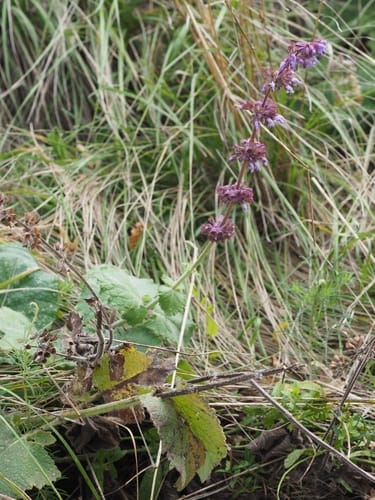
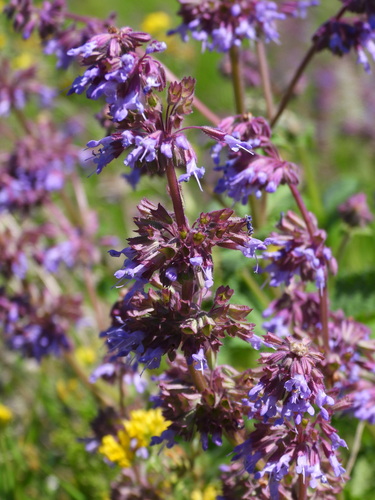
Agastache mexicana
(Kunth) Lint & Epling
Mexican giant hyssop
iNaturalist· cc-by
(c) Dick Culbert from Gibsons, B.C., Canada, some rights reserved (CC BY)
iNaturalist· cc-by-nc
(c) Carlos Galindo-Leal, some rights reserved (CC BY-NC), uploaded by Carlos Galindo-Leal
iNaturalist· cc-by-nc
(c) Daniela Fernández y Fernández, some rights reserved (CC BY-NC), uploaded by Daniela Fernández y Fernández
Summary
Source: WikipediaAgastache mexicana is a species of flowering plant in the mint family known by the common name Mexican giant hyssop. It is native to southern North America and can grow up to 100 cm tall. The leaves are lanceolate or oval-lanceolate. The plant is perennial and self-fertile. Its young lemon scented leaves are used in herbal teas and the leaves are also often used in flavoring foods.
Description
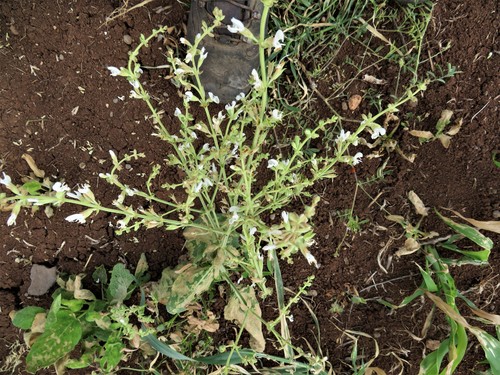
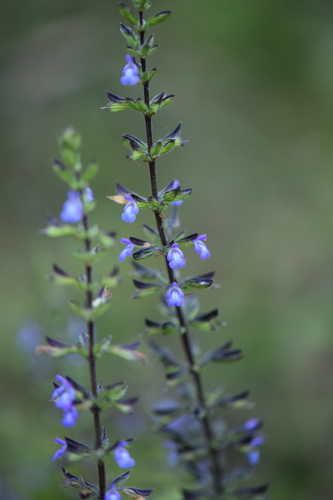
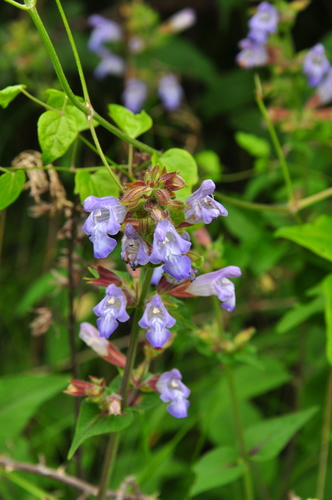
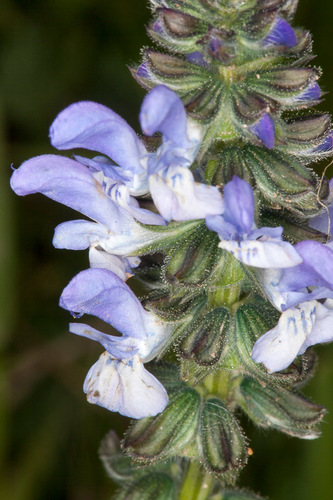
A perennial plant. It can be grown as an annual. It grows up to 80 cm tall and spreads to 30 cm wide. It has creeping roots. The leaves are sword shaped and have teeth long the edge. The flower spikes are 30 cm long. The flowers are pink or red.
Edible Uses
The highly aromatic young leaves work well as a flavouring in salads and cooked foods, and can also be brewed into a herbal tea.
Traditional Uses
The young leaves and flowers are used as flavouring. They are added to salads. The leaves can be used to make a herbal tea.
This uses section is brief — help expand it
Medicinal Uses
None known
Distribution
It is a warm temperate to tropical plant. It does best in a sheltered sunny position. It needs well-drained soil. It is resistant to drought but sensitive to frost. It suits hardiness zones 9-11.
Where It Grows
Australia, Central America, Mexico, North America, USA,
Cultivation
Plants can be grown from seed. They should just be covered with soil and germinate in 1-3 months at 13°C. They should be grown in the nursery for the first year. Plants can also be grown by dividing clumps and can be grown from basal cuttings. These root in 3 weeks.
Propagation
Sow seed in spring in a greenhouse, barely covering it. Germination typically takes 1–3 months at 13°C. Prick seedlings into individual pots once large enough to handle and grow on under glass for the first year, then plant out in late spring or early summer. Division in spring is straightforward — large divisions can go straight into their permanent positions. For basal cuttings, harvest young shoots at around 10–15cm tall in spring, pot them in a lightly shaded greenhouse, and they should root within 3 weeks, ready to plant out in summer or the following spring.
Other Uses
Mexican Giant Hyssop is a valuable addition to pollinator gardens and can enhance biodiversity in agroecosystems, also serving as a companion plant to attract beneficial insects. Its flowers are rich in nectar and pollen, drawing in bees, butterflies, and other pollinators. The leaves provide some cover and habitat for small wildlife, though the plant is not a significant nesting site. Dense foliage can offer shelter and potential overwintering sites for beneficial invertebrates. The strongly aromatic, minty foliage may also help confuse or repel certain pest insects.
Other Information
It is a cultivated food plant.
Notes
There are about 20-30 Agastache species.
Synonyms
Also Known As
Mexican Hyssop, Mexican Lemon Hyssop, Lemon licorice mint
References (7)
- Bodkin, F., 1991, Encyclopedia Botanica. Cornstalk publishing, p 55
- Caballero, J. N., & Mapes, C. S., 1985, Gathering and Subsistence Patterns among the P'urhepecha Indians of Mexico. J. Ethnol. 5(1): 31-47
- Cundall, P., (ed.), 2004, Gardening Australia: flora: the gardener's bible. ABC Books. p 110
- Facciola, S., 1998, Cornucopia 2: a Source Book of Edible Plants. Kampong Publications, p 125
- Morton,
Show all 7 references Hide references
- Plants for a Future database, The Field, Penpol, Lostwithiel, Cornwall, PL22 0NG, UK. http://www.scs.leeds.ac.uk/pfaf/
- Seidemann J., 2005, World Spice Plants. Economic Usage, Botany, Taxonomy. Springer. p 12