Ecklonia radiata
(C.Ag.) J. Ag.
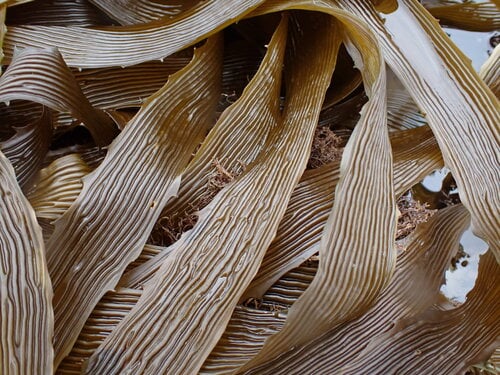
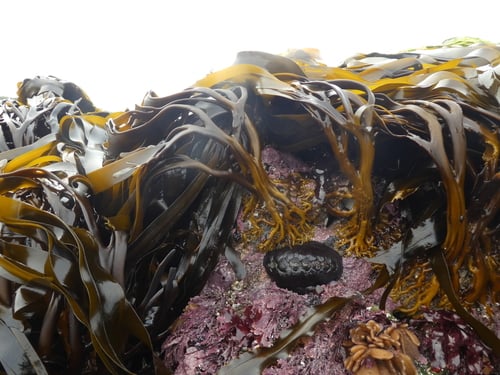
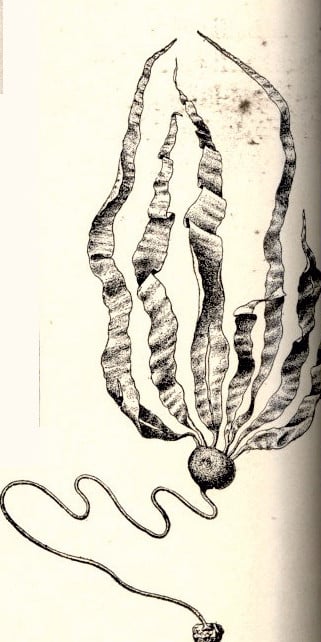
Brown kelp, Common kelp
iNaturalist· cc-by-nc
(c) David Spencer Muirhead, some rights reserved (CC BY-NC), uploaded by David Spencer Muirhead
iNaturalist· cc-by
(c) Jacqui Geux, some rights reserved (CC BY), uploaded by Jacqui Geux
iNaturalist· cc-by-nc
(c) Anthony Kurek EntSocVic, some rights reserved (CC BY-NC), uploaded by Anthony Kurek EntSocVic
Summary
Source: WikipediaEcklonia radiata, commonly known as golden kelp, common kelp, spiny kelp or leather kelp, is a species of kelp found in the Canary Islands, the Cape Verde Islands, Madagascar, Mauritania, Senegal, South Africa, Oman, southern Australia, Lord Howe Island, and New Zealand. In Australia, E. radiata forms the backbone of the Great Southern Reef, a system of interconnected kelp reefs that spans the coastline of southern Australia, underpinning biodiverse and productive ecosystems, and supporting valuable ecosystem services. Ecklonia radiata grows in kelp beds on reefs and where sheltered can form dense 'forests'. It can be found in the low intertidal zone to depths of approximately 25 metres (82 ft) and rarely exceeds a body length of 1 metre (3 ft 3 in).
Description
A brown seaweed. It is large. They can be 1.5 m long. The holdfast is branched. It has a long leathery axis or stem like structure. This has flat leaf like blades which spread out in a regular pattern. They have leaflet like branches along the stalk.
Edible Uses
The stalks are cut and pickled by boiling and placing in spiced vinegar.
Traditional Uses
The stalks are cut and pickled. It is boiled and placed in spiced vinegar.
This uses section is brief — help expand it
Distribution
It grows in subtropical to temperate places. It grows on rocky shores. It grows below the tidal zone on exposed shores. It can grow in low light conditions.
Where It Grows
Australia, Canary Islands, Cape Verde, Madagascar, New Zealand, South Africa, Tasmania,
Nutrition
| Part | Moisture | kJ | kcal | Protein | Vit A | Vit C | Iron | Zinc |
|---|---|---|---|---|---|---|---|---|
| seaweed | — | — | 9.6 | — | — | — | — | — |
References (7)
- Breidahl H., 1997, Australian Southern Shores. Lothian. p 56
- Cherry, P., et al, 2019, Risks and benefits of consuming edible seaweeds. Nutrition ReviewsVR Vol. 77(5):307–329
- Cribb, A.B., 1996, Seaweeds of Queensland A Naturalist's Guide. The Queensland Naturalists' Club Handbook No. 2. p 7, 47
- Dashorst, G.R.M., and Jessop, J.P., 1998, Plants of the Adelaide Plains & Hills. Botanic Gardens of Adelaide and State Herbarium. p 18
- Edgar, G., Edgar, R., and Edgar, A., 2006, Wild Australia. A Guide to the Places, Plants and Animals. New Holland. p 28
Show all 7 references Hide references
- Fuhrer, B.A. et al, 1981, Seaweeds of Australia. Reed. p 74
- Low, T., 1992, Bush Tucker. Australia’s Wild Food Harvest. Angus & Robertson. p 161