Nereocystis lutkeana
(K. Mertens) Postels & Ruprecht
Bull whip kelp, Bladder kelp, Sea whip kelp
wikimedia· cc0
Wikimedia Commons - Augusta Foote Arnold
wikimedia· cc0
Wikimedia Commons - Ernst Haeckel
Description
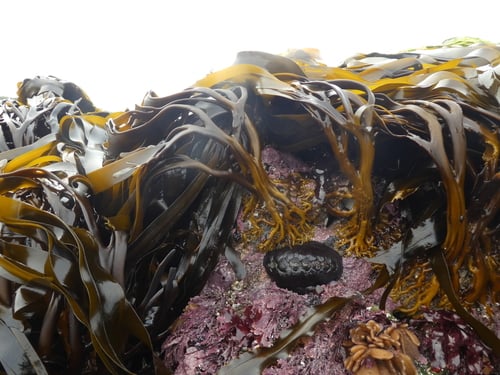
A seaweed. The stipes are long and thick. They can be 25 m long and are hollow. They are 1.5 cm wide at the base and 12 cm wide at the top. There is an inflated bulb at the top. This can be 20 cm across. There are 2 rows of leaflike fronds on this. These can be 3-8 m long. They float in the water.
Edible Uses
The long stipes are cut into lengths, desalted, then candied or pickled; the bulb or float can be treated similarly. Dried blades are cooked and eaten, often served with herring roe.
Traditional Uses
The long stipes are cut into lengths, desalted then candied or pickled. The bulb or float can be treated similarly. Dried blades are cooked and eaten. They are also eaten with herring roe.
Distribution
A temperate plant. It grows on submerged rocks on rocky coastline washed by tides.
Where It Grows
Alaska, Canada, Pacific, North America, USA,
Notes
There is only one Nereocystis species.
References (8)
- Colombo, M. J. et al, 2006, Marine Macroalgae as Sources of Polyunsaturated fatty acids. Plant Foods for Human Nutrition. 61: 67-72
- Facciola, S., 1998, Cornucopia 2: a Source Book of Edible Plants. Kampong Publications, p 260
- Heller, C. A., 1962, Wild Edible and Poisonous Plants of Alaska. Univ. of Alaska Extension Service. p 66
- http://www.seavegetables.com
- Kuhnlein, H. V. and Turner, N. J., 1991, Traditional Plant Foods of Canadian Indigenous Peoples. Food and Nutrition in History and Anthropology Volume 8. Gordon and Breach. p 18
Show all 8 references Hide references
- Moerman, D. F., 2010, Native American Ethnobotany. Timber Press. p 354
- Tseng, C. K., 1947, Seaweed Resources of North America and Their Utilization. Economic Botany, Vol. 1, No. 1 pp. 69-97
- Zemke-White, W. L. & Ohno, M., 1999, World seaweed utilisation: An end-of-century summary. Journal of Applied Phycology 11: 369-376