Echinochloa stagnina
(Retz.) Beauv
Long-awn water grass
iNaturalist· cc0
no rights reserved, uploaded by Bat
iNaturalist· cc0
no rights reserved
Summary
Source: WikipediaEchinochloa stagnina (Burgu millet, bourgou, hippo grass) is a species of Echinochloa widespread in tropical Africa and Asia, with an invasive status in many Pacific islands. It was once one of the major grasses cultivated in the Inner Niger Delta of the Niger River. It was cultivated by the Fulani people, who used the seeds as food, and to make both alcoholic and nonalcoholic beverages. It tolerates floods well, and has been replanted in Africa, where it has helped to control erosion and provides hay for animals. A traditional food plant in Africa, this little-known grain has potential to improve nutrition, boost food security, foster rural development and support sustainable landcare.
Description
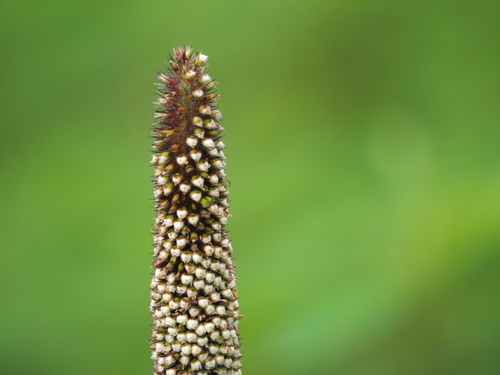
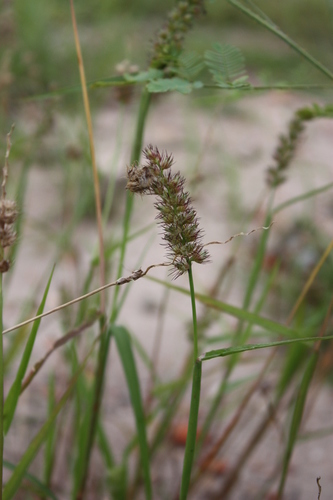
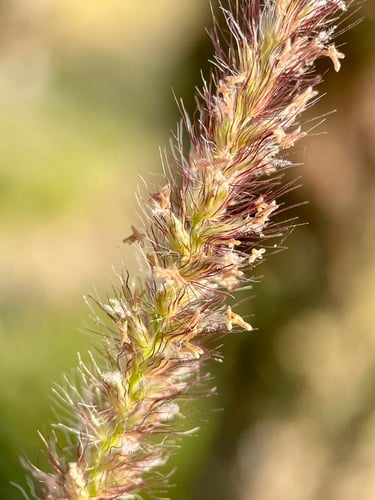
An annual swamp millet grass. It grows 1-2 m high. It has long creeping rhizomes. It can lie over and form roots at the nodes. The leaf blade is 8-50 cm long by 6-10 mm wide. The flower arrangement is a narrow sword shape. It is 7-20 cm long.
Edible Uses
The succulent submerged stems rich in sugar are eaten raw (chewed especially by children) or processed into sugar, liquor, vinegar, and cider-like drinks. The seeds are used as a cereal grain and component of kreb, a grain mixture eaten in Chad. The grain also serves as a famine food.
Traditional Uses
The succulent submerged stems are rich in sugar. This can be used for sugar or liquor. The sugary extract is used for making vinegar and a cider like drink. It is used in kreb a grain mixture eaten in Chad.
Distribution
It is a tropical plant. It occurs as floating masses in several river basins. It grows in seasonally waterlogged and alkaline soils. It grows in wetlands. It grows between 1,000-2,100 m above sea level. It can grow in arid places. It grows in the Sahel.
Where It Grows
Africa, Angola, Asia, Bangladesh, Botswana, Burkina Faso, Burundi, Cameroon, Central Africa, Central African Republic, CAR, Chad, Congo, Congo DR, East Africa, Egypt, Eswatini, Ethiopia, Gabon, Gambia, Ghana, Guinea, Guinée, Guinea-Bissau, Himalayas, India, Indochina, Indonesia, Kenya, Laos, Lesotho, Madagascar, Malawi, Mali, Mauritania, Mozambique, Myanmar, Namibia, Nepal, Niger, Nigeria, North Africa, Pacific, Pakistan, Papua New Guinea, PNG, Philippines, Rwanda, Sahel, SE Asia, Senegal, Sierra Leone, Somalia, South Africa, Southern Africa, Sri Lanka, Sudan, Swaziland, Tanzania, Thailand, Uganda, Vietnam, West Africa, Zambia, Zimbabwe,
Cultivation
The plant invades rivers causing obstruction of the waterway. It is a major component of sudd in several African rivers. Its presence is indicative of fresh-water, rather than brackish. It is a weed of rice-fields in Madagascar and irrigation channels in The Gambia. The plants are traditionally harvested using boats and by beating the inflorescences over a net. As the grains shatter easily, they are harvested at an early stage.
Propagation
Seed - when stored under water in the dark at a temperature of 20°c they showed no dormancy and had a germination percentage of almost 100%; whereas seeds kept under dry conditions had a dormancy period of 6 - 7 months. The dormancy is broken by removing the glumes, but this results in rapidly reduced viability. Seeds germinate within a week after sowing. Stem cuttings. Division.
Other Uses
The culms are used for thatching and for weaving into mats. The salt obtained from burning the plant is used in making soap and as a mordant in indigo dyes. The Niger River flood-plain is a recognised locust nursery area, the hoppers growing on the bare soil between tufts of grass exposed after the flood-waters have retreated. Very large areas, especially south of Lake Debo, are covered with pure stands of this species of grass which when the waters have receded is laid and provides excellent pasturage. Trampling, grazing and later firing to promote regrowth leave the soil bare on which locust eggs are laid. Other areas of lesser inundation have admixtures of other grasses which tend to be tufted and thus anyhow have bare ground between the tufts, 20 - 50% of the ground being bare. Oryza barthii, a wild rice, is one that harbours such hoppers. If all the land could be clothed with E. Stagnina and grazing and firing restricted so as not to expose the soil locust egg-laying might be inhibited.
Other Information
The stalks are chewed especially by children. The grain is used as a famine food.
Notes
There are about 35 Echinochloa species. They grow in tropical to warm temperate regions. The African samples may belong to Echinochloa scabra. It is an important fodder grass for Fulani.
Synonyms
Also Known As
Ahibary, Am sakine, Banti, Bontha oddu, Bourgou, Burgu, Dabhai hullu, Dul, Fringed cock's-spur grass, Gourgou, Helew, Hippo grass, Jhipa, Kadu, Queo
References (25)
- Abbiw, D.K., 1990, Useful Plants of Ghana. West African uses of wild and cultivated plants. Intermediate Technology Publications and the Royal Botanic Gardens, Kew. p 25
- Ambasta, S.P. (Ed.), 2000, The Useful Plants of India. CSIR India. p 189
- Burkill, H. M., 1985, The useful plants of west tropical Africa, Vol. 2. Kew.
- Busson, 1965,
- Cobley, L.S. (rev. Steele, W.M.) 2nd Ed., 1976, An Introduction to the Botany of Tropical Crops. Longmans. p 56
Show all 25 references Hide references
- Ess. Agrostogr. 53, 161, 171. 1812
- Facciola, S., 1998, Cornucopia 2: a Source Book of Edible Plants. Kampong Publications, p 175
- Flora of Pakistan. www.eFloras.org
- Fowler, D. G., 2007, Zambian Plants: Their Vernacular Names and Uses. Kew. p 69
- Fox, F. W. & Young, M. E. N., 1982, Food from the Veld. Delta Books. p 302
- Grivetti, L. E., 1980, Agricultural development: present and potential role of edible wild plants. Part 2: Sub-Saharan Africa, Report to the Department of State Agency for International Development. p 26
- Hahn, K., et al, 2018, The Use of Wild Plants for Food: a National Scale Analysis for Burkina Faso (West Africa) Flora et Vegetatio Sudano-Sambesica 21, 25-33
- Jardin, C., 1970, List of Foods Used In Africa, FAO Nutrition Information Document Series No 2.p 22
- Long, C., 2005, Swaziland's Flora - siSwati names and Uses http://www.sntc.org.sz/flora/
- Macmillan, H.F. (Revised Barlow, H.S., et al), 1991, Tropical Planting and Gardening. Sixth edition. Malayan Nature Society. Kuala Lumpur. p 352
- Mishra, N., et al, 2016, Indigenous knowledge in utilization of wetland plants in Bhadrak district, Odisha, India. Indian Journal of Natural Products and Resources. Vol. 7(1) pp. 82-89
- National Research Council, 1996, Lost crops of Africa. Volume 1 grains, p 259 & p 262 (As Panicum stagninum)
- Peters, C. R., O'Brien, E. M., and Drummond, R.B., 1992, Edible Wild plants of Sub-saharan Africa. Kew. p 22
- Purseglove, J.W., 1972, Tropical Crops. Monocotyledons. Longmans p 144
- Romanowski, N., 2007, Edible Water Gardens. Hyland House. p 95
- Royal Botanic Gardens, Kew (1999). Survey of Economic Plants for Arid and Semi-Arid Lands (SEPASAL) database. Published on the Internet; http://www.rbgkew.org.uk/ceb/sepasal/internet [Accessed 3rd June 2011]
- Swaziland's Flora Database http://www.sntc.org.sz/flora
- van Wyk, Be, & Gericke, N., 2007, People's plants. A Guide to Useful Plants of Southern Africa. Briza. p 9
- Wiersema, J. H. & Leon, B., 2013, World Economic Plants. A Standard Reference CRC Press. 2nd Ed. p 263
- World Checklist of Useful Plant Species 2020. Royal Botanic Gardens, Kew