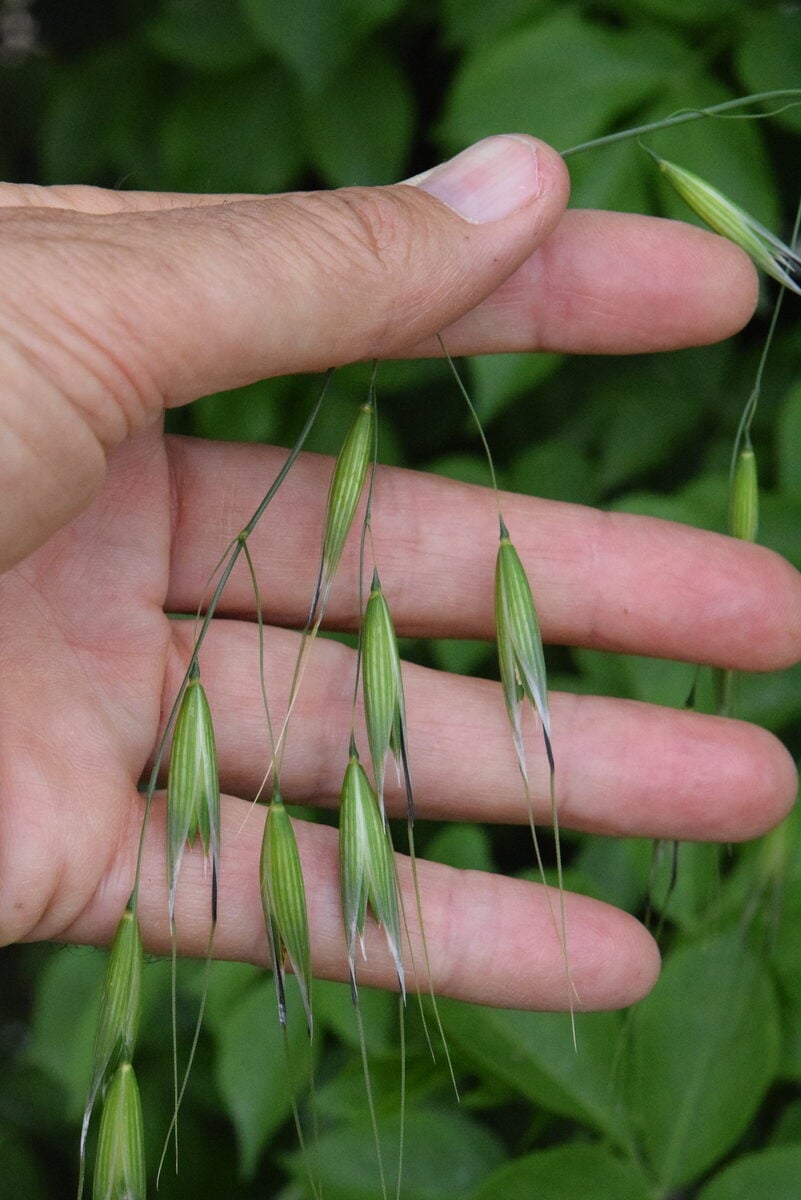
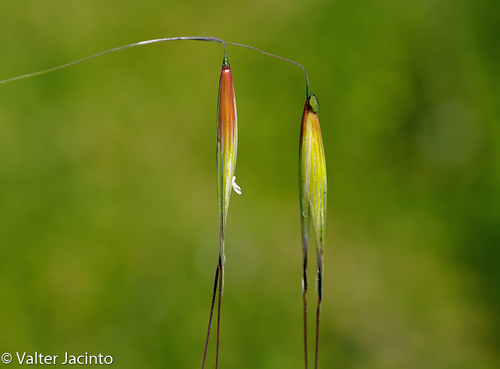
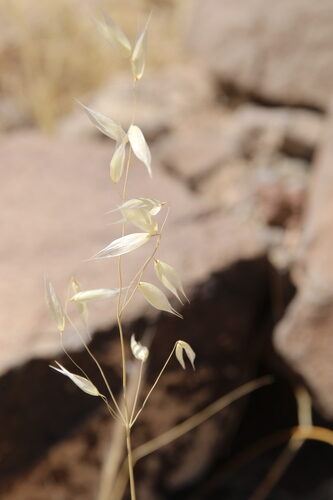
Bambusa tuldoides
Munro
Punting pole bamboo
iNaturalist· cc-by-nc
(c) silentree, some rights reserved (CC BY-NC)
iNaturalist· cc-by
(c) Sean Yang, some rights reserved (CC BY), uploaded by Sean Yang
iNaturalist· cc-by-nc
(c) 呂美玲, some rights reserved (CC BY-NC), uploaded by 呂美玲
Description
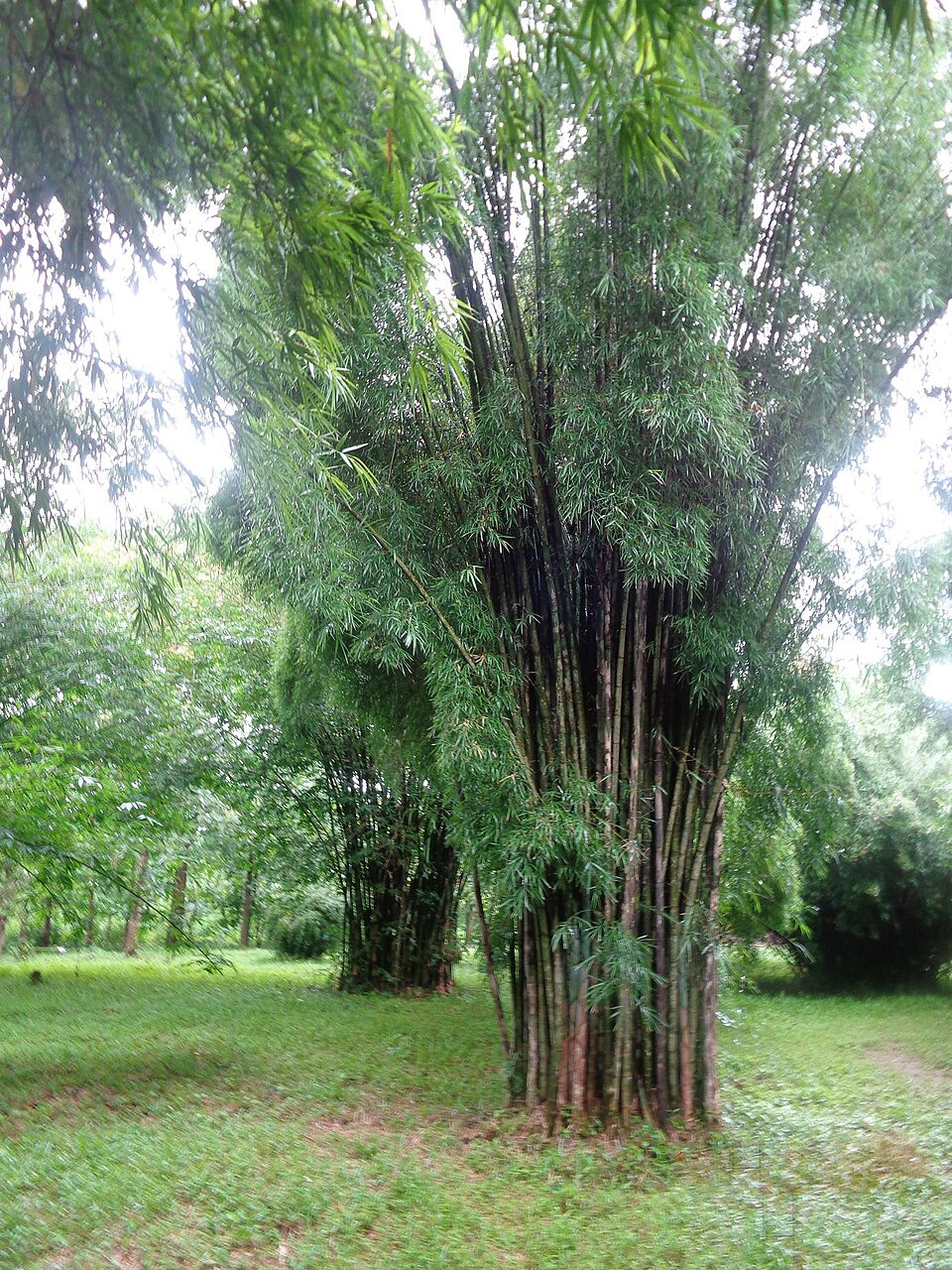
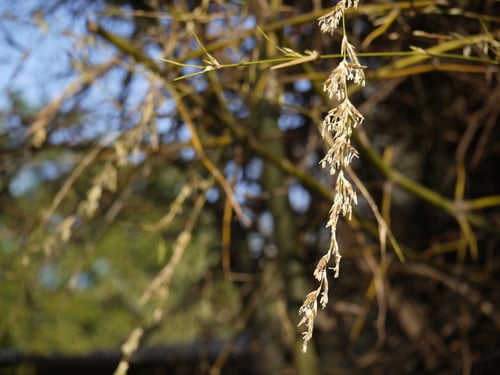
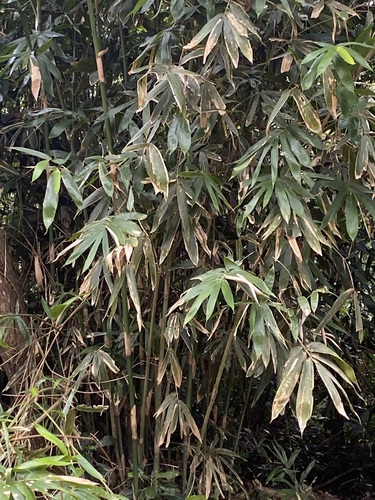
A densely tufted bamboo. The culm or stem is erect but nodding at the tip. They grow 6-10 m tall. The stems are 3-5 cm across at the base. The young stems are covered with white wax. The internodes are 30-36 cm long. The lowest 1 or 2 nodes have a ring of grey silky hairs above the sheath scar. The stems branch from the nodes. The leaf blade is sword shaped and 10-18 cm long by 1-2 cm wide. Flowering can start at 50 years of age. In China clumps usually die after flowering but in other locations plants can remain alive.
Edible Uses
Young shoots are edible. The young shoots have an average fresh weight of 938g before peeling, 137g after peeling; the edible portion is 15%. They have a bitter flavour, and are creamy and tender when cooked. The young shoots are harvested as they emerge from the soil.
Traditional Uses
Shoots are cooked and eaten.
This uses section is brief — help expand it
Medicinal Uses
Shavings of the culm cortex ('chuk yu') are used in Chinese medicine in the treatment of febrile diseases, haematuria, epistaxis and infantile epilepsy.
Distribution
A tropical plant. It can grow in subtropical conditions. It can tolerate frost down to -7°C. In tropical Asia it grows at low altitudes.
Where It Grows
Asia, Australia, Bangladesh, Brazil, Central America, China*, Colombia, Cuba, Ecuador, El Salvador, Europe, Honduras, India, Indochina, Indonesia, Japan, Laos, Malaysia, Mexico, Myanmar, Northeastern India, Philippines, Puerto Rico, SE Asia, Singapore, South America, Taiwan, Trinidad-Tobago, USA, Vietnam, West Indies,
Cultivation
It is grown from rhizome and culm cuttings. Tips of shoots from a clump are cut off and replanted. Whole culms can be planted and the separate shoots chopped off.
Propagation
Seed - surface sow in containers as soon as it is ripe, preferably at a temperature around 20°c. Do not allow the compost to dry out. Germination usually takes place fairly quickly so long as the seed is of good quality, though it can take 3 - 6 months. Prick out the seedlings into containers when they are large enough to handle and grow on in a lightly shaded place until large enough to plant out. Plants only flower at intervals of many years and so seed is rarely available. Division as new growth commences. Take divisions with at least three canes in the clump, trying to cause as little root disturbance to the main plant as possible. Grow them on in light shade in pots of a high fertility sandy medium. Mist the foliage regularly until plants are established. Plant them out into their permanent positions when a good root system has developed, which can take a year or more. Plants can be propagated vegetatively by rhizome, culm and branch cuttings. The propagules are raised in a nursery and after they have produced roots and developed rhizomes they are planted out in the field during the rainy season in pits filled with a mixture of compost and soil.
Other Uses
The culms are used for farm equipment and as punting poles and scaffolding. The split canes are used in weaving utensils and handicrafts. Plants can be grown to form an effective screen and hedge.
Production
A young fresh shoot has an average weight of 938 g before peeling and 137 g after peeling. Plants grow quickly.
Notes
There are about 120 Bambusa species. They are tropical and subtropical in Asia.
References (14)
- Anderson, E. F., 1993, Plants and people of the Golden Triangle. Dioscorides Press. p 203
- Arora, R. K., 2014, Diversity in Underutilized Plant Species - An Asia-Pacific Perspective. Bioversity International. p 36
- Burkill, I.H., 1966, A Dictionary of the Economic Products of the Malay Peninsula. Ministry of Agriculture and Cooperatives, Kuala Lumpur, Malaysia. Vol 1 (A-H) p 302
- Dransfield, S. & Widjaja, EA., 1995, Plant Resources of South East Asia. PROSEA No. 7 Bamboos. Leiden. p 72
- Hibbert, M., 2002, The Aussie Plant Finder 2002, Florilegium. p 37
Show all 14 references Hide references
- Kew Plants of the World Online
- Ryan, S., 2008, Dicksonia. Rare Plants Manual. Hyland House. p 83
- Sukarya, D. G., (Ed.) 2013, 3,500 Plant Species of the Botanic Gardens of Indonesia. LIPI p 838
- Trans. Linn. Soc. London 26:93. 1868
- USDA, ARS, National Genetic Resources Program. Germplasm Resources Information Network - (GRIN). [Online Database] National Germplasm Resources Laboratory, Beltsville, Maryland. Available: www.ars-grin.gov/cgi-bin/npgs/html/econ.pl (10 April 2000)
- Waikhom, S. D., et al, 2013, Grappling the High Altitude for Safe Edible Bamboo Shoots with Rich Nutritional Attributes and Escaping Cyanogenic Toxicity. BioMed Reserch International. Voluyme 2013 Article ID 289285, 11 pages
- Wiersema, J. H. & Leon, B., 2013, World Economic Plants. A Standard Reference CRC Press. 2nd Ed. p 92
- World Checklist of Useful Plant Species 2020. Royal Botanic Gardens, Kew
- Zeven, A. C. & de West, J. M. J., 1982, Dictionary of cultivated plants and their regions of diversity. Wageningen. p 36