Echinochloa crus-galli
(L.) P.Beauv.
Barnyard grass, Barnyard millet
iNaturalist· cc-by-nc
(c) Ron Frumkin, some rights reserved (CC BY-NC), uploaded by Ron Frumkin
iNaturalist· cc-by-nc
(c) carla1964, some rights reserved (CC BY-NC)
iNaturalist· cc0
no rights reserved, uploaded by Carter Dorscht
Summary
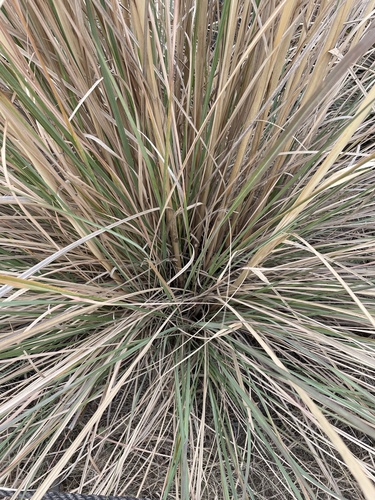
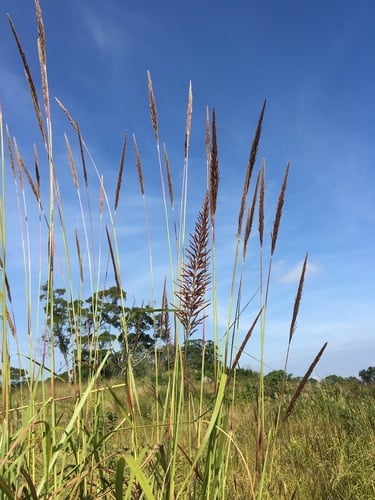
Source: WikipediaEchinochloa crus-galli is a species of wild grass originating from tropical Asia that was formerly classified as a panicum grass. It is commonly known as cockspur (or cockspur grass), barnyard millet, water grass, common barnyard grass, or simply barnyard grass (which may refer to any species of the genus Echinochloa). This plant can grow to 1.5 m (4 ft 11 in) in height and has long, flat leaves which are often purplish at the base. Most stems are upright, but some will spread out over the ground. Stems are flattened at the base. The seed heads are a distinctive feature, often purplish, with large millet-like seeds in crowded spikelets. Considered one of the world's worst weeds, it reduces crop yields and causes forage crops to fail by removing up to 80% of the available soil nitrogen. It acts as a host for several mosaic virus diseases. Heavy infestations can interfere with mechanical harvesting. Individual plants can produce up to 40,000 seeds per year. Water, birds, insects, machinery, and animal feet disperse it, but contaminated seed is probably the most common dispersal method.
Description
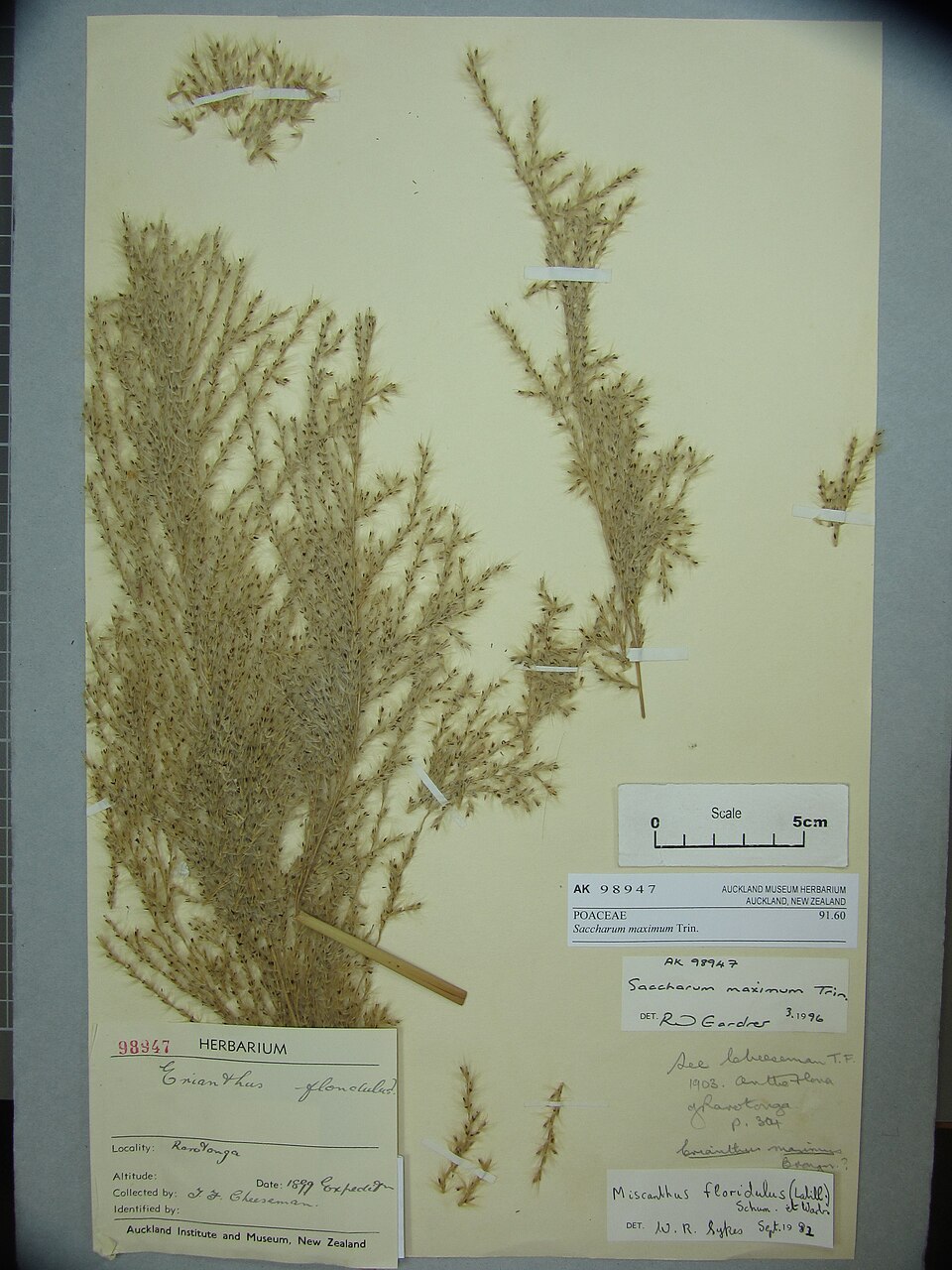
An annual millet grass It grows 1-1.5 m tall. It can be erect or lean over. The leaves are long and narrow and flat. They are about 35 cm long and 1 cm wide. The leaves do not have hairs except for a few hairs at the base. The flower arrangement is open and up to 25 cm long by 8 cm wide. The flower arrangement is pinkish. There are 3 or 4 irregular rows. The lower flower stalks are 10 cm long and they get shorter higher up. The spikelets are 2-4.5 mm long. It does not have a ligule or row of hairs where the leaf sheath joins the stem. One plant can produce 7000 seed.
Edible Uses
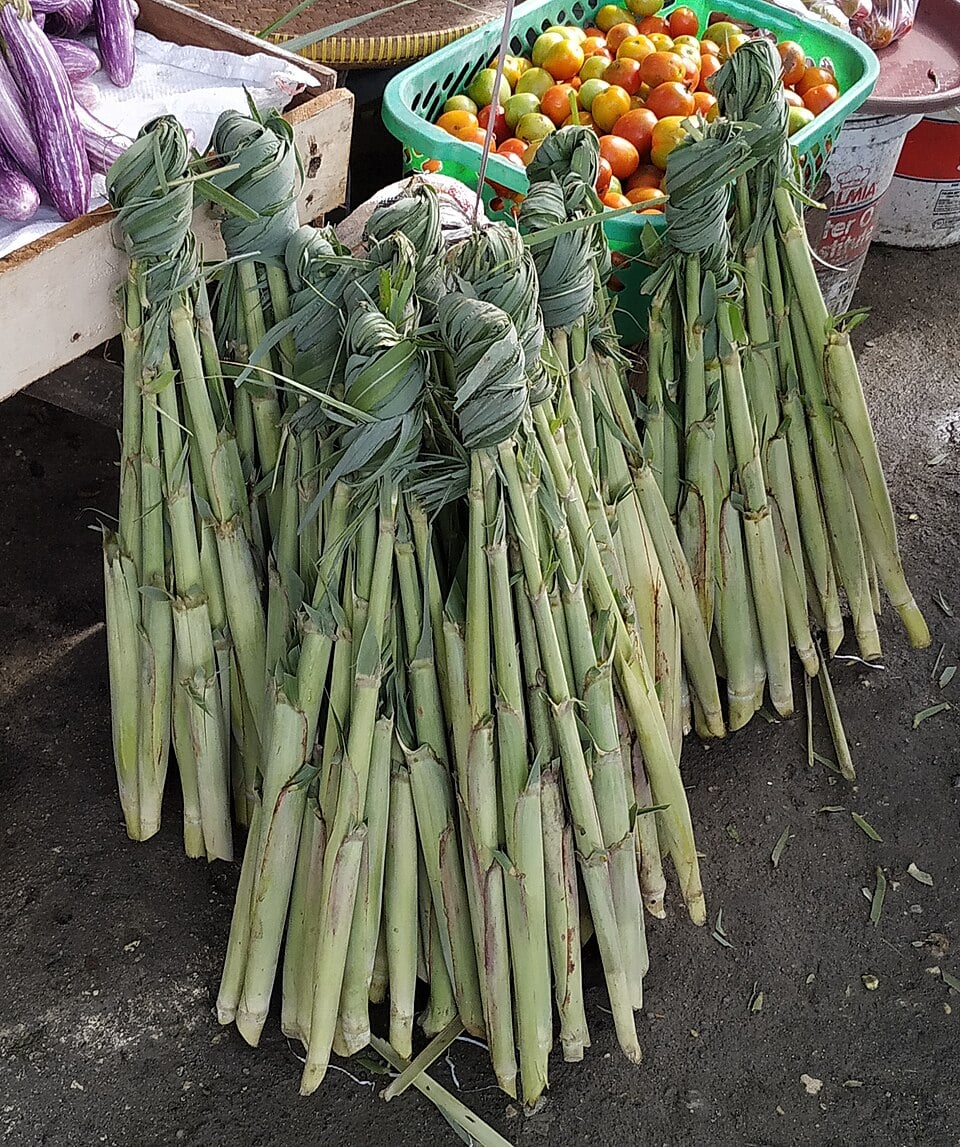
The seed is cooked and used as a millet — it can be prepared whole or ground into flour for use in porridges, macaroni, dumplings, and similar dishes. The seed has a good flavour overall but is somewhat bitter, and is fairly easy to harvest despite being rather small. Young shoots, stem tips, and the heart of the culm can be eaten raw or cooked. A nutritional analysis of the leaves (dry weight) per 100g shows: protein 7.4g, fat 2.9g, carbohydrate 81.1g, fibre 31.3g, ash 8.6g. The roasted seed can also be used as a coffee substitute.
Traditional Uses
The young shoots are eaten as a vegetable. The seeds can be boiled and eaten. They can also be popped like corn. They can be ground into flour and used to make bread, cakes and porridge. They are used for macaroni and dumplings. They can be steamed and made in porridge. Roasted seeds are used as a coffee substitute.
Medicinal Uses
Reported to be preventative and tonic, barnyard grass is a folk remedy for carbuncles, haemorrhages, sores, spleen trouble, cancer, and wounds. The shoots and/or roots are applied as a styptic to wounds. The plant acts as a tonic on the spleen.
Known Hazards
This grass has been reported to accumulate levels of nitrate in its tissues high enough to be toxic to farm animals. This problem is most likely to occur when plants are fed with inorganic fertilizers.
Distribution
A tropical plant. It grows in wet places and paddy fields. It grows in wetlands. It also grows in temperate places. Seed germinate most easily at 20°C. It grows in water-logged soils which are medium to heavy. It can grow in arid places. In Argentina it grows from sea level to 800 m above sea level. Tasmanian Herbarium. In Yunnan.
Where It Grows
Africa, Andorra, Argentina, Asia, Australia, Bahamas, Bolivia, Botswana, Brazil, Burkina Faso, Cambodia, Central America, Central Asia, Chile, China, Cuba, Czech Republic, East Africa, Eswatini, Europe, France, Georgia, Greece, Haiti, Himalayas, India, Indochina, Indonesia, Iran, Iraq, Italy, Japan, Kiribati, Korea, Laos, Madagascar, Malaysia, Mediterranean, Mexico, Middle East, Mongolia, Mozambique, Myanmar, Nepal, New Zealand, North America, Northeastern India, Pacific, Pakistan, Paraguay, Puerto Rico, SE Asia, Slovenia, Solomon Islands, South Africa, Southern Africa, South America, Spain, Sri Lanka, Swaziland, Taiwan, Tajikistan, Tasmania, Uruguay, USA, West Africa, West Indies, Zimbabwe,
Cultivation
Plants are grown from seed.
Propagation
Sow seed in early spring in a greenhouse, barely covering it. Prick seedlings into individual pots when large enough to handle and plant out into permanent positions in early summer. A direct sowing in late spring may also succeed, but is unlikely to ripen a seed crop in cool, wet summers.
Other Uses
The plant is sometimes used, particularly in Egypt, for the reclamation of saline and alkaline areas.
Other Information
It is cultivated as a cereal in China, Korea and Japan. The seeds are a famine food.
Notes
There are about 35 Echinochloa species. They grow in tropical to warm temperate regions. It is a weed problem in rice. It is probably the wild form from which Japanese millet developed. It has anticancer properties.
Nutrition
| Part | Moisture | kJ | kcal | Protein | Vit A | Vit C | Iron | Zinc |
|---|---|---|---|---|---|---|---|---|
| Seeds | 1611 | — | 11 | — | — | — | — | — |
Synonyms
Also Known As
Adban samo, Ahibary, Bai, Banti, Barasanwak, Bharti, Bovar, Burashama, Capin arroz, Chalakini, Cockspur grass, Dhand, Dhera, Dul, God, Jalsamoka, Jarotha, Myet-cho, Myet-thi, Navadna kostreba, Oothupul, Osu honug, Pacad, Pedda wundu, Sama, Samak, Samaw, Sanwak, Sarvank, Sawan, Sema, Smau bak'kba, Tan, Ziro
References (63)
- Ambasta, S.P. (Ed.), 2000, The Useful Plants of India. CSIR India. p 188
- Bandyopadhyay, S. et al, 2009, Wild edible plants of Koch Bihar district, West Bengal. Natural Products Radiance 8(1) 64-72
- Beckstrom-Sternberg, Stephen M., and James A. Duke. "The Foodplant Database." http://probe.nalusda.gov:8300/cgi-bin/browse/foodplantdb.(ACEDB version 4.0 - data version July 1994)
- Blamey, M and Grey-Wilson, C., 2005, Wild flowers of the Mediterranean. A & C Black London. p 526
- Burkill, I.H., 1966, A Dictionary of the Economic Products of the Malay Peninsula. Ministry of Agriculture and Cooperatives, Kuala Lumpur, Malaysia. Vol 1 (A-H) p 903
Show all 63 references Hide references
- Bussman, R. W., et al, 2021, Unity in diversity—food plants and fungi of Sakartvelo (Republic of Georgia), Caucasus. Journal of Ethnobiology and Ethnomedicine (2021) 17:72 p 12
- Cobley, L.S. (rev. Steele, W.M.) 2nd Ed., 1976, An Introduction to the Botany of Tropical Crops. Longmans. p 56
- Dashorst, G.R.M., and Jessop, J.P., 1998, Plants of the Adelaide Plains & Hills. Botanic Gardens of Adelaide and State Herbarium. p 172
- Duke, J.A., 1992, Handbook of Edible Weeds. CRC Press. p 90
- Ess. Agrostogr. 53, 161, 169. 1812 "crus galli"
- Facciola, S., 1998, Cornucopia 2: a Source Book of Edible Plants. Kampong Publications, p 175
- Flora of Australia Volume 49, Oceanic Islands 1, Australian Government Publishing Service, Canberra. (1994) p 482
- Flora of Pakistan. www.eFloras.org
- Flora of Solomon Islands
- GAMMIE, (As Panicum crus-galli)
- Geng, Y., et al, 2016, Traditional knowledge and its transmission of wild edibles used by the Naxi in Baidi Village, northwest Yunnan province. Journal of Ethnobiology and Ethnomedicine. 12:10
- Grubben, G. J. H. and Denton, O. A. (eds), 2004, Plant Resources of Tropical Africa 2. Vegetables. PROTA, Wageningen, Netherlands. p 561
- GUPTA & KANODIA, (As Panicum crus-galli)
- Hussey, B.M.J., Keighery, G.J., Cousens, R.D., Dodd, J., Lloyd, S.G., 1997, Western Weeds. A guide to the weeds of Western Australia. Plant Protection Society of Western Australia. p 52
- Hu, Shiu-ying, 2005, Food Plants of China. The Chinese University Press. p 288
- Hwang, H., et al, 2013, A Study on the Flora of 15 Islands in the Western Sea of Jeollanamdo Province, Korea. Journal of Asia-Pacific Biodiversity Vol. 6, No. 2 281-310
- Hwang, HS, et al, 2014, Distribution characteristics of plant in the Ungseokbong Mountain, Gyeongsangnam-do, Korea. Journal of Asia-Pacific Biodiversity. 7(2014) e164-e178
- Jardin, C., 1970, List of Foods Used In Africa, FAO Nutrition Information Document Series No 2.p 2
- Khanal, R., et al, 2014, Documenting abundance and use of underutilized plant species in the mid hill region of Nepal. ECOPRINT 21: 63-71, 2014
- Khasbagan, Hu-Yin Huai, and Sheng-Ji pei, 2000, Wild Plants in the Diet of Athorchin Mongol Herdsmen in Inner Mongolia. Economic Botany 54(4): 528-536 (Also as Echinochloa caudata and Echinochloa crus-galli var. mitis)
- Kiple, K.F. & Ornelas, K.C., (eds), 2000, The Cambridge World History of Food. CUP p 117, 118
- Kuhnlein, H. V., et al, 2009, Indigenous Peoples' food systems. FAO Rome p 148
- Kuo, W. H. J., (Ed.) Taiwan's Ethnobotanical Database (1900-2000), http://tk.agron.ntu.edu.tw/ethnobot/DB1.htm
- Lamp, C & Collet F., 1989, Field Guide to Weeds in Australia. Inkata Press. p 108
- Lamp, C.A., Forbes, S.J. and Cade, J.W., 1990, Grasses of Temperate Australia. Inkata Press. p 144
- Lazarides, M. & Hince, B., 1993, Handbook of Economic Plants of Australia, CSIRO. p 86
- Long, C., 2005, Swaziland's Flora - siSwati names and Uses http://www.sntc.org.sz/flora/
- Macmillan, H.F. (Revised Barlow, H.S., et al), 1991, Tropical Planting and Gardening. Sixth edition. Malayan Nature Society. Kuala Lumpur. p 351
- Mal, B., S., et al, (Eds), 2010, Minor Millets in South Asia. Bioversity.
- Malezas Comestibles del Cono Sur, INTA, 2009, Buernos Aires
- Manandhar, N.P., 2002, Plants and People of Nepal. Timber Press. Portland, Oregon. p 211
- Martin, F.W. & Ruberte, R.M., 1979, Edible Leaves of the Tropics. Antillian College Press, Mayaguez, Puerto Rico. p 194
- Martin, F.W. & Ruberte, R.M., 1979, Edible Leaves of the Tropics. Antillian College Press, Mayaguez, Puerto Rico. p 194 (As Panicum crus-galli)
- Mishra, N., et al, 2016, Indigenous knowledge in utilization of wetland plants in Bhadrak district, Odisha, India. Indian Journal of Natural Products and Resources. Vol. 7(1) pp. 82-89
- Ochse, J.J. et al, 1931, Vegetables of the Dutch East Indies. Asher reprint. p 335
- Paczkowska, G. & Chapman, A.R., 2000, The Western Australian Flora. A Descriptive Catalogue. Western Australian Herbarium. p 102
- Peters, C. R., O'Brien, E. M., and Drummond, R.B., 1992, Edible Wild plants of Sub-saharan Africa. Kew. p 21
- Phon, P., 2000, Plants used in Cambodia. © Pauline Dy Phon, Phnom Penh, Cambodia. p 267
- Plants for a Future database, The Field, Penpol, Lostwithiel, Cornwall, PL22 0NG, UK. http://www.scs.leeds.ac.uk/pfaf/
- Plants of Haiti Smithsonian Institute http://botany.si.edu/antilles/West Indies
- Purseglove, J.W., 1972, Tropical Crops. Monocotyledons. Longmans p 144
- READ, (As Panicum crus-galli)
- Romanowski, N., 2007, Edible Water Gardens. Hyland House. p 94
- Royal Botanic Gardens, Kew (1999). Survey of Economic Plants for Arid and Semi-Arid Lands (SEPASAL) database. Published on the Internet; http://www.rbgkew.org.uk/ceb/sepasal/internet [Accessed 8th May 2011]
- SAXENA, (As Panicum crus-galli)
- Sainty, G.R. & Jacobs, S.W.L., 1981, Waterplants of New South Wales. Water Resources Commission. NSW p 174
- Scudder, 1962,
- Singh, H.B., Arora R.K.,1978, Wild edible Plants of India. Indian Council of Agricultural Research, New Delhi. p 84
- Singh, V. and Singh, P., 1981, Edible Wild Plants of Eastern Rajasthan. J. Econ. Tax. Bot. Vol 2 pp 197-207
- Simkova, K. et al, 2014, Ethnobotanical review of wild edible plants used in the Czech Republic. Journal of Applied Botany and Food Quality 88, 49-67
- Stephens, K.M., & Dowling, R.M., 2002, Wetland Plants of Queensland. A field guide. CSIRO p 67
- Swaziland's Flora Database http://www.sntc.org.sz/flora
- Tasmanian Herbarium Vascular Plants list p 84
- Ulian, T., et al, 2020, Unlocking plant resources to support food security and promote sustainable agriculture. Plants, People, Planet. 2020;2:421–445.
- van Wyk, B., 2005, Food Plants of the World. An illustrated guide. Timber press. p 183
- World Checklist of Useful Plant Species 2020. Royal Botanic Gardens, Kew
- Zeven, A. C. & de West, J. M. J., 1982, Dictionary of cultivated plants and their regions of diversity. Wageningen. p 36
- Zhang, Y., et al, 2014, Diversity of wetland plants used traditionally in China: a literature review. Journal of Ethnobiology and Ethnomedicine. 10:72