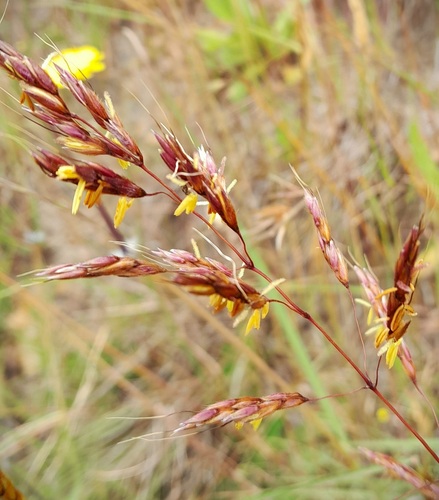
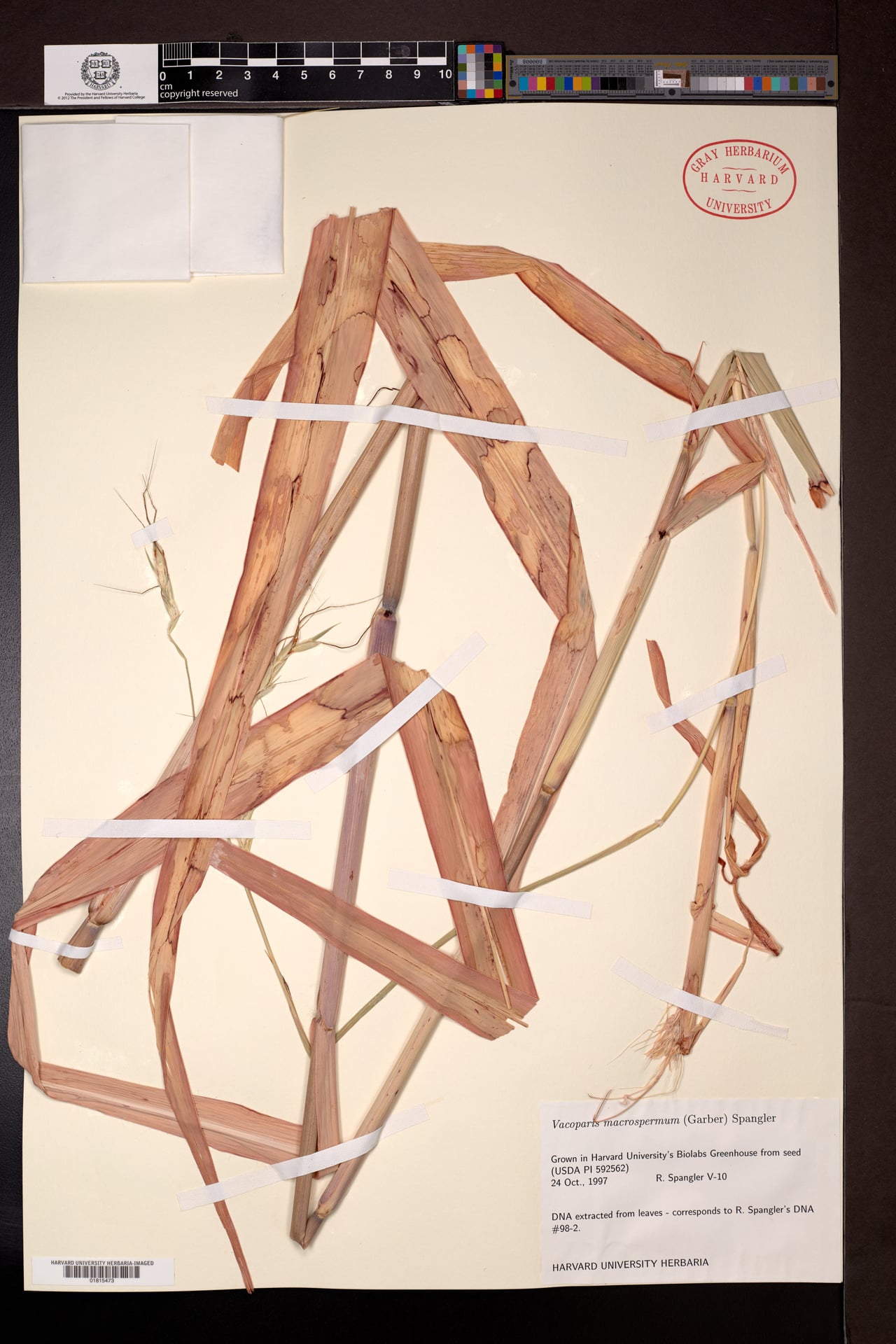
Sorghum bicolor subsp. arundinaceum
(L.) Moench, (Desv.) de Wet & Harlan
Wild Sorghum, Kamerun grass
gbif· cc-by-nc-sa
MBG
gbif· cc-by
The New York Botanical Garden
gbif· cc0
Ingrid P. Lin
Description
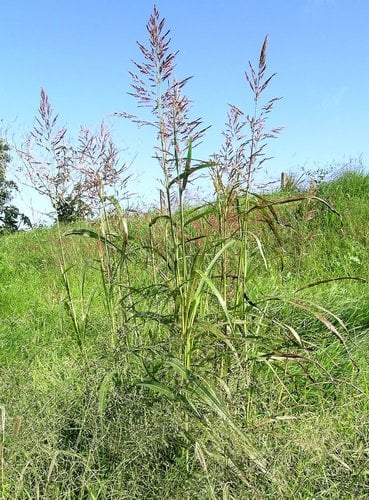
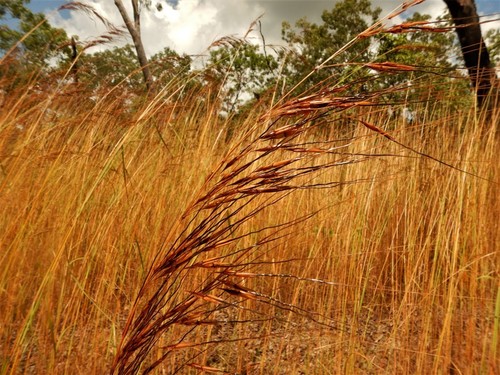
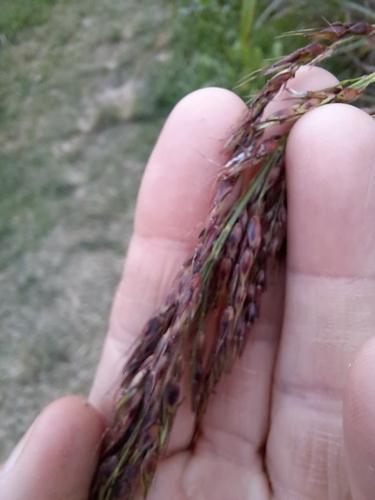
A grass which lives for one year or a few years. It is a millet. It is robust and forms tufts. The stalks are 2 m tall. The flower panicles are 20-40 cm long. Plants vary considerably depending on climates. Probably now Sorghum arundinaceum (Desv.) Stapf.
Edible Uses
The seeds are eaten and used for brewing beer. The stalks are used as a famine food.
Traditional Uses
The seeds are eaten and also used for beer. The stalks are used as a famine food.
This uses section is brief — help expand it
Distribution
A tropical plant. It grows in swampy soils and old farm land. It grows between 50-1,400 m altitude. It grows in areas with an annual rainfall between 200-600 mm. It is often over limestone material. It can grow in arid places.
Where It Grows
Africa, Angola, Australia, Botswana, Cameroon, Central Africa, Congo DR, East Africa, Eswatini, Ethiopia, Ghana, India, Kenya, Liberia, Malawi, Mozambique, Myanmar, Namibia, Niger, Nigeria, Norfolk Island, Pakistan, SE Asia, Sierra Leone, South Africa, Southern Africa, South Sudan, Sudan, Swaziland, Tanzania, Togo, Uganda, West Africa, Zambia, Zimbabwe,
Other Information
It is a famine food.
Notes
There are about 20 Sorghum species. This is a complex species interlinked with Sorghum bicolor.
Synonyms
Also Known As
Abaar, Abaro, Abeet, Adar, Makhaha, Musonde, Muswenge, Sumbyo, Waet
References (25)
- Abbiw, D.K., 1990, Useful Plants of Ghana. West African uses of wild and cultivated plants. Intermediate Technology Publications and the Royal Botanic Gardens, Kew. p 26
- Awas, T., 1997, A Study on the Ecology and Ethnobotany of Non-cultivated Food Plants and Wild Relatives of Cultivated crops in Gambella Region, Southwestern Ethiopia. Addis Ababa University. p 78
- Burkill, H. M., 1985, The useful plants of west tropical Africa, Vol. 1. Kew.
- Busson, 1965,
- Dalziel, J. M., 1937, The Useful plants of west tropical Africa. Crown Agents for the Colonies London.
Show all 25 references Hide references
- Doggett, H., 1979, Sorghum, in Simmonds N.W.,(ed), Crop Plant Evolution. Longmans. London. p 112
- Flora of Australia Volume 49, Oceanic Islands 1, Australian Government Publishing Service, Canberra. (1994) p 495
- Flora of Pakistan. www.eFloras.org
- Goode, P., 1989, Edible Plants of Uganda. FAO p 30 (As Sorghum verticilliflorum)
- Fowler, D. G., 2007, Zambian Plants: Their Vernacular Names and Uses. Kew. p 72
- Jardin, C., 1970, List of Foods Used In Africa, FAO Nutrition Information Document Series No 2.p 8
- Jardin, C., 1970, List of Foods Used In Africa, FAO Nutrition Information Document Series No 2.p 8 (As Sorghum aterrimum)
- Jardin, C., 1970, List of Foods Used In Africa, FAO Nutrition Information Document Series No 2.p 8 (As Sorghum lanceolatum)
- Lazarides, M. & Hince, B., 1993, Handbook of Economic Plants of Australia, CSIRO. p 225
- Long, C., 2005, Swaziland's Flora - siSwati names and Uses http://www.sntc.org.sz/flora/ (As Sorghum bicolor subsp. arundinaceum)
- Magwede, K., van Wyk, B.-E., & van Wyk, A. E., 2019, An inventory of Vhavenḓa useful plants. South African Journal of Botany 122 (2019) 57–89
- Ocho, D. L., et al, 2012, Assessing the levels of food shortage using the traffic light metaphor by analyzing the gathering and consumption of wild food plants, crop parts and crop residues in Konso, Ethiopia. Journal of Ethnobiology and Ethnomedicine 8:30
- Peters, C. R., O'Brien, E. M., and Drummond, R.B., 1992, Edible Wild plants of Sub-saharan Africa. Kew. p 27
- D. Prain, Fl. trop. Afr. 9:114. 1917
- D. Prain, Fl. trop. Afr. 9:112. 1917 (As Sorghum lanceolatum)
- Purseglove, J.W., 1972, Tropical Crops. Monocotyledons. Longmans p 260
- Royal Botanic Gardens, Kew (1999). Survey of Economic Plants for Arid and Semi-Arid Lands (SEPASAL) database. Published on the Internet; http://www.rbgkew.org.uk/ceb/sepasal/internet [Accessed 4th June 2011]
- Scudder, 1962,
- Terashima, H., et al, 1992, Ethnobotany of the Lega in the Tropical Rainforest of Eastern Zaire (Congo): Part Two, Zone de Walikale, African Study Monographs, Suppl. 19:1-60 (As Sorghum arundinaceum)
- World Checklist of Useful Plant Species 2020. Royal Botanic Gardens, Kew (As Sorghum arundinaceum)